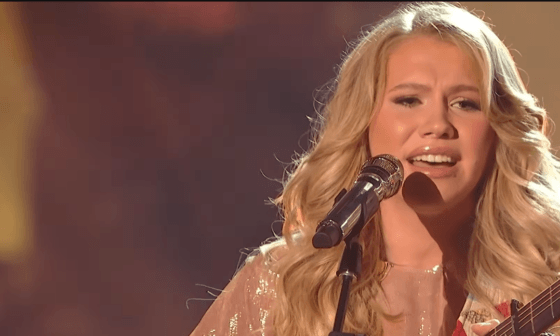
The stage lights were gentle, almost restrained, as Matteo Bocelli stepped forward and began to sing “Time to Say Goodbye.” From the very first note, it was clear this was not a performance meant to impress or overpower, but one designed to honor, reflect, and give thanks. The familiar melody filled the room with a sense of reverence, inviting everyone present into a deeply personal moment.
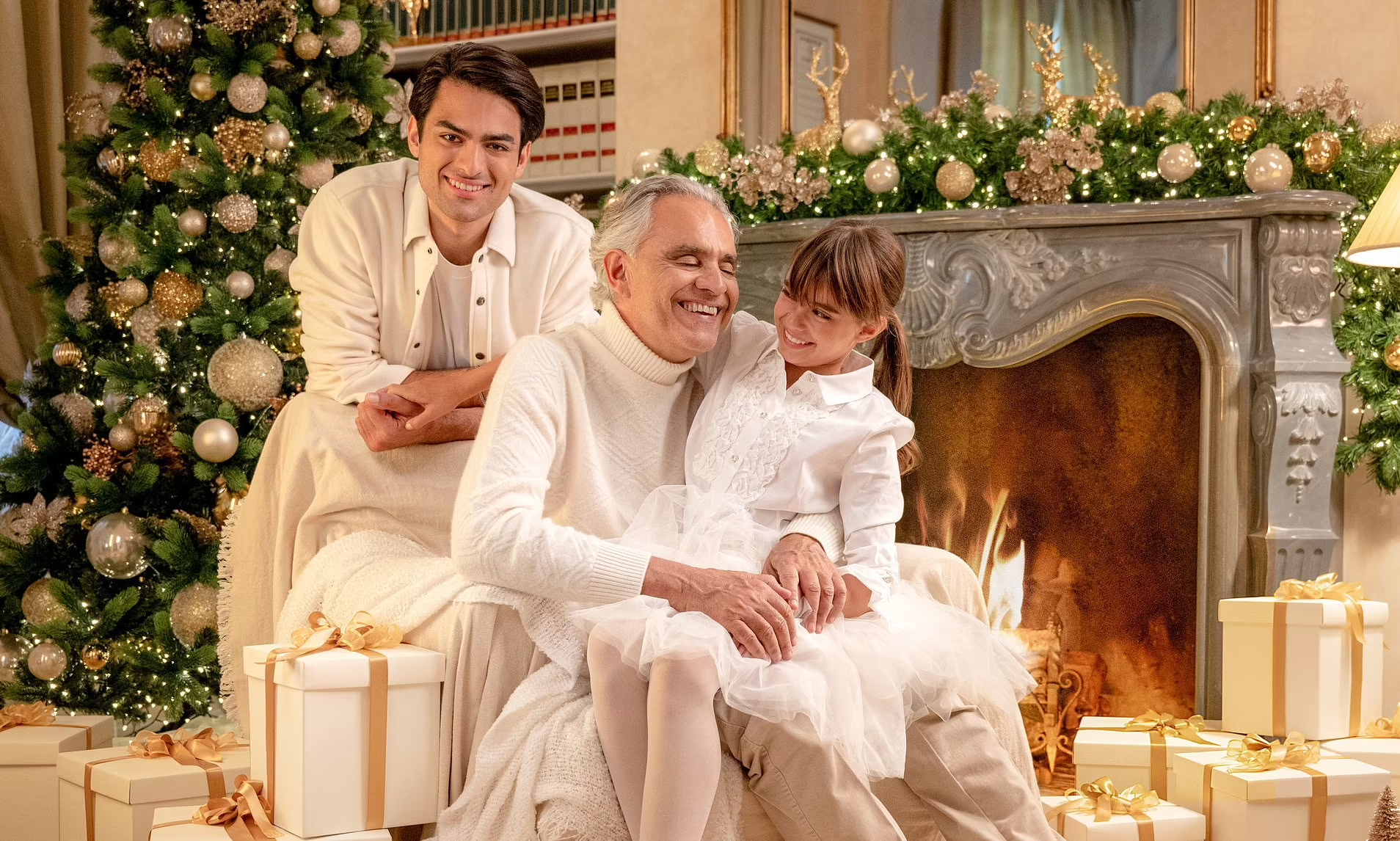
Andrea Bocelli was seated quietly in the audience, not as the global icon known for filling arenas, but as a father listening to his son. As the song unfolded, his head lowered slightly, emotion written plainly across his face. In that instant, the distance between stage and seats disappeared, replaced by a shared history bound together by music.
Matteo made no attempt to mirror his father’s legendary operatic force or unmistakable vocal signature. Instead, he chose restraint, warmth, and sincerity. His voice carried respect rather than comparison, offering something entirely his own while acknowledging the path that had shaped him.
Each lyric seemed to carry a lifetime of memories: childhood rehearsals, quiet encouragement, and lessons learned not just in technique, but in humility and purpose. The song became a mirror, reflecting Andrea’s life’s work back to him through a new voice shaped by love rather than legacy.
As the music continued, the audience sensed that they were witnessing something rare. This did not feel like a tribute arranged for applause or headlines. It felt like a private conversation that happened to be shared in public, a moment where sound became language for feelings too deep to explain.
The hall remained hushed, not from obligation, but from instinct. People leaned forward, breathing carefully, aware that even a cough or whisper might disturb something sacred. The performance had transformed the space into something intimate and almost timeless.
Andrea’s reaction spoke volumes without words. There was no grand gesture, no dramatic display, just quiet stillness and visible pride. In his expression was the recognition that his life’s anthem was now being carried forward, reshaped but never diminished.
When the final notes rose and gently faded, time seemed to slow. The applause that followed was heartfelt but secondary, as though everyone understood that clapping was not the point. The true significance lay in what had been exchanged between father and son.
Fans later described the moment not as a cover, but as an act of love. They spoke of legacy not as something inherited, but as something earned through honesty and devotion. It was music stripped of mythology, grounded instead in family and gratitude.
In the end, Matteo’s tribute was not about saying goodbye at all. It was about continuity, respect, and the quiet strength of a bond forged through shared purpose. A father listened. A son sang. And in that exchange, music became exactly what it has always been meant to be: a bridge between hearts.