Robin Williams’ first appearance on The Tonight Show Starring Johnny Carson was not an interview in any traditional sense. It was a moment when the structure of late-night television briefly ceased to exist, overtaken by a performer whose energy, imagination, and speed seemed to defy human limits. From the instant he sat down, it was clear this would not be a polite exchange of questions and answers.
What followed was nearly twenty minutes of uninterrupted creative eruption. Williams launched into a whirlwind of characters, accents, physical bits, and improvised monologues, barely pausing long enough to breathe. Ideas collided and transformed in real time, each one giving birth to another before the audience could fully process what had just happened.
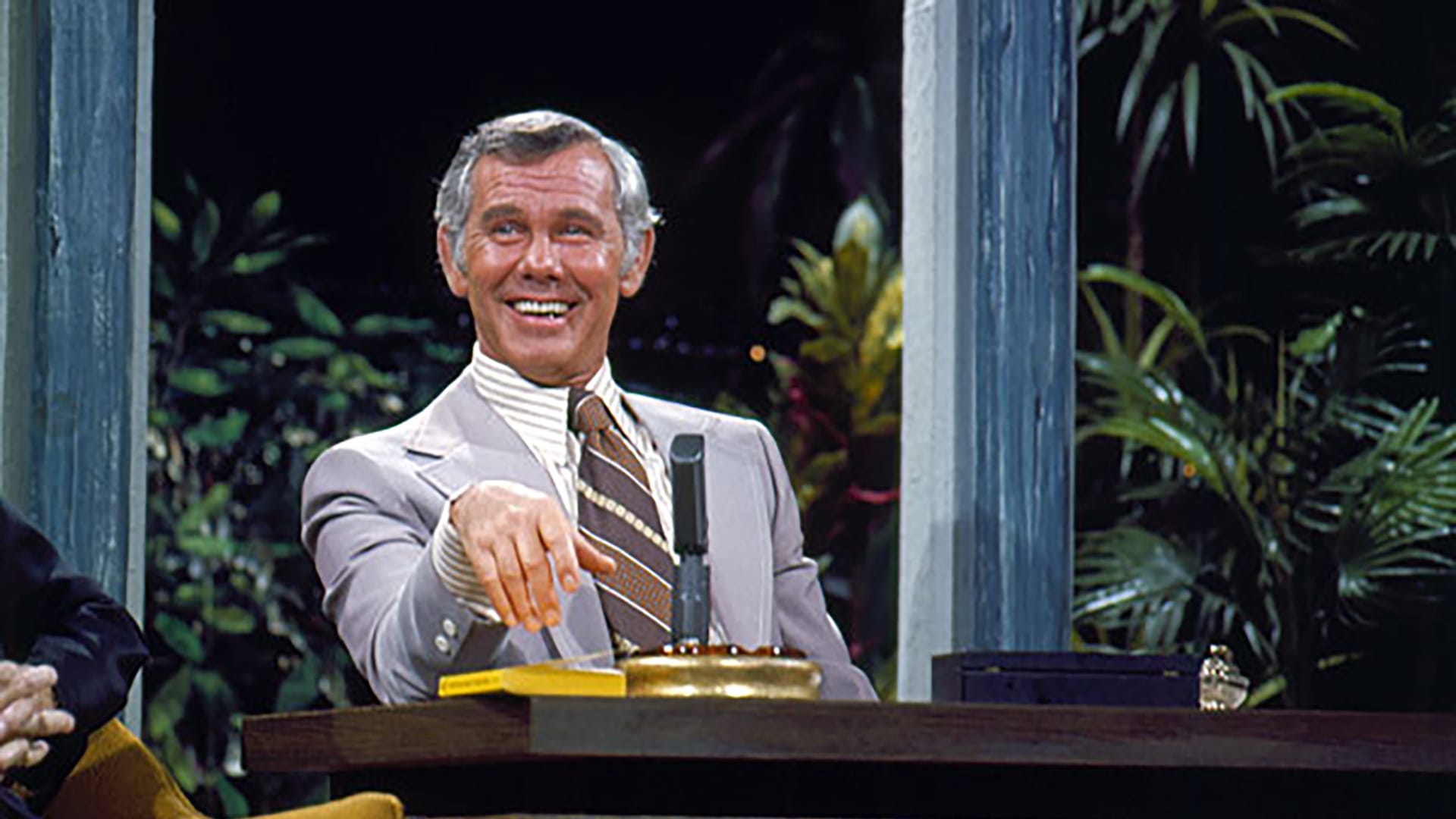
Johnny Carson, known for his unshakable control of the desk, quickly realized he was no longer steering the show. Instead of guiding the conversation, he became a fascinated witness, reacting in disbelief as Williams bounced from one persona to the next with manic precision and fearless abandon.
This was not stand-up comedy refined through repetition, nor was it material carefully polished for television. It was raw improvisation, unfolding live, with no safety net. Williams wasn’t delivering jokes — he was generating worlds, voices, and emotions at a pace that felt almost supernatural.
The audience responded instantly. Laughter came in waves, often overlapping, as people struggled to keep up with the constant reinvention happening before their eyes. Even the band, trained to punctuate punchlines, found themselves momentarily paralyzed by the sheer velocity of what they were witnessing.
Carson himself appeared delighted and stunned in equal measure. He laughed openly, surrendered control without resistance, and allowed the moment to breathe in its own chaos. It was a rare acknowledgment that something historic was unfolding — something no host could or should interrupt.
In the years that followed, comedians repeatedly pointed to this appearance as a turning point. Many said it wasn’t just a breakout moment for Williams, but a redefinition of what was possible on live television. The rules of pacing, structure, and restraint seemed permanently altered in its wake.
Watching the clip decades later, the impact hasn’t dulled. If anything, it feels even more astonishing in contrast to modern comedy’s often measured, cautious rhythms. The risks Williams took — and survived — feel almost unthinkable now.
There is a sense, among fans and performers alike, that something unrepeatable happened that night. Not because others lack talent, but because the conditions aligned perfectly: a fearless performer, a trusting host, and an audience willing to surrender control along with them.
Robin Williams didn’t just make his debut on The Tonight Show. He overwhelmed it, reshaped it, and left behind a moment so electric that it still crackles with life decades later — a reminder of what happens when genius is given space and told, even briefly, to run free.