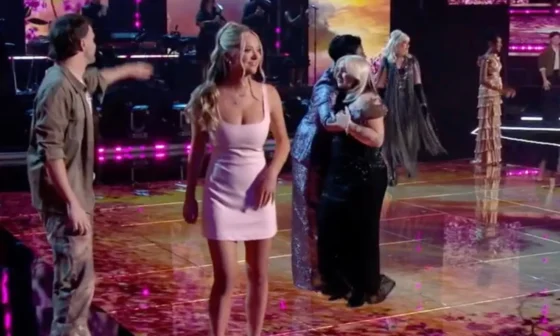
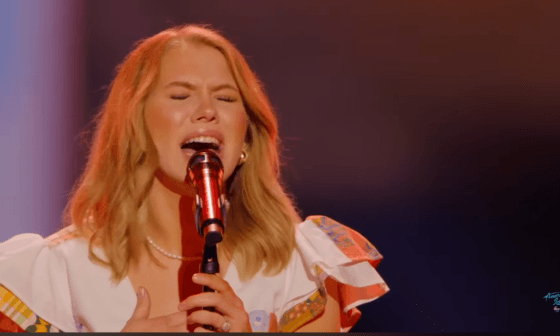
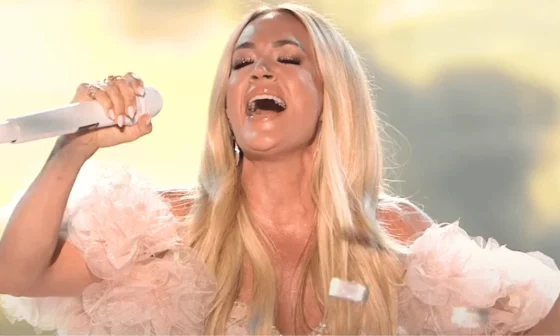
While the NFL delivered its official halftime spectacle during Super Bowl, a quieter but rapidly growing movement was unfolding online. Millions of viewers began switching screens, tuning into an alternative broadcast that would soon rival the main event in attention and conversation.
The stream, branded as the “All-American” alternative halftime, was organized by Turning Point USA and headlined by Kid Rock. What started as a parallel option quickly gained momentum as clips spread across social media.
At the center of the broadcast was a dedication to Charlie Kirk, with the phrase “This one’s for you, Charlie” becoming the unofficial tagline of the night. The line echoed through the performance and was soon repeated widely online, transforming the stream into more than just entertainment.
Visually and thematically, the broadcast leaned hard into Americana imagery — flags, military symbolism, classic rock energy, and defiant messaging. Framed as a patriotic counterpoint to the NFL’s officially programmed halftime, it positioned itself not as background noise, but as a statement.
Supporters of the alternative stream praised it as a moment of unity and representation, saying it reflected values they felt were missing from the main broadcast. Many described it as refreshing, unapologetic, and emotionally resonant.
Critics, however, saw it very differently. They labeled the event provocative and polarizing, arguing that it was designed less as an alternative and more as a cultural rebuttal. Some questioned whether the framing blurred the line between music, politics, and spectacle.
What neither side could dispute were the numbers. Viewership climbed rapidly as the broadcast progressed, with millions watching live or catching clips afterward. In real time, the alternative stream began trending alongside — and in some circles above — the official halftime show.
The sudden surge made one thing clear: this was no longer a niche event. What was intended as an alternative had, for a moment, become a direct challenge for attention, highlighting just how fragmented the national audience has become.
By the end of the night, the conversation wasn’t only about which performance people preferred. It was about why so many felt compelled to choose a different screen altogether — and what that choice says about the current cultural moment.
Whether viewed as a show of unity or a flashpoint of division, the “All-American” halftime broadcast accomplished something undeniable. It pulled millions away from the most-watched television event of the year and turned a musical performance into a mirror reflecting a deeply split audience — one no longer content to watch the same stage.