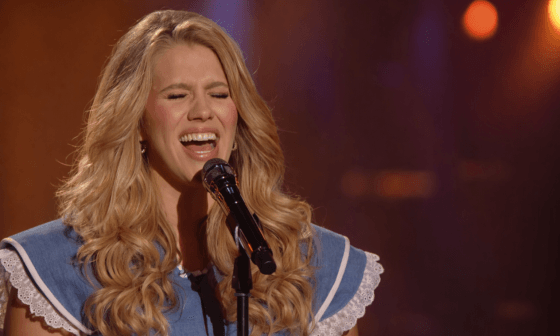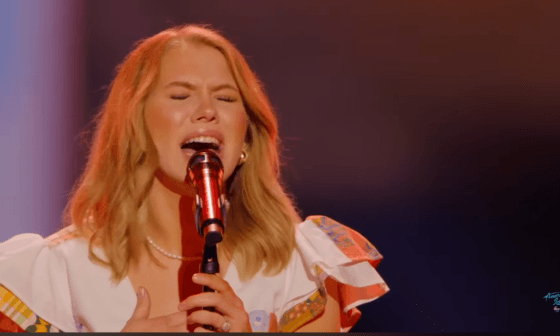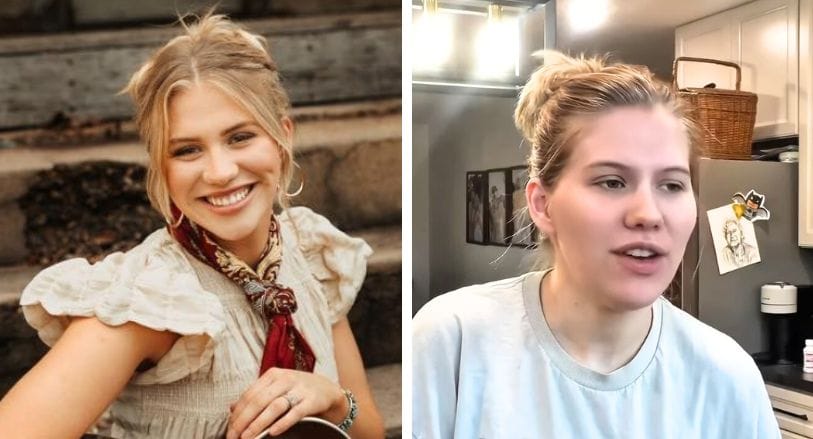
When Hannah Harper stepped onto the stage of American Idol, she wasn’t chasing a spotlight. She was carrying something heavier — a truth that many mothers whisper but rarely say out loud. Before her voice ever soared, it cracked. And in that fracture, something powerful happened.
“I loved my babies — but I didn’t recognize myself anymore.”
The words landed before the music even began. Harper, a mother of three sons, stood alone under the stage lights and began to tell a story born from postpartum depression — not the tidy version, not the inspirational headline, but the quiet unraveling that happens behind closed doors.
Her original song unfolded like a journal entry never meant for television. She sang about exhaustion that didn’t sleep, about smiling while silently drowning, about the guilt of feeling lost in a life you once prayed for. There were no dramatic crescendos at first — just honesty. The kind that tightens a room.
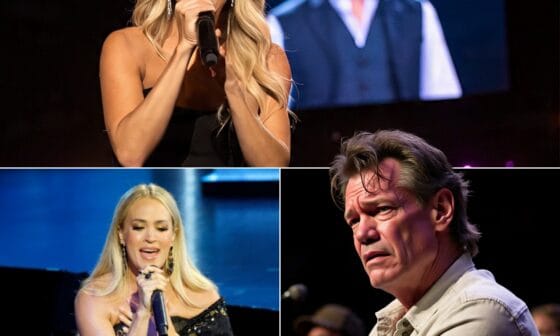
The judges grew visibly still. Carrie Underwood blinked back tears, recognizing something familiar in the lyrics. It wasn’t just artistry they were reacting to — it was recognition. The performance felt less like entertainment and more like someone naming what so many have endured privately.
Online, the reaction was immediate. Mothers clutched their phones. Comments flooded in with two simple words: “That’s me.” Women wrote about crying in the dark, about feeling invisible, about loving their children fiercely while quietly losing pieces of themselves. Harper hadn’t just sung a song. She had opened a door.
As the melody built, her voice steadied. What began fragile grew resolute. The song didn’t deny the pain — it moved through it. Each note carried years of bottled emotion, each lyric a reminder that survival sometimes looks like getting up one more day and opening string cheese for your child even when you feel empty.
When the final note trembled into silence, Hannah closed her eyes and breathed. It wasn’t a performance ending. It was a release. The applause that followed felt different — not loud, but grateful.
Somewhere in the crowd, someone hit “share.” Someone else tagged Dolly Parton, hoping the legend of storytelling might hear the raw country honesty in Harper’s words. But in that moment, the song had already traveled far beyond the stage.
It no longer belonged solely to Hannah.
It became something shared — a lullaby for every mother who cried quietly and kept going anyway. Not polished. Not glamorous. Just real. And sometimes, that’s the most powerful music of all.