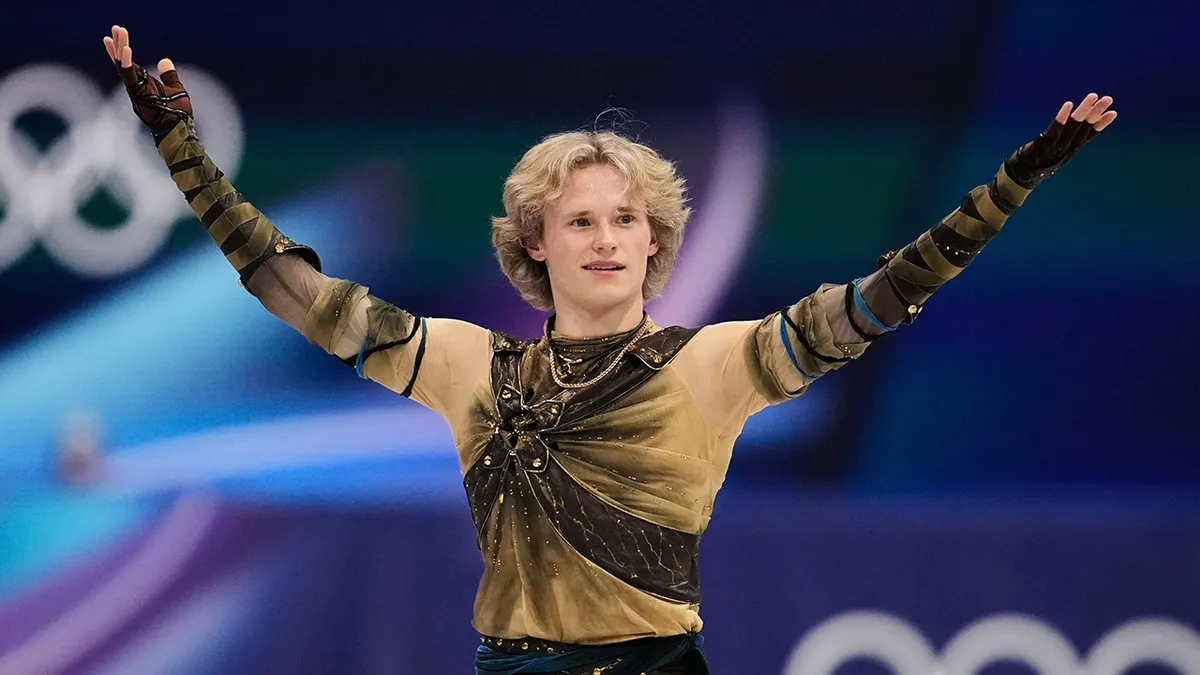
The silence hit before the scores ever appeared. One moment, Ilia Malinin was flying across the Olympic ice with the confidence of a favorite expected to claim gold. The next, everything unraveled in seconds that felt painfully slow to watch.
Entering the men’s singles free skate at the 2026 Winter Olympics, Malinin carried enormous expectations. Known worldwide for his fearless technical arsenal and historic quad jumps, he had built his reputation on pushing the limits of what seemed possible in figure skating.
That same ambition shaped his Olympic strategy. Rather than playing it safe, he chose a high-risk routine packed with difficult elements designed to secure an undeniable victory if executed cleanly.
At first, it seemed to be working. His opening jumps landed with authority, and his speed and control electrified the arena. The energy in the building felt tense but hopeful, as if everyone sensed they were watching a future champion in the making.
Then came the first fall. It wasn’t dramatic — just a sudden slip at the worst possible moment. But in a sport measured by precision, even a single mistake can shift everything instantly.
The second fall hit harder. You could see it in his posture the moment he stood up — the realization settling in that the routine, and perhaps the gold medal, had slipped beyond reach.
When the music ended, Malinin didn’t celebrate or acknowledge the crowd right away. Cameras found him sitting quietly in the kiss-and-cry area, shoulders slightly hunched, eyes fixed downward as he tried to steady his breathing.
The arena buzzed with a mix of sympathy and shock. For fans who had watched him dominate competitions and redefine technical boundaries, this was an unfamiliar and deeply human moment.
Then came the reaction that spread instantly across broadcasts and social media. Speaking softly, almost to himself, Malinin summed up the moment in just three words: “I blew it.”
Those words carried a raw honesty that resonated far beyond the sport. They weren’t defensive or deflective — they were simply the painful acknowledgment of how quickly years of preparation can collide with a single difficult night.
Yet even within the heartbreak, many observers saw something powerful. The moment revealed not just a fallen favorite, but a young athlete confronting disappointment in real time, without hiding the emotion behind it.
For Ilia Malinin, the 2026 Olympic free skate may not be remembered as a victory. But the quiet, human weight of that moment — and the honesty of those three words — may linger just as long in the story of a career still far from finished.