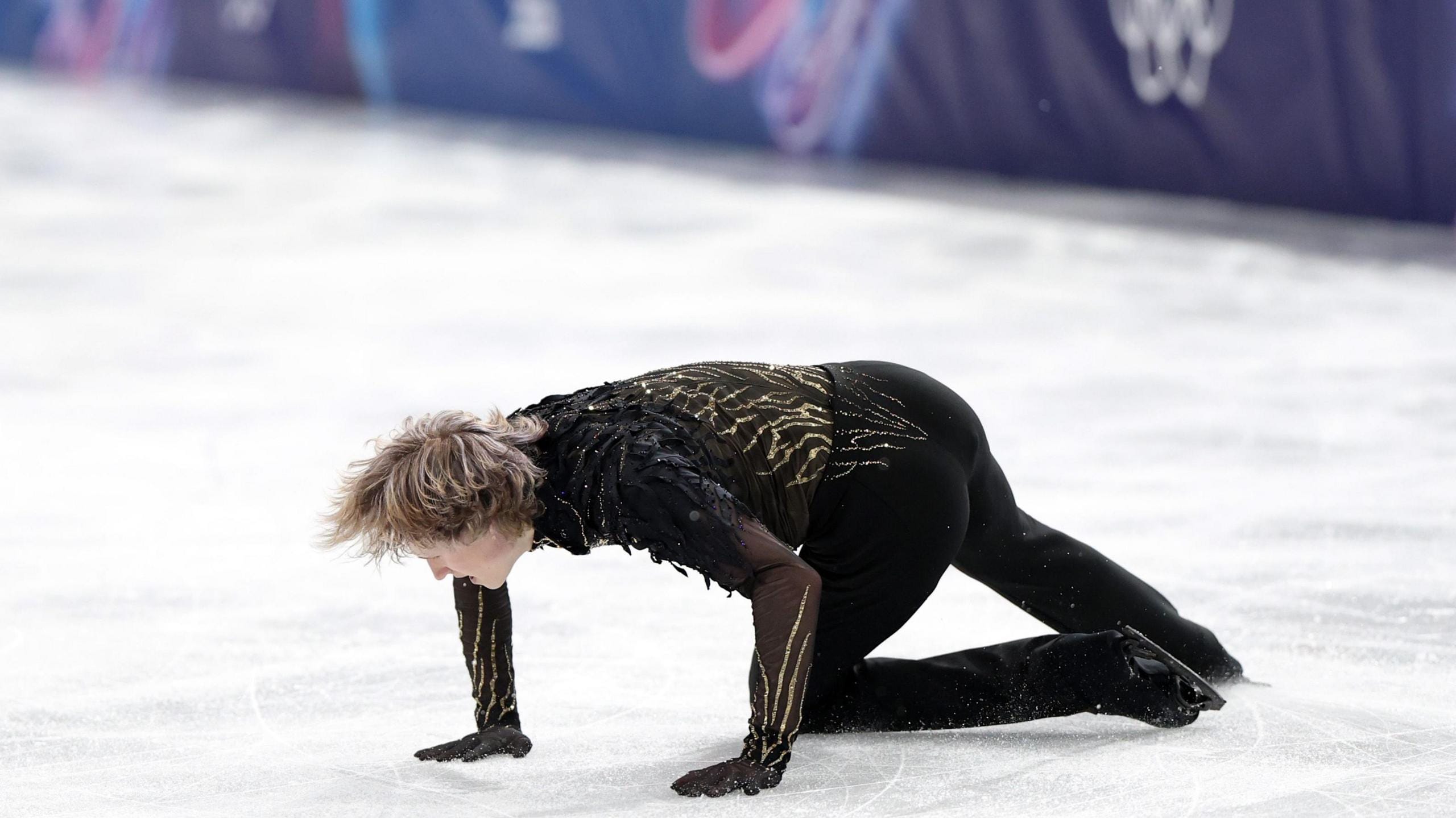
When Ilia Malinin stepped off the Olympic ice after his stunning eighth-place finish, the arena buzzed with disbelief. The “Quad God,” once seen as an overwhelming favorite for gold, had fallen twice during a high-risk routine, watching years of preparation unravel in a matter of seconds.
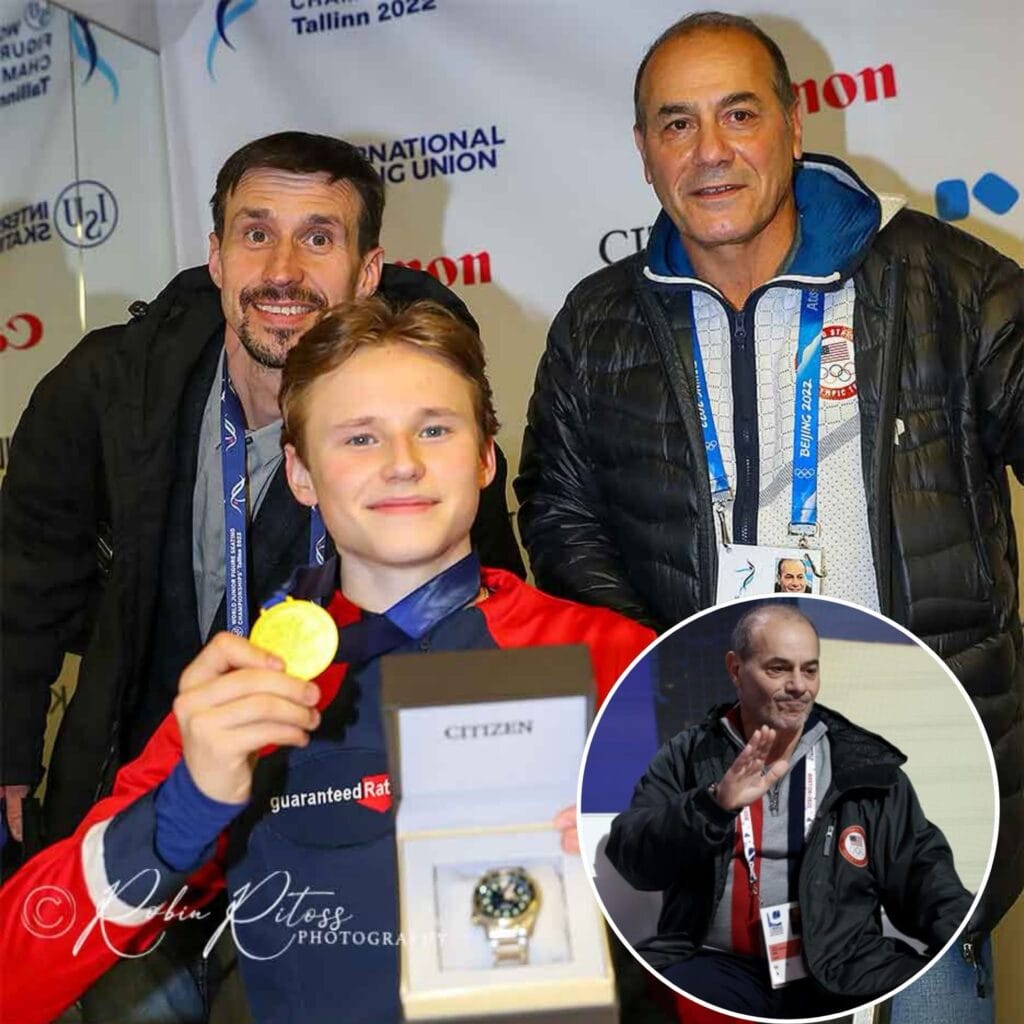
In the days that followed, attention quickly shifted away from the technical mistakes and toward something deeper. His longtime coach, Rafael Arutyunyan, publicly stepped forward — not to criticize his skater, but to take full responsibility for what happened under the Olympic spotlight.
Arutyunyan’s statement was striking in its tone. Rather than focusing on jumps or strategy, he spoke about pressure — the kind that builds quietly over years until it becomes impossible to contain. He admitted the coaching team had failed to shield a young athlete from what he described as “unbearable expectations.”
According to him, Malinin entered the Games carrying more than competitive ambition. He was carrying the weight of being labeled a generational talent, a medal favorite, and a symbol of American skating hopes — all at just 21 years old.
The coach acknowledged that those expectations created a psychological storm that intensified once the Olympic spotlight hit. He suggested that, instead of easing that pressure, the environment around Malinin may have amplified it, leaving little room for emotional recovery when things began to slip.
Malinin himself later shared a message that added a haunting layer to the story. He spoke openly about the online hatred and extreme scrutiny he had faced leading up to the Games, saying the negativity made the possibility of a collapse feel almost “inevitable.”
He described how social media commentary shifted from admiration to harsh judgment the moment he became a favorite, turning every practice session and competition result into a public referendum on his worth.
What made his words resonate most was the vulnerability behind them. Rather than blaming judging, ice conditions, or luck, Malinin focused on the mental toll — the quiet exhaustion of trying to meet impossible expectations while being watched by millions.
Arutyunyan echoed this perspective, emphasizing that elite athletes are often treated as symbols rather than human beings. He said the experience served as a painful reminder that talent alone cannot withstand constant pressure without emotional support and protection.
In the aftermath, many fans and analysts began reframing the result. Instead of seeing the eighth-place finish as a failure, they viewed it as a moment exposing the hidden psychological costs of modern elite sport.
For Malinin, the journey now appears less about redemption and more about recovery — rebuilding confidence, redefining expectations, and reclaiming his identity beyond medals and labels.
As the Olympic spotlight fades, one thing remains clear: behind the jumps, scores, and headlines stands a young athlete who faced the full weight of global expectation — and whose story has sparked a wider conversation about pressure, humanity, and the true cost of greatness.