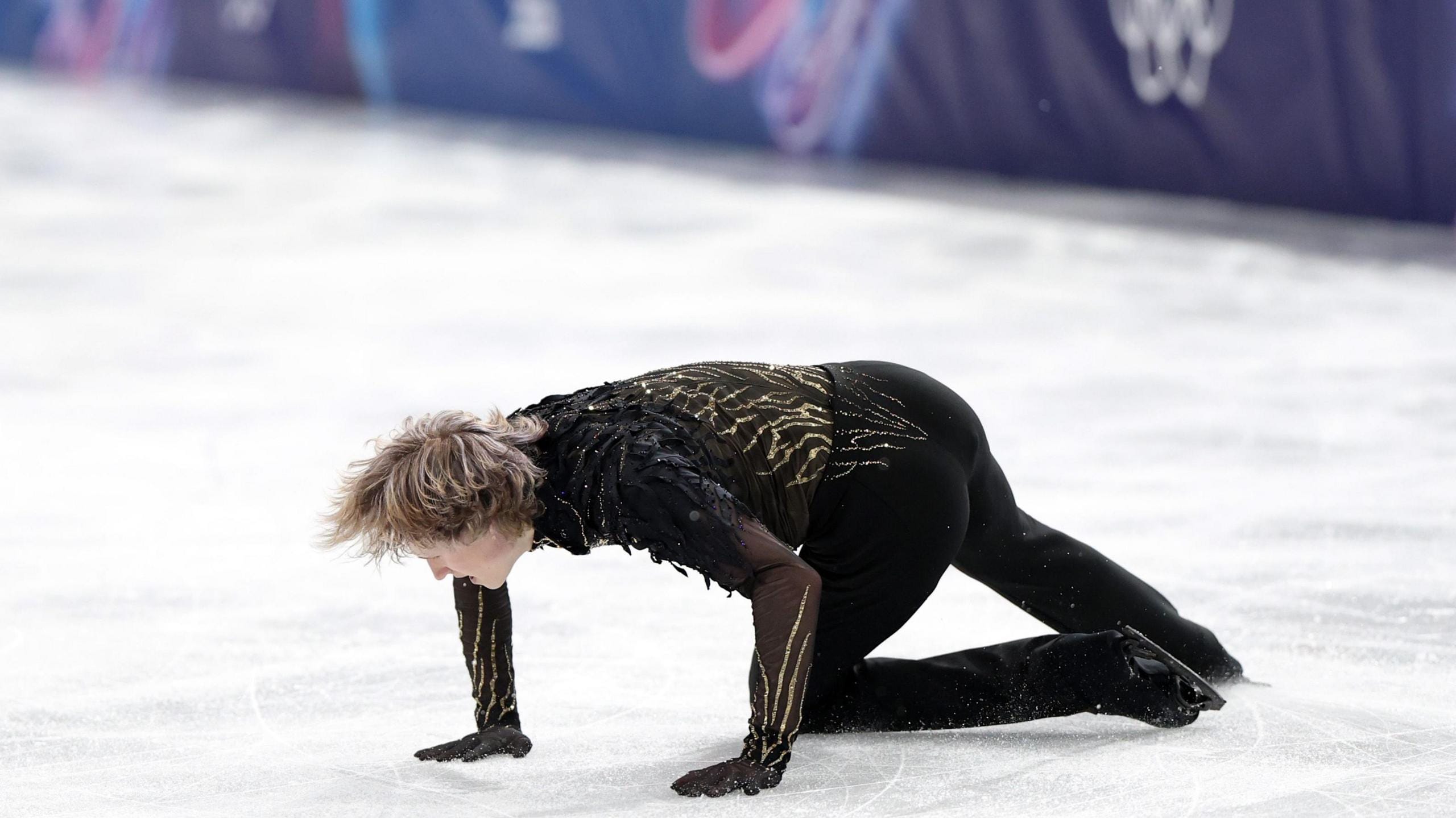
Ilia Malinin arrived in Milan carrying the weight of expectation. Known globally as the “Quad God,” he was widely viewed as a centerpiece of the men’s event. But the 2026 Winter Olympics ended in a way few predicted — an eighth-place finish after a free skate that unraveled under pressure.
In the immediate aftermath, a brief hot-mic moment captured his raw frustration. Soon after, Malinin addressed the performance directly, acknowledging that the pressure and what he described as “traumatic moments” during the skate affected his focus. Rather than deflecting, he took responsibility.
One image, however, reshaped the tone of the night.
Amid the disappointment, Malinin sought out newly crowned gold medalist Mikhail Shaidorov and embraced him. The gesture was unforced and genuine — a sign of respect that stood out in a moment where emotions could have gone another direction.
For many observers, that embrace spoke volumes. It reflected perspective beyond medals and underscored the sportsmanship that often gets overshadowed by results.
Now, attention has already shifted forward. Malinin and his team are reportedly mapping out the next Olympic cycle with renewed focus. Technical refinement, program construction, and mental preparation are expected to be central pillars of the long-term plan toward 2030.
Olympic careers are rarely defined by a single Games. Many champions have experienced setbacks before returning stronger in the next cycle. At 21, Malinin’s competitive window remains wide open.
The Milan result may have altered one chapter — but it has not closed the book. If anything, the road to 2030 appears to have already begun.