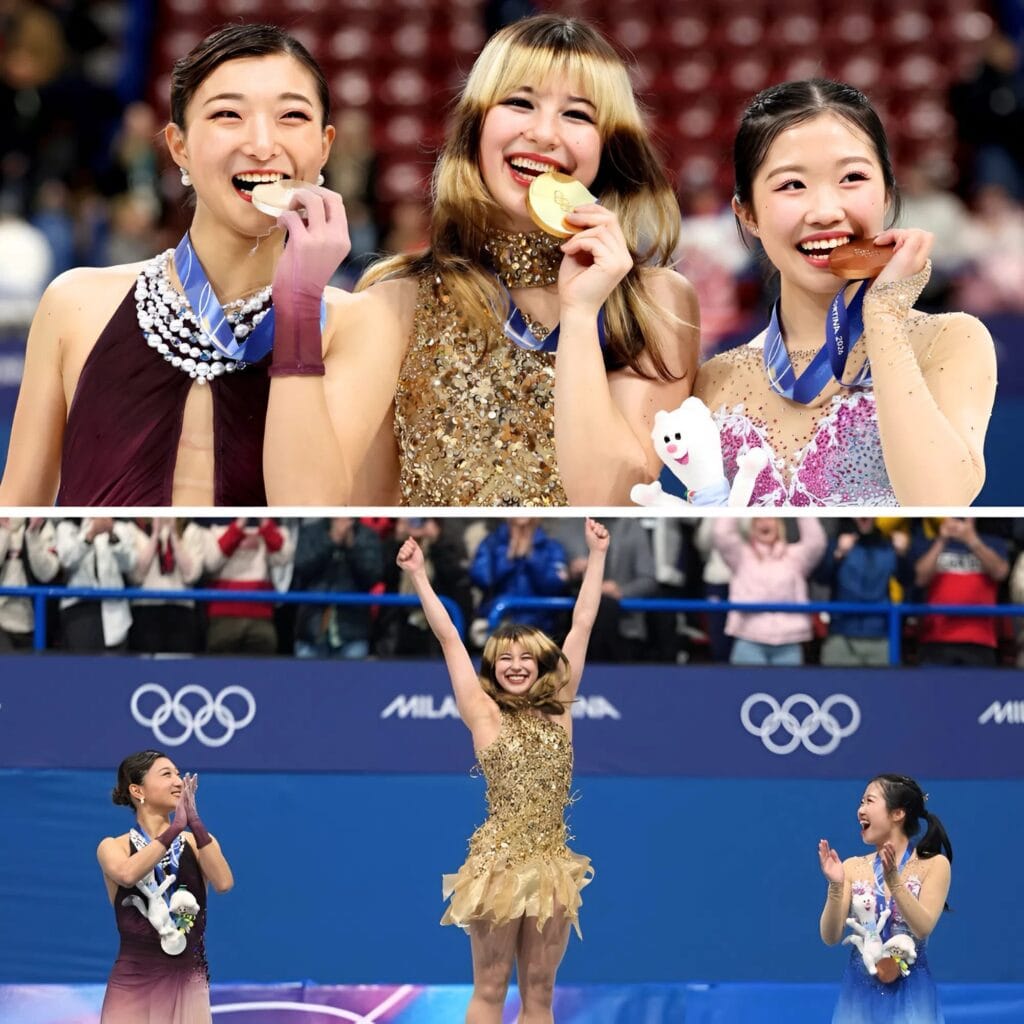
Alysa Liu’s triumphant victory in the women’s individual figure skating event at the Winter Olympic Games should have been a moment of pure celebration for Team USA. Instead, the aftermath quickly became overshadowed by a growing controversy surrounding one judge’s official scoring, igniting fierce debate across the skating world.
When the final marks flashed on the scoreboard, Liu stood at the top of the standings, securing one of the most significant achievements of her career. Her performance had been widely praised for its technical precision, clean execution, and emotional depth — a combination many analysts believed made her a deserving champion.
However, almost immediately after the results were announced, attention shifted away from the gold medal moment and toward the judging panel. One specific judge’s scorecard drew intense scrutiny after fans and experts noticed a significant discrepancy compared to the rest of the panel.
According to score breakdowns circulating online, the judge in question awarded unusually low component scores relative to Liu’s competitors in certain areas, while simultaneously assigning unusually high marks to another skater. The difference was not minor — it was large enough to raise questions about consistency and impartiality.
Within hours, social media platforms erupted with detailed comparisons, slow-motion performance analyses, and heated debates. Some fans accused the judging system of long-standing biases, arguing that the scoring patterns appeared too extreme to be explained by interpretation alone.
Figure skating analysts also weighed in, emphasizing that while variation between judges is normal in a subjective sport, unusually wide gaps can fuel suspicion — especially in high-stakes Olympic competitions where margins often decide medals.
Officials quickly responded by reaffirming that all scores were reviewed through standard protocols and complied with International Skating Union regulations. They stressed that judging differences are inherent in a sport evaluated through both technical and artistic criteria.
Still, the reassurance did little to quiet the controversy. Critics pointed out that transparency issues in figure skating scoring have been a recurring source of tension for decades, with past Olympic events often sparking similar debates about fairness and accountability.
Amid the storm, Alysa Liu herself remained focused on gratitude rather than controversy. In post-event interviews, she emphasized her pride in the performance and expressed appreciation for the support she received, carefully avoiding direct comment on the judging dispute.
For many observers, the situation reflects a broader challenge within figure skating — balancing artistic subjectivity with the need for public trust in results. Each Olympic cycle seems to reopen that conversation, reminding fans how fragile confidence in scoring can be.
As calls grow for further review and clearer judging transparency, one reality stands out: Alysa Liu’s victory remains official and historic, but the debate surrounding the scoring controversy is likely to linger long after the Olympic ice has melted.