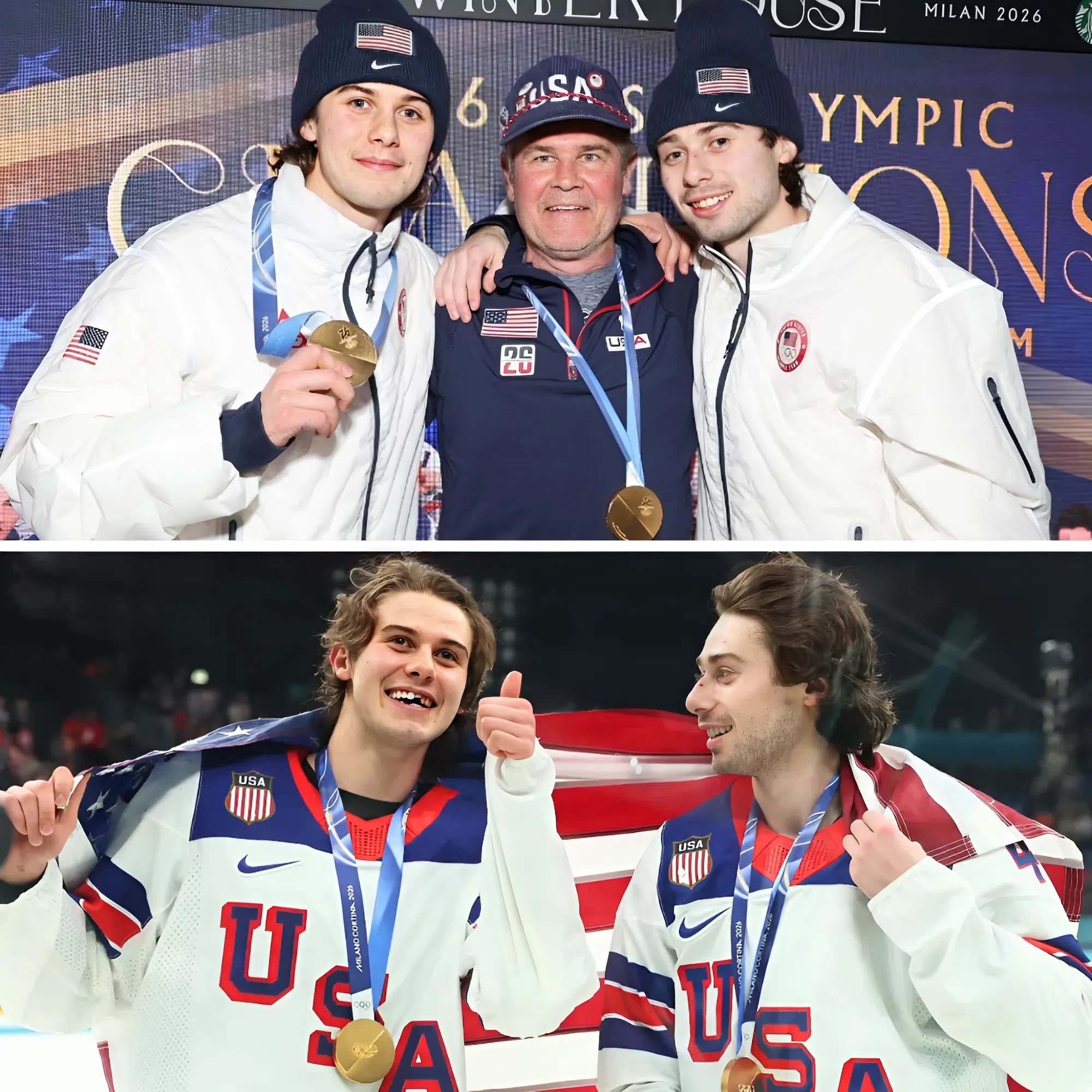
Jack Hughes had imagined that moment for as long as he could remember. From the first time he gripped a hockey stick as a child, he pictured wearing the red, white, and blue in a game that mattered most. At the Milano Cortina Winter Olympics, that dream became reality in the most dramatic way possible.
The gold medal game against Canada carried the weight of history. Few rivalries in sports match the intensity of USA versus Canada in men’s hockey. Every shift felt urgent, every collision amplified by decades of competition between two nations that measure themselves against each other on the ice.
As regulation ended without a winner, overtime began with nerves stretched to their limit. One mistake would end it. One shot would define it. The tension inside the arena was thick, mirrored by millions watching at home.
Then came the defining sequence.
Hughes found space in transition, carried the puck with confidence, and released a shot that cut cleanly through traffic. In a split second, it was over. The puck hit the back of the net, and the silence shattered into an eruption of sound.
Team USA had claimed Olympic gold.
For Hughes, the goal represented more than a championship moment. His path to that shot had been marked by injuries, setbacks, and the heavy burden of expectation. As a highly touted star, he had experienced both praise and criticism, often under an unforgiving spotlight.
Instead of allowing pressure to fracture his confidence, Hughes used it as fuel. Teammates have spoken about his focus throughout the tournament — a calm determination that never wavered, even in the highest-stakes moments.
After the celebration spilled across the ice, Hughes addressed the significance of the victory with visible emotion. He spoke about pride, about representing his country, and about the honor of contributing to something larger than himself.
In the locker room, the mood blended joy and reflection. Veterans and young players alike understood they had authored a chapter that would be replayed for generations. The medal symbolized achievement, but the journey behind it carried equal meaning.
When Hughes later reflected on the overtime winner, he returned to the simplest truth: it was a childhood dream fulfilled. In a rivalry defined by intensity and history, he had delivered a moment that belonged to an entire nation — and cemented his place in Olympic lore.