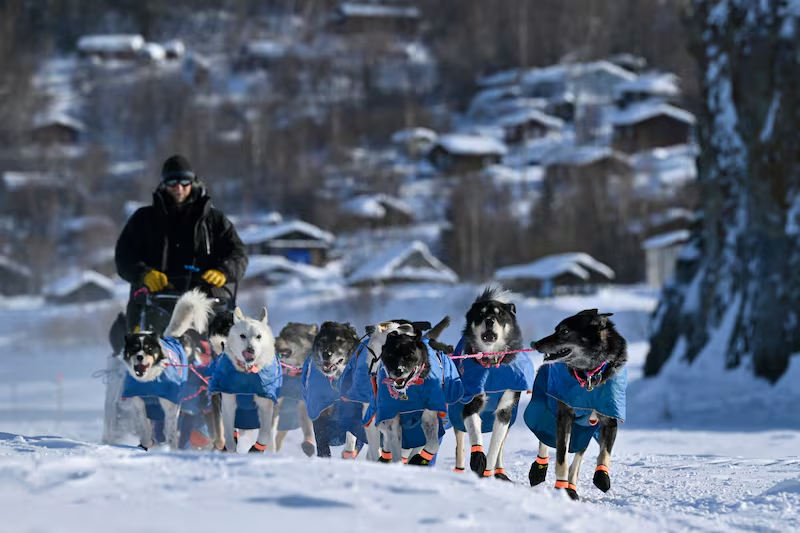
The Iditarod Trail Sled Dog Race isn’t just a competition — it’s one of the most extreme endurance events on Earth, filled with stories and realities that sound almost unbelievable until you realize they’re completely true.
Stretching roughly 1,000 miles across Alaska, the race pushes mushers and their dog teams through some of the harshest conditions imaginable, where temperatures can drop below -40°C and winds can erase the trail in minutes.
One of the most surprising facts is that mushers don’t sleep the way you’d expect. Many survive on just a few hours of rest per day, often grabbing short naps on the sled while their dogs continue moving through the darkness.
The dogs themselves are nothing short of extraordinary. These elite sled dogs can run over 100 miles in a single day, fueled by high-fat diets that would seem impossible for most animals but are essential for maintaining their energy in extreme cold.
Another fascinating detail is the deep bond between musher and team. Mushers rely on their lead dogs not just for speed, but for decision-making — especially in whiteout conditions where the human can’t even see the trail ahead.
Then there are the checkpoints, scattered across remote parts of Alaska. Some are so isolated they’re accessible only by snowmobile or small aircraft, turning each stop into a lifeline in the middle of nowhere.
One of the most intense challenges comes from the terrain itself. Mushers must cross frozen rivers, dense जंगल trails, and even sections of sea ice, where conditions can change rapidly and unpredictably.
There’s also a strategic side that many don’t realize. Mushers carefully plan when to rest, when to push forward, and how to manage their dogs’ energy — because one wrong decision can cost them the race.
Perhaps one of the most unbelievable truths is how quiet parts of the journey can be. With no crowds, no noise, and nothing but wind and snow, mushers often spend hours or even days in complete isolation.
And yet, despite the danger and exhaustion, many return year after year.
Because the Iditarod isn’t just about winning.
It’s about endurance, trust, and facing a challenge so extreme that simply finishing becomes a victory in itself.