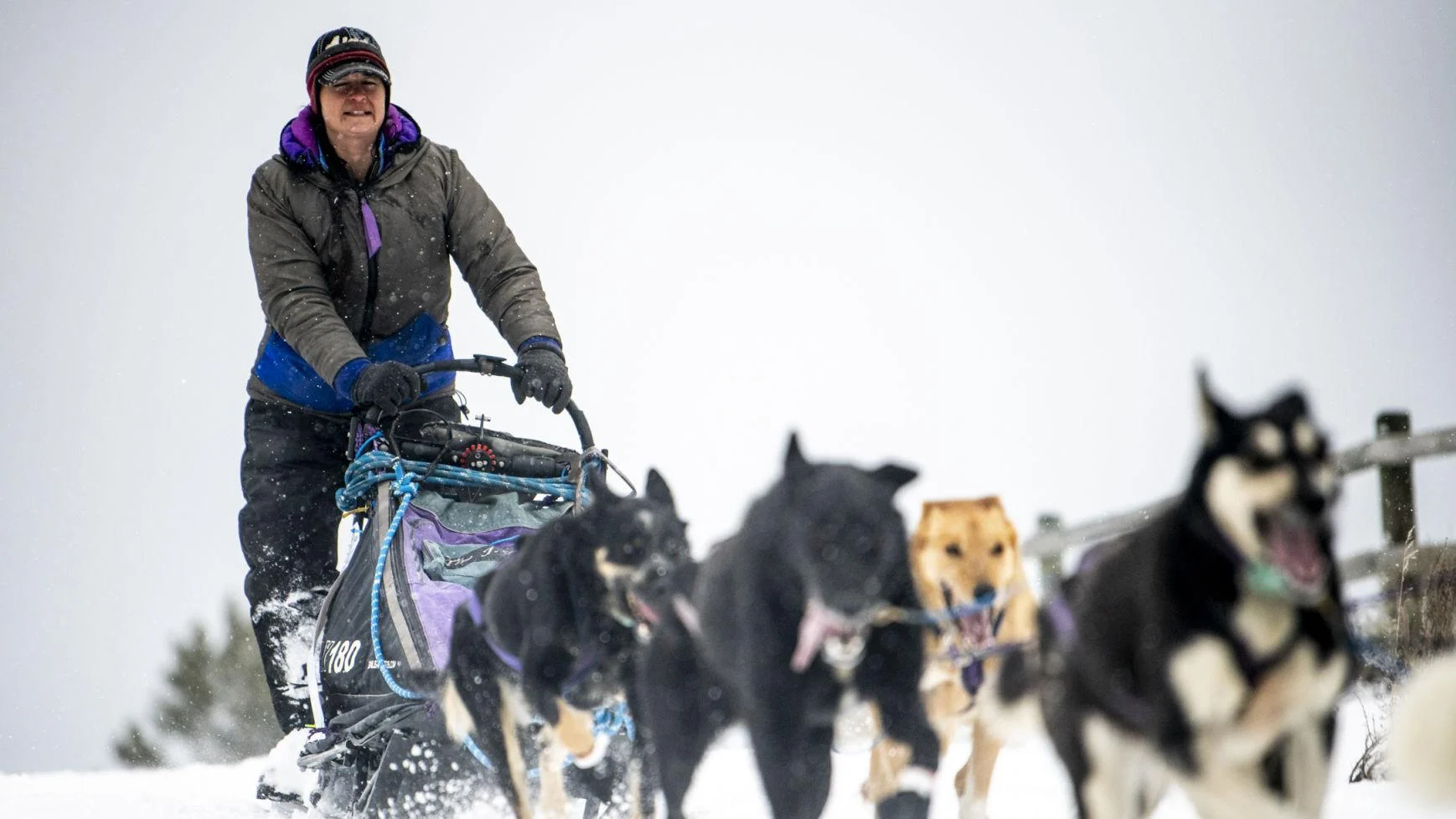
After years of running some of the toughest miles on Earth, Iditarod sled dogs don’t simply fade away — they move into a different phase of life that’s often just as meaningful.
Retirement for these dogs usually comes when they reach an age where racing at full intensity is no longer ideal, or when their bodies begin to show signs of wear from the demanding sport.
But stepping away from racing doesn’t mean slowing down completely.
Most retired sled dogs remain highly active. They still love to run, play, and be part of a team environment, even if the pace is more relaxed.
Many stay with their original mushers, continuing to live in the kennels where they were raised and trained.
In these settings, they often take on new roles — helping to train younger dogs or simply enjoying a less demanding routine.
Some retired dogs are adopted into homes, especially by people familiar with working breeds and their high energy levels.
These dogs can make loyal and affectionate companions, though they still need plenty of exercise and mental stimulation.
Others become part of educational programs, where they help introduce people to the history and culture of sled dog racing.
What’s important to understand is that these dogs are not just athletes — they are valued members of a team.
Mushers form strong bonds with them over years of training and racing, and that connection doesn’t disappear after retirement.
In the end, retirement is less of an ending and more of a transition — from intense competition to a life that still celebrates their spirit, strength, and love for the trail.