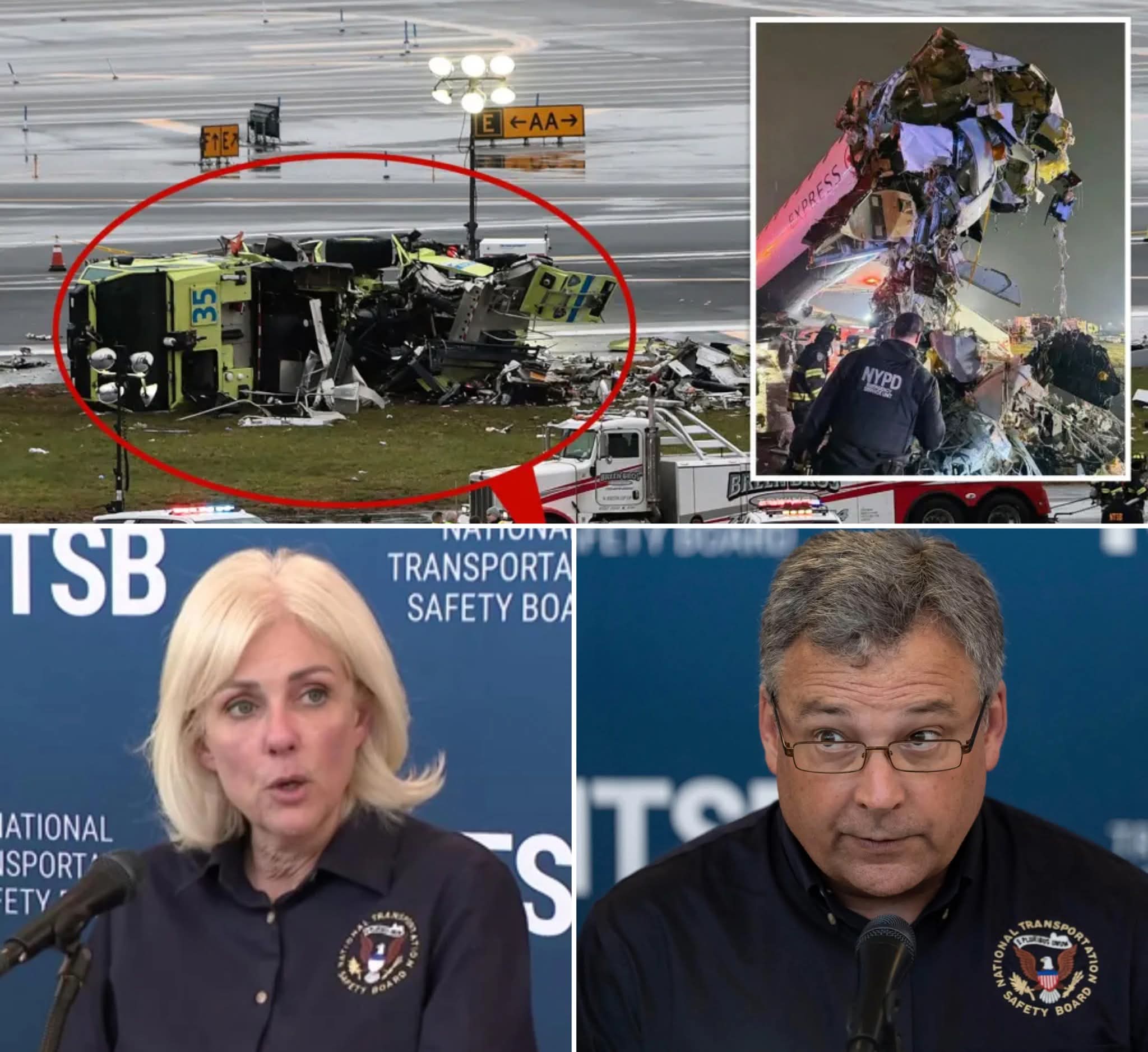
The National Transportation Safety Board has released a detailed timeline outlining the final moments before the reported Air Canada runway incident at LaGuardia Airport, offering a closer look at how a routine landing sequence may have escalated into a tragic and complex situation within a very short span of time.
According to the timeline, the aircraft was in communication with air traffic control as it approached the runway, following standard procedures that are designed to ensure safe coordination between pilots and ground operations during one of the most critical phases of flight.
As the plane moved closer to landing, activity on the ground continued simultaneously, adding layers of complexity that required precise timing and clear communication to avoid any potential conflict.
One of the key points raised in the discussion surrounding the timeline involves the use of transponders, with the statement “Should they have transponders? Yeah, they should,” highlighting questions about whether all ground vehicles were properly equipped to be visible within the airport’s tracking systems.
Transponders play a crucial role in aviation safety by allowing controllers to accurately track both aircraft and ground vehicles, especially in busy airport environments where multiple movements occur at once.
The absence or malfunction of such systems could make it more difficult to maintain full situational awareness, particularly when visibility or timing becomes a factor.
The sequence described in the timeline suggests that multiple elements were unfolding at the same time, requiring coordinated responses from both the flight crew and ground control.
Experts often emphasize that incidents like these are rarely caused by a single factor, but rather by a chain of events that align in a way that creates risk.
The newly revealed details are therefore being closely examined to understand how each step contributed to the overall outcome and whether there were missed opportunities to prevent escalation.
At the same time, it is important to note that investigations of this nature are ongoing, and early timelines are typically subject to further analysis and refinement as more data becomes available.
Authorities will continue to review communications, technical systems, and operational procedures to determine exactly what happened and why.
The release of this information has already sparked discussions about safety protocols, equipment requirements, and coordination between different areas of airport operations.
As more findings are confirmed, they are expected to provide clearer insight into the incident and help guide improvements aimed at preventing similar situations in the future.
In the end, the focus remains on understanding the full sequence of events and ensuring that any lessons learned contribute to enhancing aviation safety moving forward.