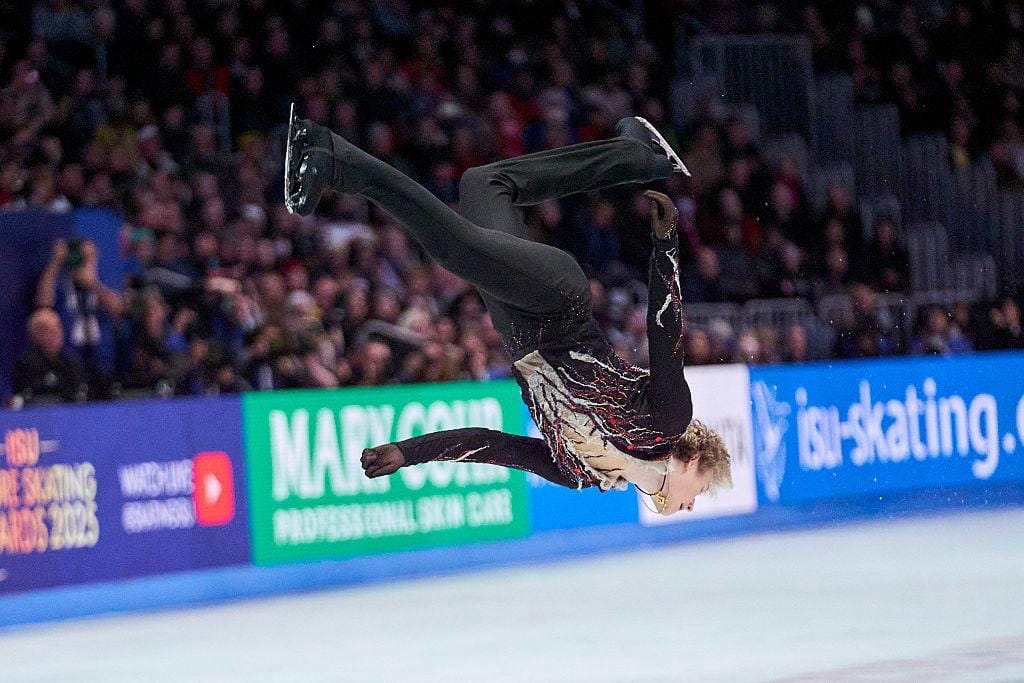
When Ilia Malinin secured his third consecutive title at the 2026 World Figure Skating Championships, the moment should have felt like pure dominance. Another gold. Another statement. Another chapter in a rapidly growing legacy.
But what stood out wasn’t just the victory.
It was what he said right after.
Instead of focusing on scores, records, or history, Malinin described the entire experience as a “mental reset.” A phrase that felt simple—but carried the weight of everything he had gone through just weeks earlier.
Because this win wasn’t just about skating.
It was about recovery.
After the intense pressure of the 2026 Winter Olympics—where expectations, attention, and pressure seemed to collide—Malinin entered Worlds with a different mindset. Not to prove something to everyone else… but to find clarity within himself.
And it showed.
From the short program to the free skate, there was a visible shift. The tension that once surrounded his performances was gone. In its place was control, confidence, and something even more noticeable—freedom.
He didn’t just execute.
He flowed.
Landing high-difficulty elements, including his signature quadruple jumps, Malinin delivered programs that felt both technically brilliant and emotionally balanced. It wasn’t just about pushing limits—it was about owning the moment.
And when the final scores came in, confirming his third straight world title, the reaction said everything.
There was relief.
There was quiet satisfaction.
But more than anything, there was lightness.
For the first time in a while, he didn’t look like a skater carrying expectations. He looked like one who had let them go.
That’s what fans are responding to.
Because while the title itself is historic—placing him among the elite in the sport—it’s the way he won that’s changing the conversation. This wasn’t a comeback fueled by pressure. It was a performance built on release.
And that changes everything moving forward.
A skater who performs under pressure is dangerous.
But a skater who performs without it…
Is something else entirely.
Malinin’s own words reflect that shift. Calling Worlds a reset suggests that this version of him is only the beginning—not the peak. That what we saw in Prague wasn’t just redemption…
It was transformation.
And now, with three consecutive world titles behind him, the focus begins to shift again.
Not to what went wrong before.
But to what’s possible next.
Because if this is what Ilia Malinin looks like when he’s unburdened…
The rest of the field may be chasing something far more difficult than a title.