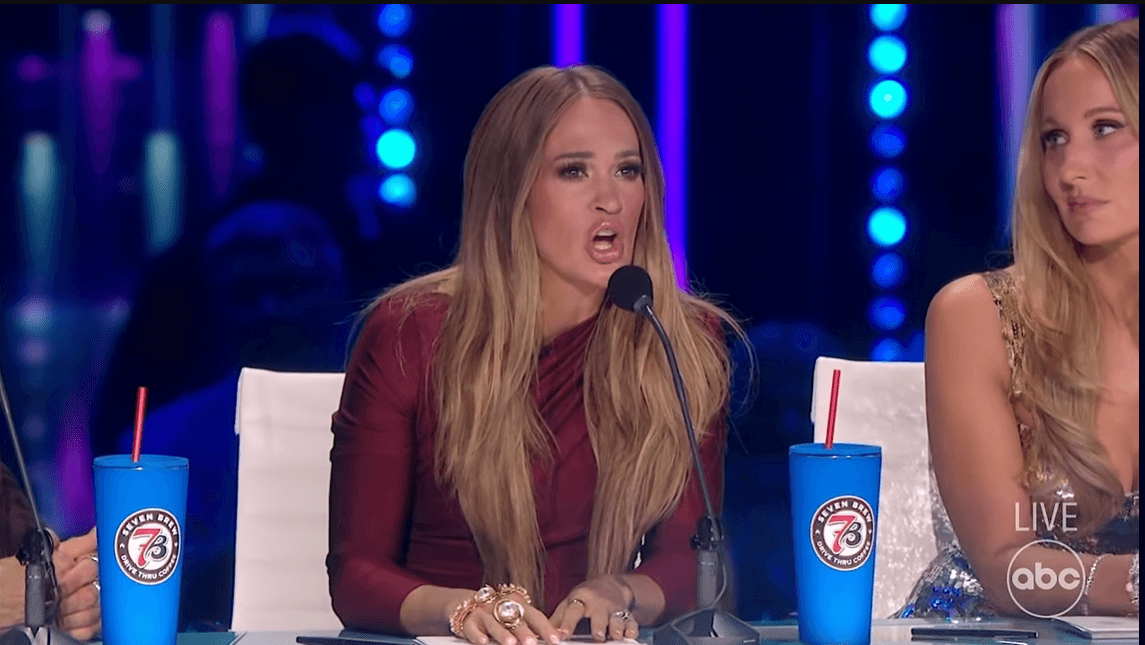
Carrie Underwood’s return to American Idol has placed her in a very different role than the one that first made her a household name.
After rising from contestant to superstar, Carrie now sits on the other side of the table—offering guidance, critique, and difficult decisions that directly impact hopeful singers chasing the same dream she once pursued.
According to comments highlighted by Lionel Richie, Carrie’s greatest challenge this season may not have been recognizing talent at all.
Instead, the hardest part appears to be something far more emotional: learning how to say “no.”
For someone who understands firsthand what the Idol stage can mean to contestants, that shift carries a unique kind of pressure.
Carrie knows what it feels like to stand in front of judges with everything on the line, which may make delivering disappointing feedback especially difficult.
That emotional balancing act—supporting artists while also making honest judgments—can be one of the most complex transitions for any former contestant turned mentor.
Viewers may now be recognizing how that internal struggle has shaped Carrie’s judging style, from moments of visible empathy to reactions that seem deeply personal.
Rather than simply evaluating performances from a distance, Carrie’s perspective appears rooted in lived experience, which may explain why certain decisions seem to affect her more profoundly.
As the season continues, this emotional evolution is offering fans a new understanding of Carrie Underwood—not just as a successful artist, but as someone navigating the difficult responsibility of helping shape other people’s dreams, even when it means making the toughest call of all.