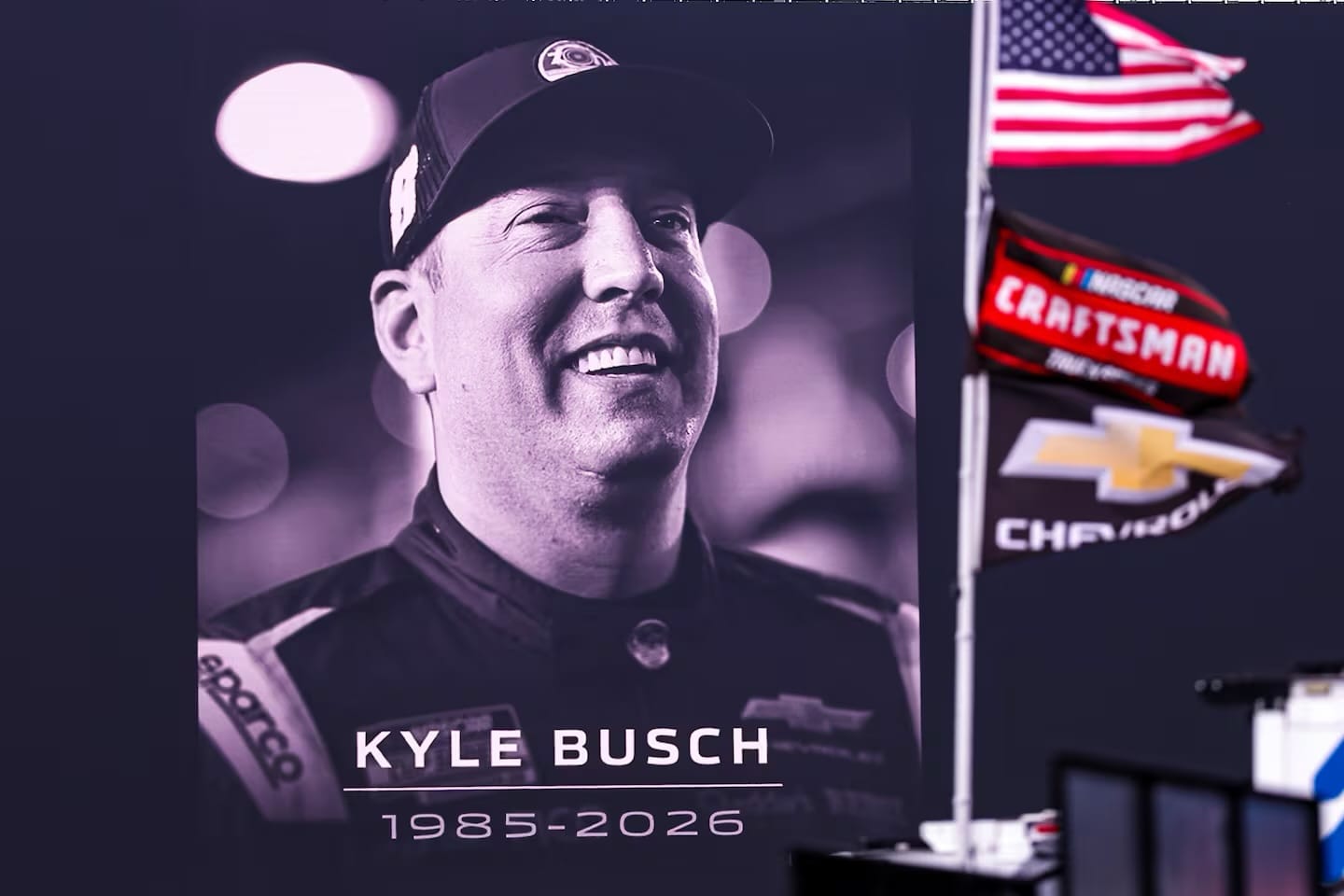
The sudden death of NASCAR legend Kyle Busch continues to leave fans searching for answers. Just days before he was expected to compete in the Coca-Cola 600, the two-time Cup Series champion died at age 41 after what his family later confirmed was severe pneumonia that progressed into sepsis. Now, medical experts are speaking publicly about how such a devastating outcome could happen to someone who appeared healthy, active, and was still competing at the highest level of motorsports.
According to Dr. Ryan Maves, chief of critical care medicine at Wake Forest University, Busch’s death is considered extraordinarily rare. For healthy adults in their early 40s who develop pneumonia, the risk of death is extremely low, making Busch’s case highly unusual. Medical experts say that while pneumonia is common, the progression that occurred in Busch’s case is something physicians do not often see in otherwise healthy individuals.
Several doctors now believe Busch may have been dealing with what is commonly called “walking pneumonia,” a form of pneumonia that allows people to remain active and functional while the infection quietly worsens. According to sports medicine physician Dr. Jesse Morse, this type of illness can linger for weeks, causing symptoms that many people dismiss as a stubborn cold or sinus infection. In Busch’s case, he reportedly continued racing, attending public events, and maintaining his schedule despite persistent symptoms.
Warning signs had appeared earlier in the month. During a race weekend at Watkins Glen, Busch was heard over team radio requesting medical assistance afterward and saying he would need a “shot.” Days later, he acknowledged in an interview that he was still not feeling well and described having a substantial cough. Despite those symptoms, he continued competing and even won a Truck Series race shortly before his death.

Everything changed on May 20 when a 911 call was placed from the General Motors Charlotte Technical Center in Concord, North Carolina. The caller reported that Busch was experiencing shortness of breath, a high fever, and was coughing up blood. Emergency responders were told he had collapsed and was lying on a bathroom floor but remained conscious at the time. Doctors now say those symptoms were major warning signs that pneumonia had advanced into a medical emergency.
According to medical records referenced in reports, Busch had been battling bacterial pneumonia for days or possibly weeks before the infection triggered sepsis. Sepsis occurs when the body’s immune response becomes overwhelming and begins damaging its own organs. In Busch’s case, doctors say the infection set off a chain reaction that rapidly spread throughout his body.
Medical experts describe the progression as particularly devastating. After sepsis developed, Busch reportedly suffered disseminated intravascular coagulation (DIC), a condition in which abnormal blood clotting occurs throughout the body. That complication then led to hemorrhagic shock, resulting in severe blood loss and multiple organ failure. Doctors say the entire cascade unfolded within a remarkably short period of time.
Several physicians have suggested that earlier intervention may have improved the outcome. Dr. Jesse Morse argued that more extensive testing, imaging, and intravenous antibiotics might have identified the severity of the infection before it reached a critical stage. However, doctors also caution that medicine is rarely predictable and that even serious infections can sometimes progress rapidly despite treatment.
The tragedy has also sparked renewed awareness about sepsis, a condition many people know little about despite its danger. Experts stress that symptoms such as high fever, worsening cough, confusion, extreme fatigue, shortness of breath, and coughing up blood should never be ignored. Once sepsis begins, patients can deteriorate very quickly, making immediate medical attention critical.
As the NASCAR community continues mourning one of its most successful and recognizable champions, many fans say the most shocking part remains how quickly everything happened. Just days earlier, Kyle Busch was still racing, winning, and planning future events. Today, doctors hope that understanding the warning signs of pneumonia and sepsis may help others avoid a similar tragedy. For many supporters, Busch’s story has become both a heartbreaking loss and a powerful reminder that even seemingly minor illnesses should never be taken lightly.