A witness who was waiting near 21-year-old Maria Eduarda Rodrigues de Freitas before her fatal rope jump has now become an important voice in the investigation, describing the confusion that unfolded at the Skeleton Bridge in Limeira, Brazil.
Maria Eduarda died on June 13 after being launched from the bridge during a rope-jumping activity without the main safety rope attached. Authorities say the fall was about 131 feet, and three instructors have since been charged in connection with her death.
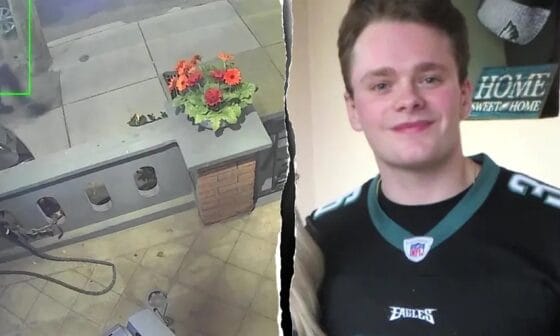
The witness, identified in reports as Rafael Goulart, was reportedly next in line for the jump when the tragedy happened. His account has drawn attention because he was close enough to see the workers, the equipment, and the immediate reaction after people realized something had gone wrong.
According to reports, Maria Eduarda had paid for the jump and also paid extra to record the experience with a GoPro-style or 360-degree camera. That camera has now become one of the biggest unanswered questions in the case because police have not recovered it.
Goulart reportedly told authorities that he saw someone connected to the operation remove the camera from Maria Eduarda after the fall. Investigators are now trying to determine what happened to the device and whether it captured key moments before she was released.
That missing camera could matter because the central question remains painfully simple: how did a group running a high-risk jump fail to attach the rope that was supposed to protect her?
Reports say footage from the scene showed instructors lifting and launching Maria Eduarda while the safety rope remained unused on the platform. People nearby could reportedly be heard reacting when they realized the rope was not connected.
The activity was described as a rope-jump style launch rather than a traditional bungee jump. In this version, participants can be released in an “airplane” position by instructors, which made the workers’ role in the final safety check even more important.
The three charged instructors have been identified as Luis Felipe Feliciano Egoroff, 32, Vitor de Freitas Gonçalves, 27, and Maicon Fernandes Cintra, 42. Authorities say they are accused of homicide with dolus eventualis, meaning prosecutors believe they accepted a serious risk.
During questioning, the men reportedly said they could not remember who was supposed to attach the rope or who should have completed the final check. That explanation has caused anger because it leaves no clear answer for how such a basic safety step was missed.
Goulart’s account also added concern about what happened after the fall. He reportedly said some employees appeared shaken, while others began packing equipment as the scene turned chaotic.
Reports also say two of the instructors tried to leave the area after the incident and were later found in a nearby wooded area with the help of a military helicopter. That alleged escape has become another focus for investigators.
Police have also said the rope-jumping operation was unauthorized, adding more pressure to questions about who organized the event, who inspected the equipment, and whether any proper safety system was in place before people were allowed to jump.
Safety experts cited in reports have pointed to multiple failures, including the absence of standard backup checks that should exist before anyone is released from a bridge. For many following the case, the issue is no longer only one missed rope, but whether the entire operation was dangerously loose.
As Maria Eduarda’s family mourns, the witness testimony has become part of a growing list of unanswered questions: who was responsible for the rope, why the final check failed, why the camera disappeared, and why workers allegedly tried to leave after the tragedy. Until those answers are clear, the case remains centered on one heartbreaking truth — a young woman stepped into an adventure expecting safety, but the people responsible for protecting her allegedly failed at the most important moment.