
Brazil is facing another outdoor tragedy just one day after the fatal rope-jumping accident that killed 21-year-old Maria Eduarda Rodrigues de Freitas in São Paulo state. This time, the victim was 59-year-old Rosemary Suzart Garcia, who died after falling from a steep hiking area in Maricá, near Rio de Janeiro.
Rosemary was hiking with a large group at Grutas do Spar on Sunday when the accident happened. Reports say she moved onto a short path near an overlook during the outing, moments before losing her balance.
According to witness accounts, Rosemary had been applying insect repellent when she slipped. The movement reportedly happened so quickly that those nearby had almost no time to react.
One witness, Giovani Maximino, told local media that a guide tried to reach for her as she began to fall. The guide reportedly came close to being pulled over as well, but managed to stop himself by grabbing onto a root in the area.
Maximino described the fall as extremely fast and said the height was around 100 feet. His account has become one of the main details now being discussed as investigators look into exactly how the accident unfolded.
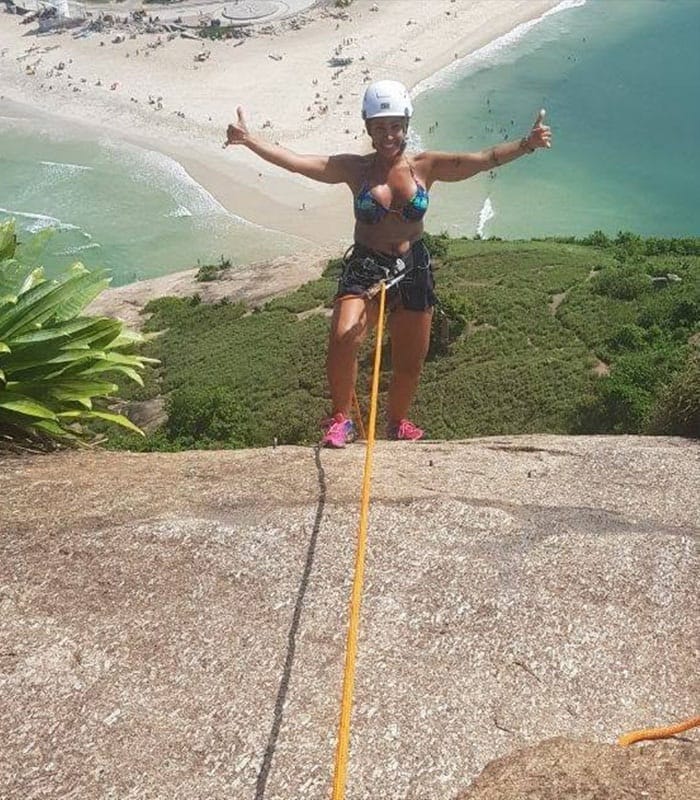
What has made the case even more unsettling is that Rosemary was reportedly wearing safety equipment at the time. Witnesses said she had protective gear including gloves and a helmet, yet the fall still happened.
That detail has raised questions about what kind of safety system was in place on the trail. While protective gear may reduce certain risks, it does not automatically prevent a fall from a cliffside path or overlook.
Firefighters later recovered Rosemary’s body from the area. Authorities have said the fatal fall remains under investigation as officials work to determine whether the accident involved a simple slip, a lack of barriers, poor oversight, or other safety failures.
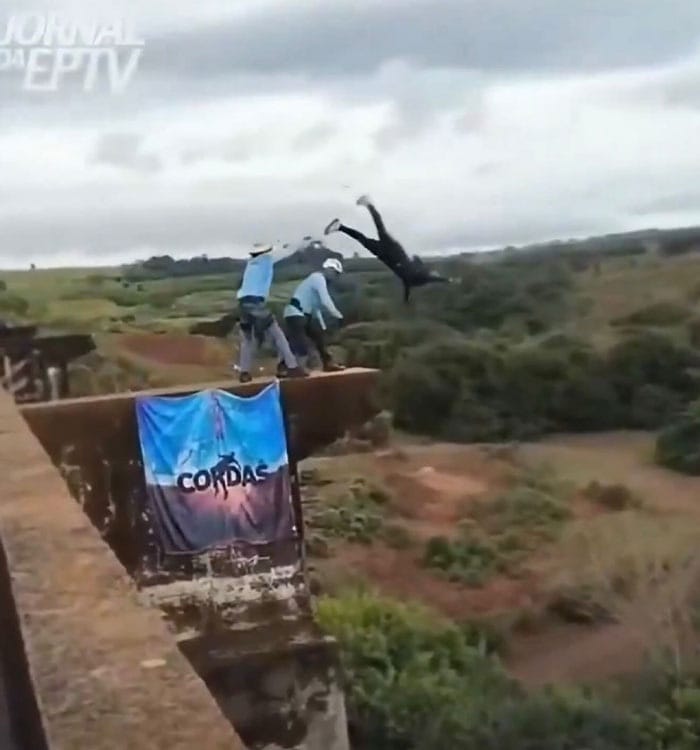
The tragedy became even more widely discussed because it happened so soon after Maria Eduarda’s death in Limeira. Maria Eduarda died during a rope-jumping activity at the Skeleton Bridge after instructors allegedly released her without the main safety cord attached.
The two deaths were different types of accidents, but both involved outdoor adventure activities and both have left people questioning how much responsibility organizers and guides should carry when participants are placed near serious danger.
In Maria Eduarda’s case, authorities have focused on the missing safety cord, the instructors’ alleged failure to complete final checks, and the broader question of whether the event was properly authorized.
In Rosemary’s case, the focus is now on the hiking route, the overlook, the guide’s role, and whether the group had enough protection while moving through a risky area.
The back-to-back tragedies have shaken many people in Brazil because both women set out for recreational experiences and never returned home. One was a 21-year-old taking part in an extreme jump, while the other was a 59-year-old hiking with a group.
For Rosemary’s loved ones, the investigation cannot undo the loss, but it may help answer how a moment as ordinary as applying insect repellent ended in such a devastating way.
As officials continue reviewing both cases, the larger concern is becoming clearer: adventure activities, guided hikes, and extreme-sport events can only be trusted when safety is treated as the first priority, not an afterthought.