Karmelo Anthony’s attempt to overturn his mu*der conviction has taken a significant turn after the judge who presided over his original trial was removed from all further proceedings, handing Anthony’s new legal team an important procedural victory.
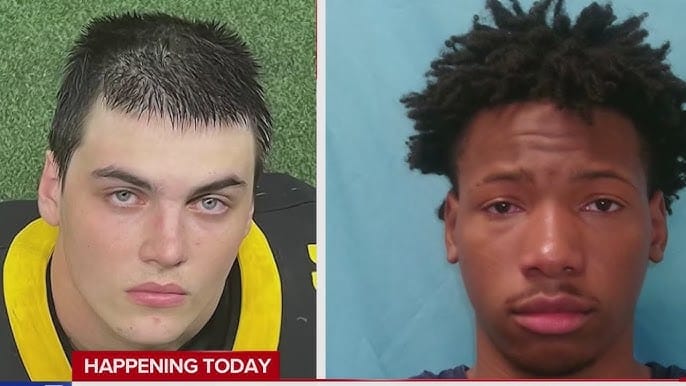
Anthony, now 19, was convicted in June 2026 in the de@th of 17-year-old Austin Metcalf following their confrontation at a Texas high school track meet in April 2025. Jurors rejected Anthony’s claim that he acted in self-defense, and he was sentenced to 35 years in prison.
But Anthony’s attorneys are now seeking a new trial, arguing that problems surrounding the original proceedings prevented him from receiving a fair one. Before those arguments could move forward, however, they wanted District Judge John Roach Jr., who oversaw the trial, removed from the case.
Their request centered partly on comments Roach made publicly after the verdict.
During a television interview following the trial, Roach was asked whether he believed the jury had reached the correct decision. He responded that the jurors had “got it right.” Anthony’s attorneys argued that such comments could reasonably create questions about whether Roach could impartially decide a motion asking him to effectively reconsider the outcome of that same trial.
The dispute resulted in a special recusal hearing on August 19.
Visiting Judge Sid Harle ultimately sided with Anthony’s defense and ordered Roach removed from the case. Importantly, Harle did not find that Roach was actually incapable of being fair. Instead, he concluded that the legal standard also considers whether a reasonable observer could question a judge’s impartiality.
That distinction became crucial.
Harle said he personally believed Roach could fairly consider Anthony’s request for another trial, but determined that the circumstances were enough for his impartiality to “reasonably be questioned.” The ruling therefore requires another judge to handle all further proceedings.
The prosecution had strongly opposed removing Roach.
Prosecutor Bill Wirskye defended the judge’s conduct and argued that some of the controversial courtroom restrictions during the original trial were intended to protect the proceedings amid extraordinary public attention, demonstrations and threats surrounding the case.
Nevertheless, the defense prevailed.
Supporters of Anthony celebrated outside the Collin County courthouse after the ruling was announced, while his attorneys characterized the decision as an important step toward ensuring that his request for another trial receives an independent review.
A new judge, retired District Judge Michael Chitty, was subsequently assigned to oversee the next stage of the case.
But the ruling does not mean Anthony’s conviction has been overturned.
He remains convicted and continues serving his 35-year sentence. Removing Roach only changes who will decide the post-trial issues, including Anthony’s request to have his conviction set aside and receive another trial.
And those arguments are already revealing previously undisclosed information about how the original case was handled.
During the new-trial hearing, attorneys discussed an informal agreement between the prosecution and the original defense team to keep certain background information about both Anthony and Metcalf away from the jury. The agreement was reportedly intended partly to prevent the already highly charged case from becoming even more inflammatory.
Anthony’s new attorneys are now questioning whether decisions surrounding that arrangement—as well as courtroom-access restrictions and other procedural issues—affected his ability to receive a fair trial.
Prosecutors maintain that the original proceedings were fair and that the jury properly rejected Anthony’s self-defense argument. They are opposing his request for another trial.
That means Anthony’s biggest legal battle is still ahead.
Getting Judge Roach removed gives his attorneys something they specifically requested: a different judge reviewing their challenge to the conviction. But they must still convince that judge that the alleged problems were serious enough to justify throwing out the verdict and conducting an entirely new trial.
If that request is denied, Anthony can continue pursuing his case through the appellate process.
For now, his 35-year sentence remains unchanged, and the jury’s guilty verdict remains in effect.
But after losing his self-defense argument at trial, Anthony has now secured his first major victory in the fight that followed: the judge who presided over his conviction will no longer be the person deciding whether that conviction deserves another look.