“Dancing With the Stars” Season 35 opened with noticeably tougher judging, and it did not take long for viewers to react. Across the two-night premiere, judges Carrie Ann Inaba, Derek Hough and Bruno Tonioli handed out several 3s and 4s, numbers rarely seen so frequently in recent seasons.
The biggest reaction came after Guillermo Rodriguez and professional partner Witney Carson performed their cha-cha to “Mr. Big Stuff.” The couple received a 4 from Inaba and 3s from Hough and Tonioli, leaving them with only 10 points out of 30.
That score placed Guillermo at the bottom of the Night One leaderboard and became one of the lowest totals in the show’s history. Even the ballroom audience loudly booed when the judges revealed their numbers.
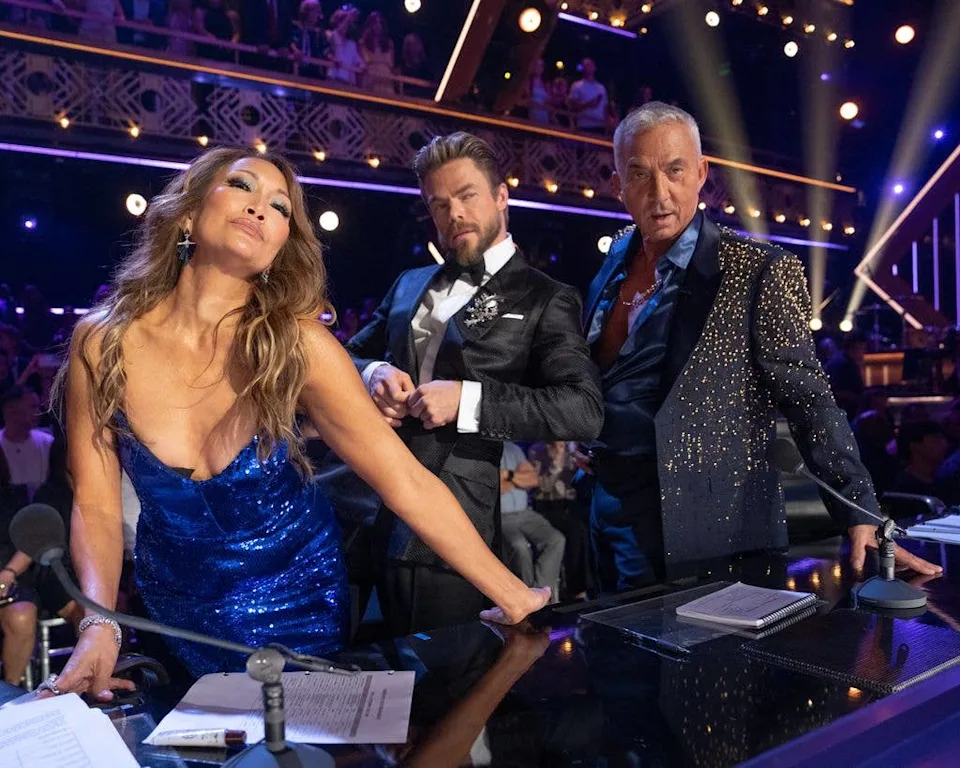
Carson did not hide her disappointment afterward. While she acknowledged that Guillermo still had plenty to improve technically, she described the scores as “lame” and later said she believed the two 3s were a little mean and uncalled for.
But Hough is standing behind the judges’ approach. Speaking after the premiere, he explained that the lower numbers were intentional because he wants the entire scoring scale to have meaning throughout the season.
According to Hough, contestants have become accustomed to treating a 5 as though it were an insulting score. He wants to change that perception so receiving a 5 early in the competition can represent a respectable starting point rather than a failure.
The strategy also gives the judges more room to reward genuine improvement. If contestants begin with 4s, 5s and 6s, an 8 later in the competition can represent significant progress instead of judges having only a narrow range of high numbers available.
When Hough looked back at where everyone finished on the premiere leaderboard, he summed up his feelings in three straightforward words: “Felt pretty accurate.” Despite the backlash, he believes the scores reflected how the contestants actually compared with one another.
Hough also emphasized that a low number should not be viewed as a judgment of a contestant personally. Instead, the score reflects what the judges saw in that particular dance and creates a starting point from which the celebrity can improve.

Guillermo was not the only contestant affected by the tougher approach. Tatyana Ali and Jan Ravnik received only 12 out of 30, while several other celebrities found themselves receiving numbers considerably lower than viewers have become accustomed to seeing during recent “DWTS” premieres.
Even contestants with extensive dance experience were not automatically rewarded with huge scores. Jenna Dewan and Val Chmerkovskiy earned 19 out of 30 for their tango, with Hough pointing out technical issues despite acknowledging the power and strength of Dewan’s performance.
Hough’s message suggests viewers should not expect the judges to suddenly become generous simply because the premiere backlash was intense. His goal is to make every number matter again, leaving contestants with room to grow as Season 35 continues. If that philosophy remains in place, earning the first 8s, 9s and eventually 10s of the season could feel considerably more meaningful than in years when high scores arrived almost immediately.