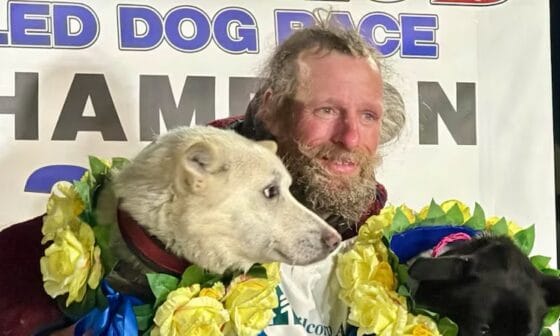
For fans of the Iditarod Trail Sled Dog Race, the finish line in Nome often feels like the end of the story. Mushers celebrate, teams rest, and the race fades into memory — until next year. But for the dogs who made that journey, the real story doesn’t end there. In many ways, it’s only just beginning.
After years on the trail, veteran sled dogs don’t simply “retire” in the way people might imagine. These dogs are born to run — it’s not just a job, it’s part of who they are. When their racing days slow down, that instinct doesn’t disappear overnight.
Instead, there’s a quiet transition.
Some dogs step into lighter roles within the team. They may no longer lead 1,000-mile races, but they still run shorter training routes, staying active while helping maintain their physical and mental health. For many, movement remains essential to their happiness.
Others take on an entirely new purpose — becoming mentors.
Experienced dogs often help train younger teams, teaching them how to follow commands, stay in formation, and adapt to the rhythm of the trail. In this way, their knowledge continues to shape the next generation, even after their competitive days are over.
There are also dogs who transition into more relaxed lives, staying with their mushers as companions rather than racers. The bond between musher and dog is incredibly strong, built through years of shared hardship. Letting go completely isn’t something that happens easily.
In some cases, retired sled dogs are adopted into homes. But even then, their past stays with them. These are not typical pets — they are highly active, disciplined animals who often need space, routine, and purpose to feel comfortable.
And that’s where the unseen part comes in.
Many of these dogs carry something from the trail that continues to shape their lives — not just physical endurance, but a mindset. They are used to teamwork, structure, and challenge. Without that, some can feel restless, which is why their transition must be handled carefully.
Mushers understand this better than anyone.
Retirement decisions aren’t based only on age or performance, but on the individual dog — its energy, health, personality, and readiness to adapt. Some dogs slow down naturally, while others want to keep going far longer than expected.
That’s what makes this process so complex.
There’s no single path after the finish line. Each dog’s journey is different, shaped by years of experience and the bond it shares with its team. What remains constant, however, is the respect given to them — not just as animals, but as athletes.
In the end, while fans may only see the race, the real story continues long after it’s over. Because for these sled dogs, the finish line isn’t the end.
It’s simply the beginning of a different kind of run.