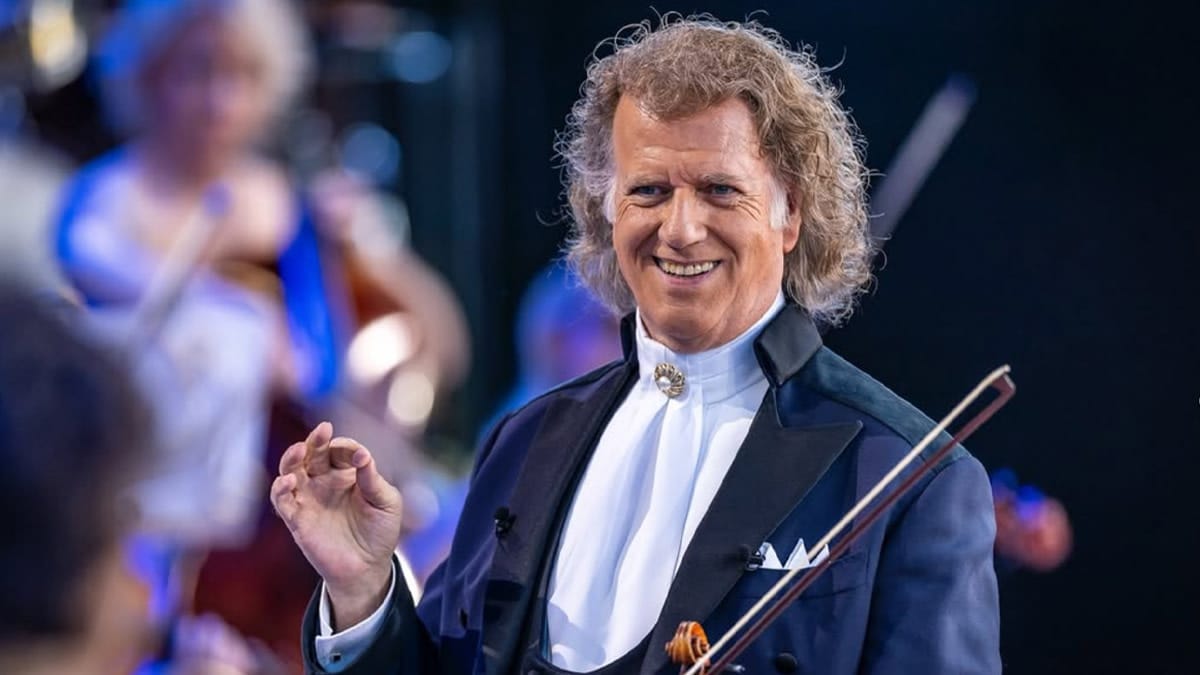
If there is one thing musician and conductor André Rieu knows how to do, it is how to transform music into a spectacle that feels larger than life. In the heart of Maastricht, his hometown, Rieu once again proved why he is known worldwide as the King of the Waltz, delivering a performance that blurred the line between concert, celebration, and cultural phenomenon.
Standing at the center of the vast town square, violin in hand, Rieu led his beloved Johann Strauss Orchestra with effortless authority. The historic surroundings became a natural stage, where centuries-old buildings echoed with music that felt both timeless and freshly alive. From the first notes, the atmosphere shifted, as thousands of spectators were drawn into a shared moment of anticipation.
What made the evening truly extraordinary was the scale of the performance. Alongside the orchestra, 150 dancers filled the square, their movements perfectly synchronized with the sweeping melodies. Waltzes unfolded like living paintings, each step and turn amplifying the emotion carried by the music.
Rieu’s violin soared above the orchestra, guiding the dancers as if his bow itself were choreographing their motion. Every phrase felt deliberate, every pause intentional, creating a seamless dialogue between sound and movement. The performance was not simply watched—it was felt, rippling through the crowd like a shared heartbeat.
The dancers, dressed in elegant costumes that caught the light, transformed the square into a grand ballroom under the open sky. Their presence added a visual rhythm that matched the orchestra’s energy, turning familiar compositions into something immersive and almost cinematic.
As the music swelled, the audience responded instinctively. Some swayed gently, others danced in place, and many watched in quiet awe. It was a reminder that Rieu’s concerts are not about passive listening, but about participation—about letting music pull people together regardless of age, language, or background.
There was a deep sense of pride woven into the night, especially given Maastricht’s special place in Rieu’s life. Performing such a grand production in his hometown felt like a gift returned, a celebration of roots as much as artistry. The square became a meeting point between personal history and global acclaim.
Throughout the performance, Rieu’s joy was unmistakable. He smiled at the dancers, acknowledged the orchestra, and repeatedly turned toward the audience as if sharing the moment with old friends. That warmth, as much as the music itself, is what has kept audiences devoted to him for decades.
As the final notes rang out, the applause was thunderous and unrelenting. The crowd knew they had witnessed something rare—a performance that combined technical brilliance, emotional depth, and breathtaking scale. It was not just a concert, but a memory etched into the fabric of the city.
In Maastricht’s town square that night, André Rieu did more than conduct an orchestra and lead dancers. He created a living symphony, proving once again that music, when shared on such a grand and human scale, has the power to turn an ordinary place into something truly magical.