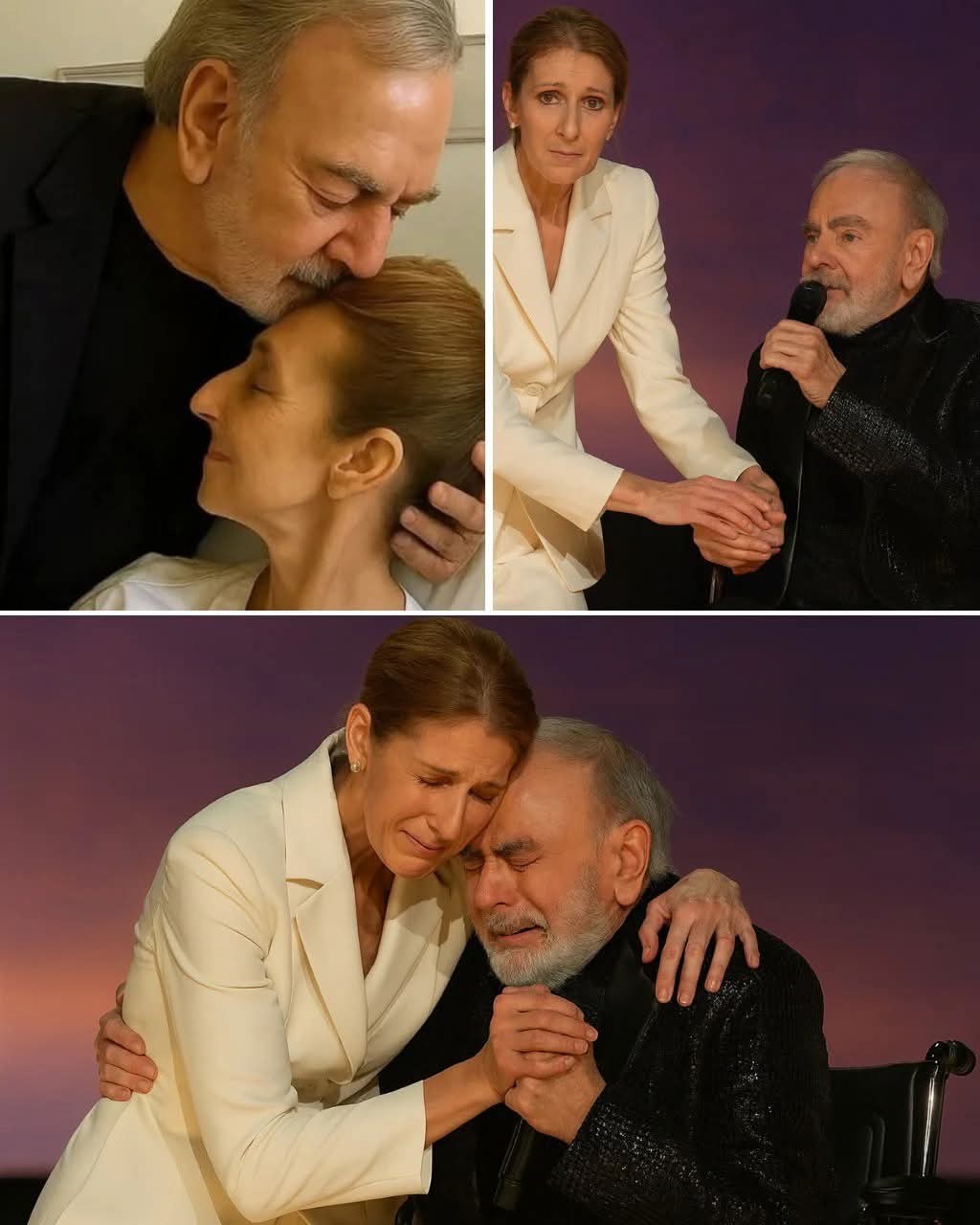
For decades, their voices filled arenas, crossed generations, and became the soundtracks of countless lives. Céline Dion and Neil Diamond stood at the peak of musical history, their songs woven into weddings, heartbreaks, and moments of quiet reflection. To the world, they were untouchable legends. But behind the lights and applause, each was fighting a battle that threatened the very core of who they were.
For Céline Dion, the diagnosis of Stiff-Person Syndrome changed everything. What once came naturally — breath control, vocal strength, physical command — suddenly became uncertain. Singing was no longer just an act of expression; it became a physical challenge, a calculated risk. For an artist whose identity has always lived in her voice, the possibility of silence felt unbearable.
Every performance demanded more than preparation. It demanded courage. Each note carried tension, effort, and resolve, as Dion faced the fear that her body might not respond the way it once did. Yet she continued, not because it was easy, but because stopping felt like losing a part of herself.
Neil Diamond’s reckoning arrived differently, but cut just as deeply. Parkinson’s disease forced him to step away from touring and confront the reality that the stage — his lifelong refuge — might no longer be sustainable. The rhythm, the movement, the endurance he once relied on were no longer guaranteed.
For Diamond, walking away from touring was not just a career decision. It was an emotional farewell to the place where he had always felt most alive. The voice that had carried generations through love, longing, and hope suddenly felt fragile, subject to limits he could not control.
Yet neither artist chose disappearance. Instead of retreating into quiet legacy, both leaned into what remained. They shifted their purpose, no longer singing for charts, trophies, or applause, but for something far more personal. Music became an act of survival — a way to assert identity in the face of uncertainty.
In these moments, song stopped being entertainment and became resistance. Each lyric carried meaning beyond melody. Each appearance, however rare or restrained, stood as proof that creativity does not vanish simply because the body changes.
These were not comeback stories crafted for headlines or redemption arcs. They were acts of honesty. Of vulnerability. Of choosing expression over fear, even when the cost was high and the outcome uncertain.
When fame, spectacle, and expectation fell away, something purer remained. Music returned to its most human form — a lifeline, a declaration of presence, a refusal to be erased.
This story is not about stages or spotlights. It is about standing at the edge of silence, feeling it pull closer — and choosing, once more, to be heard.