Ilia Malinin entered the Winter Games as the undisputed favorite — the reigning world champion, the “Quad God,” the skater expected to deliver a golden exclamation point to a dominant season. The narrative felt almost complete before he even stepped onto the ice. This was supposed to be a coronation.
Instead, it became one of the most shocking upsets in recent Olympic memory.
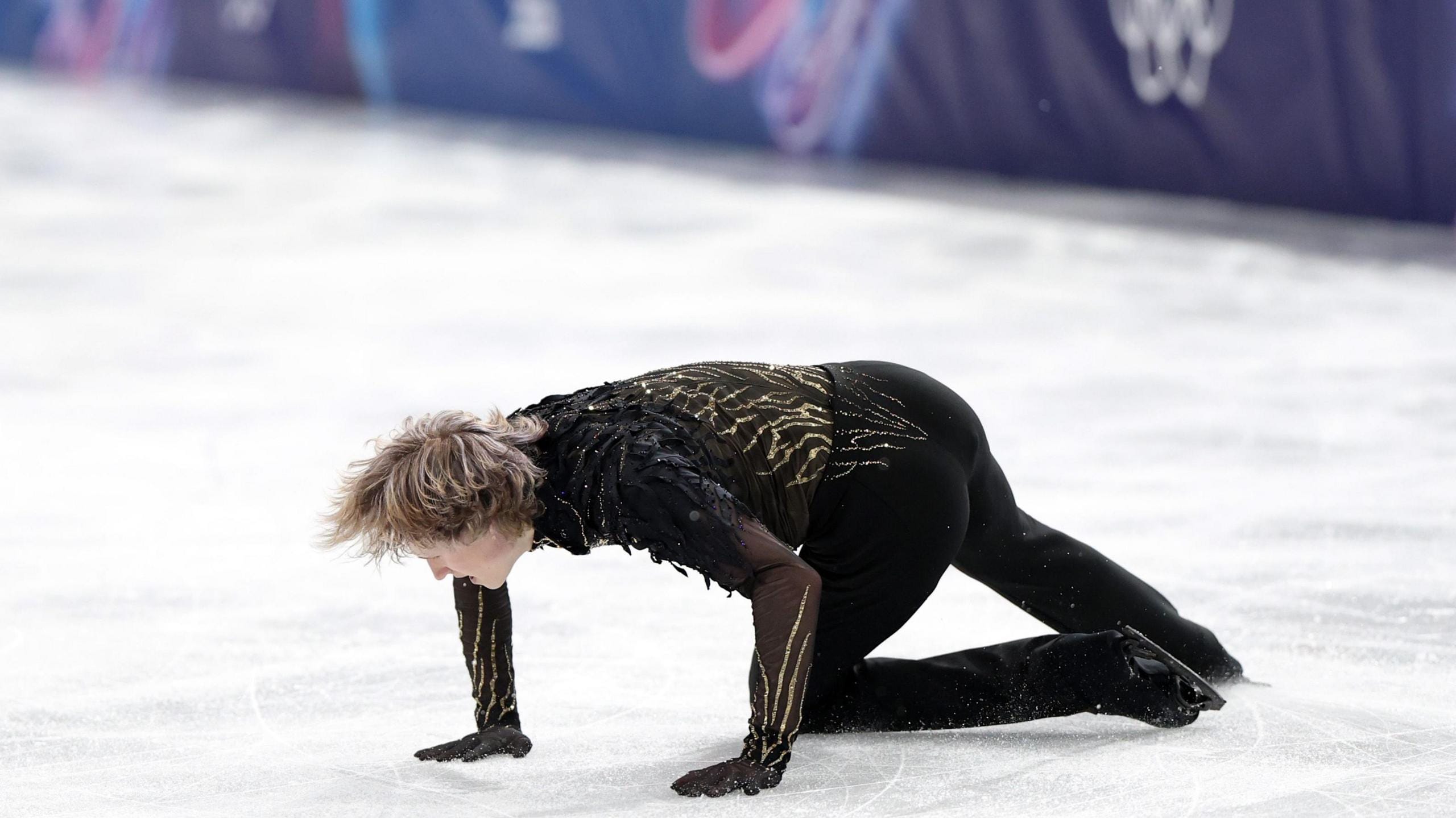
The first mistake came early. A jump that normally looked effortless drifted off-axis. The landing wasn’t there. He hit the ice hard. The arena gasped, but there was still time to recover. Champions regroup. Favorites reset. The program continued.
Then came the second fall.
In that instant, the energy inside the arena shifted from anticipation to disbelief. What had been building toward celebration unraveled in real time. By the final pose, the roar that typically follows Malinin’s skates was replaced with stunned quiet.
Cameras caught everything — the tight jaw, the distant stare, the slow exhale in the kiss-and-cry as the scores confirmed the slide down the standings. From gold favorite to off the podium in a matter of minutes. Olympic ice can be merciless.
But it was Malinin’s own words afterward that resonated most.
He didn’t deflect. He didn’t blame the judging, the conditions, or the pressure. He spoke about shock. About how quickly momentum can disappear. About how a split second of hesitation can undo months of preparation. The silence between mistakes, he suggested, felt louder than the falls themselves.
This was a season built on sacrifice — relentless training sessions, refining jump entries, pushing technical layouts few others would even attempt. The expectation wasn’t just external. It was internal. And when it slipped away, it hurt.
Yet even in disappointment, there was composure.
Teammates and competitors noted that he remained respectful, congratulating others and facing questions directly. The heartbreak was visible, but so was the accountability. For many fans, that response mattered just as much as any medal.
One performance doesn’t erase a legacy of innovation or historic achievements. But it does remind the world of something important: even the most fearless athlete is still human.
And sometimes the most defining Olympic moments aren’t the victories — they’re the nights when everything falls apart, and the athlete stands there anyway.