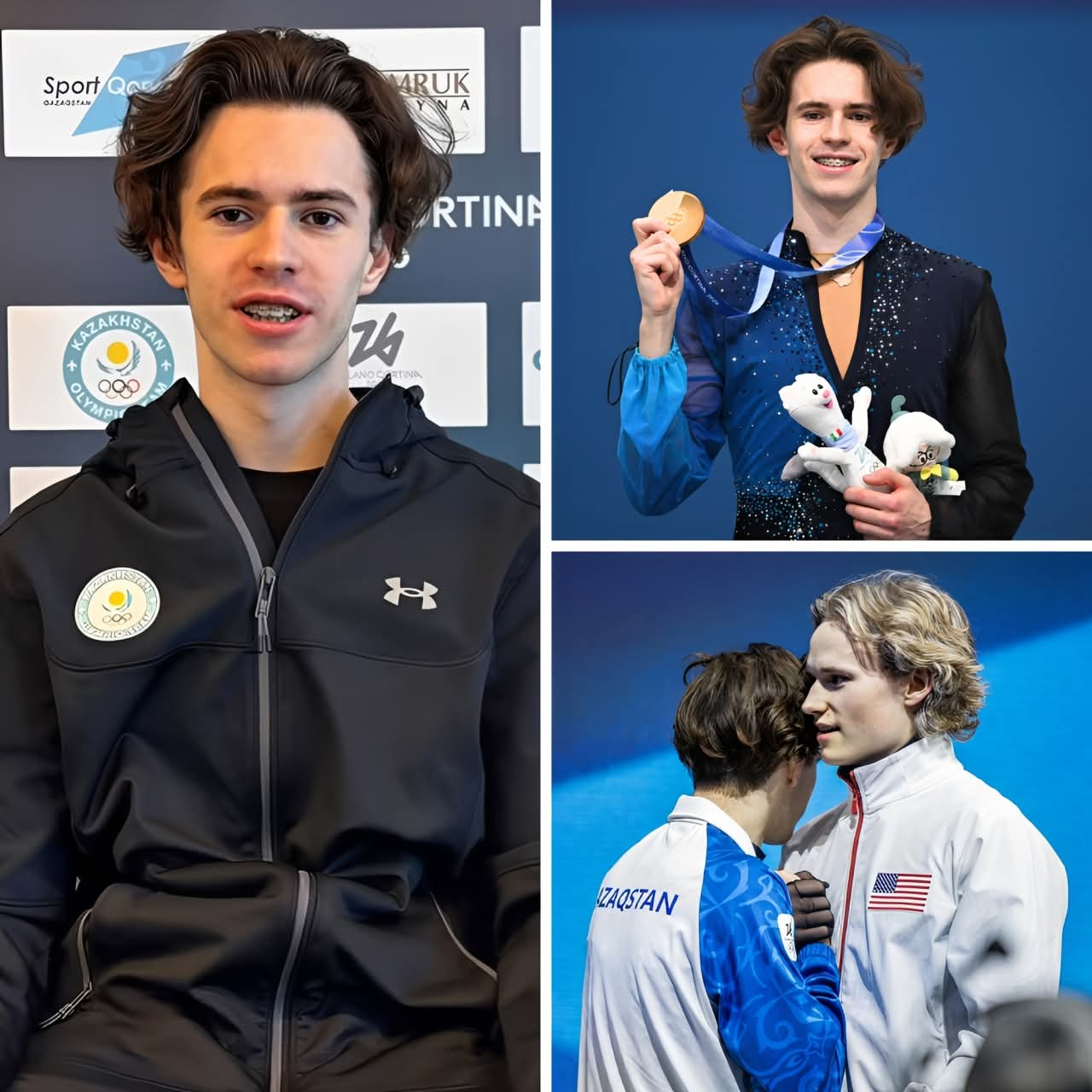
Just 48 hours after making history by winning Kazakhstan’s first Olympic gold medal in figure skating, Mikhail Shaidorov turned the spotlight away from himself and toward fellow competitor Ilia Malinin. In a move that surprised many, the newly crowned champion publicly voiced strong support for the two-time world champion following his difficult Olympic outing.
Shaidorov’s victory marked a groundbreaking moment for Kazakhstan, instantly elevating him to national hero status. Yet amid the celebrations, he took time to acknowledge Malinin — whose fall-filled free skate left him off the podium and facing intense scrutiny.
Speaking in a post-event interview, Shaidorov praised Malinin’s technical brilliance and lasting impact on the sport. “Ilia changed men’s skating,” he reportedly said, referencing the American’s historic quadruple Axel and revolutionary jump content. “One competition doesn’t erase that.”
The gesture did not go unnoticed. Fans applauded Shaidorov for demonstrating sportsmanship at a time when emotions were still running high. Instead of fueling rivalry narratives, he emphasized respect and admiration for his competitor.
But it was his future promise that truly caught attention. Shaidorov stated that if he and Malinin ever have the opportunity to meet again — whether at Worlds, another Olympics, or even off the ice — he intends to personally congratulate him and express his respect face-to-face.
The statement resonated as a powerful reminder that elite skating, while fiercely competitive, is also a tight-knit community. Athletes share the same pressures, sacrifices, and public scrutiny. In moments of triumph or disappointment, empathy often bridges what rivalry divides.
For Malinin, who has faced heavy analysis following his Olympic performance, the public backing from a newly crowned Olympic champion adds a meaningful layer of support. It reinforces that his contributions to the sport are recognized not only by fans but by his peers.
The interaction also hints at what could become one of figure skating’s defining rivalries in the coming years — one built not on hostility, but on mutual respect and excellence pushing excellence.
With World Championships and future Olympic cycles ahead, the prospect of Shaidorov and Malinin meeting again on competitive ice already carries intrigue. Their contrasting Olympic outcomes only deepen the storyline.
For now, Shaidorov’s message stands as a symbol of sportsmanship in victory — and a reminder that history-making moments are even stronger when paired with humility.