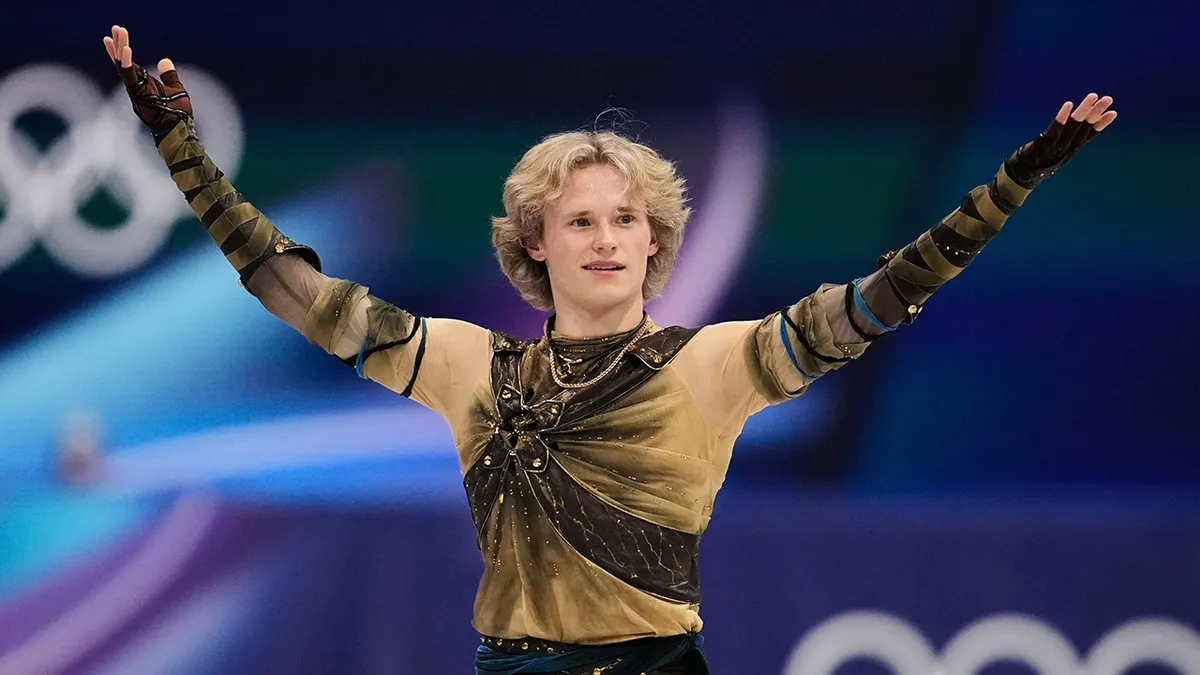
The moment Ilia Malinin stepped onto the Olympic ice, the pressure was already suffocating. At just 21 years old, the American skating phenom wasn’t simply competing — he was carrying the weight of expectations, hype, and the label of being the sport’s most fearless technical pioneer. But within minutes, that dream night unraveled in a way no one saw coming.
The first fall stunned the arena into silence. Midway through his program, Malinin lost his edge during a high-risk jump, crashing hard onto the ice. It wasn’t just a technical mistake — it felt like the entire rhythm of his performance fractured in that instant, leaving him visibly shaken.
As he pushed forward, trying to regain composure, a second fall followed later in the routine. This time, the impact felt final. The crowd, which had entered the program buzzing with anticipation, now watched in painful quiet as the gold-medal favorite struggled to steady himself.
By the time his music ended, the atmosphere inside the arena had completely shifted. There was applause — respectful, sympathetic — but it carried a heavy undertone of heartbreak. The scoreboard soon confirmed what everyone already knew: Malinin had fallen far out of medal contention.
The shock deepened when the final standings placed him eighth overall, while Kazakhstan’s Mikhail Shaidorov surged to claim gold in a stunning upset. What had been expected to be Malinin’s crowning Olympic moment had instead turned into one of the most dramatic reversals of the Games.
Back in the kiss-and-cry area, Malinin sat quietly, staring ahead as emotions visibly built beneath the surface. His shoulders sagged, and for a moment it looked as though he might completely break down. The confident competitor known for pushing the limits of figure skating now appeared painfully human.
When he finally spoke, his words were blunt and unfiltered. “I blew it,” he admitted, his voice steady but heavy with disappointment. He didn’t point to judging, ice conditions, or luck — he took full responsibility for what happened.
Malinin explained that the mistakes stemmed from a critical loss of focus early in the program. After the first fall, he said, his mind spiraled into self-doubt, making it difficult to regain the mental control required to execute the complex jumps he had planned.
That mental battle, more than the physical errors themselves, became the defining factor of the night. For a skater known for his technical fearlessness, it was a reminder that the Olympics test far more than athletic ability — they test resilience under unimaginable pressure.
Even in defeat, many fans and analysts emphasized that this moment may ultimately shape Malinin’s legacy rather than diminish it. Olympic heartbreak has often forged the strongest champions, and at just 21, his career remains wide open.
As he left the arena, still processing the outcome, one truth lingered in the air: this was not the end of Ilia Malinin’s story. It was a painful chapter — one written in falls, tears, and honesty — but also one that could define the strength of his comeback in the years to come.