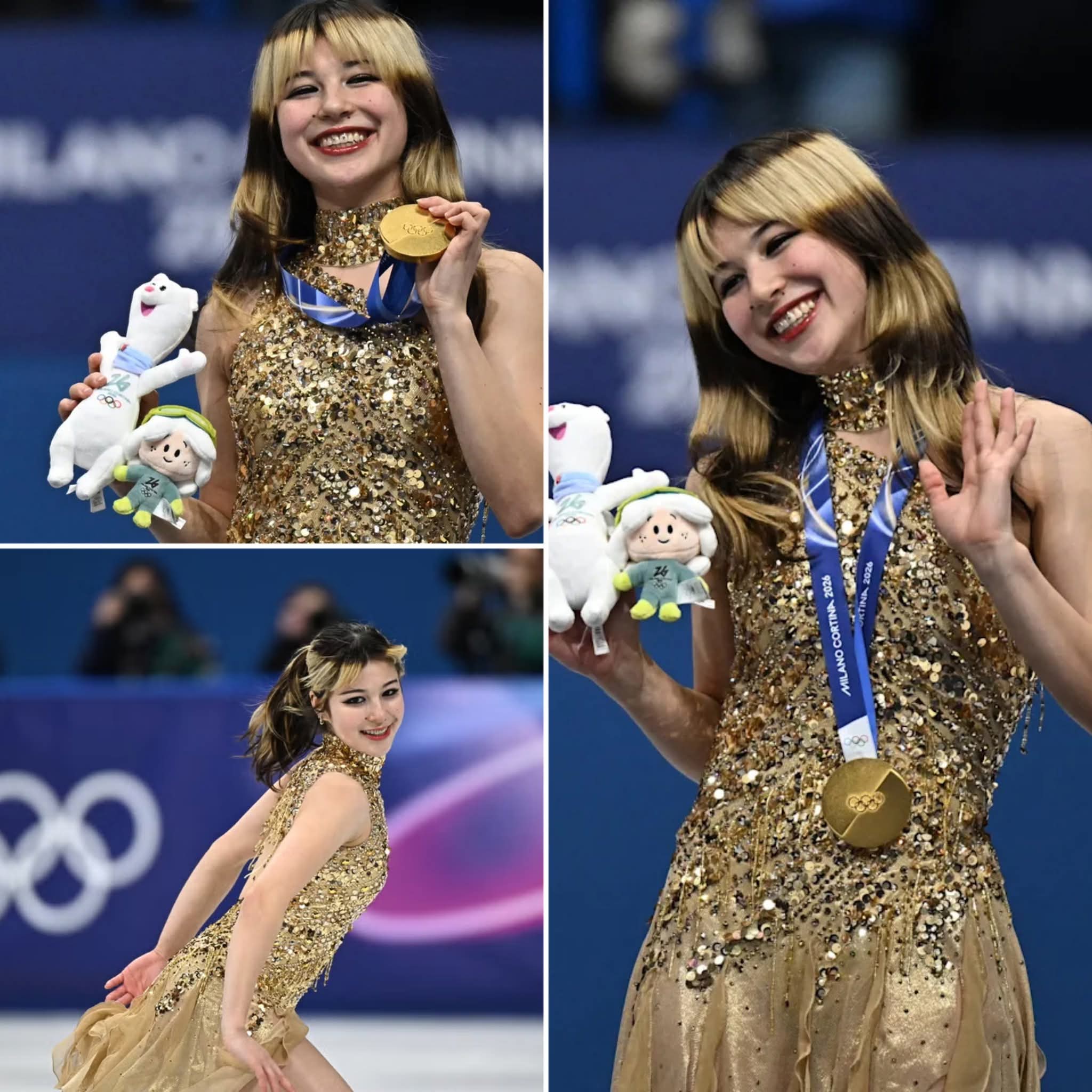
The words felt heavier than the medal around her neck. Standing at center ice inside a roaring Olympic arena, Alysa Liu didn’t look like someone chasing validation. She looked like someone who had finally made peace with herself. At the 2026 Winter Olympics, she didn’t just win gold — she rewrote her own story.
Years earlier, Liu had been labeled a prodigy before she was old enough to process the weight of it. National titles came fast. Expectations came faster. Every jump was analyzed, every result magnified. The spotlight that once celebrated her brilliance slowly became something far more exhausting.
At just 16, she made a decision that stunned the skating world: she stepped away. No dramatic farewell. No guarantees of return. Just a teenager choosing a normal life over podium pressure. For many, it felt like the end of a career that once seemed destined for Olympic glory.
But walking away didn’t erase who she was. It gave her space to rediscover it.
When Liu eventually returned to competition, something was different. The urgency was gone. The fear of disappointing others had softened. She skated with a freedom that hadn’t been visible in her early rise. This time, she wasn’t chasing headlines — she was chasing feeling.
That transformation became unmistakable in the Olympic free skate final. Every landing carried conviction. Every transition felt intentional. She wasn’t performing like someone trying to prove critics wrong. She was skating like someone who had already won the internal battle.
By the time she struck her final pose, the arena erupted — but Liu’s expression told its own story. Relief. Gratitude. Closure. The gold medal ended a 24-year drought for U.S. women’s singles skating, but for Liu, the victory ran deeper than history books.
Her comeback wasn’t built on revenge or redemption arcs crafted for television. It was built on self-awareness. On choosing to leave. On choosing to return. On understanding that stepping away didn’t mean failure — it meant growth.
“I had to lose it all to find myself again.”
In the end, that wasn’t just a quote. It was the blueprint for one of the most powerful Olympic comebacks in recent memory.
And this time, the story feels complete.