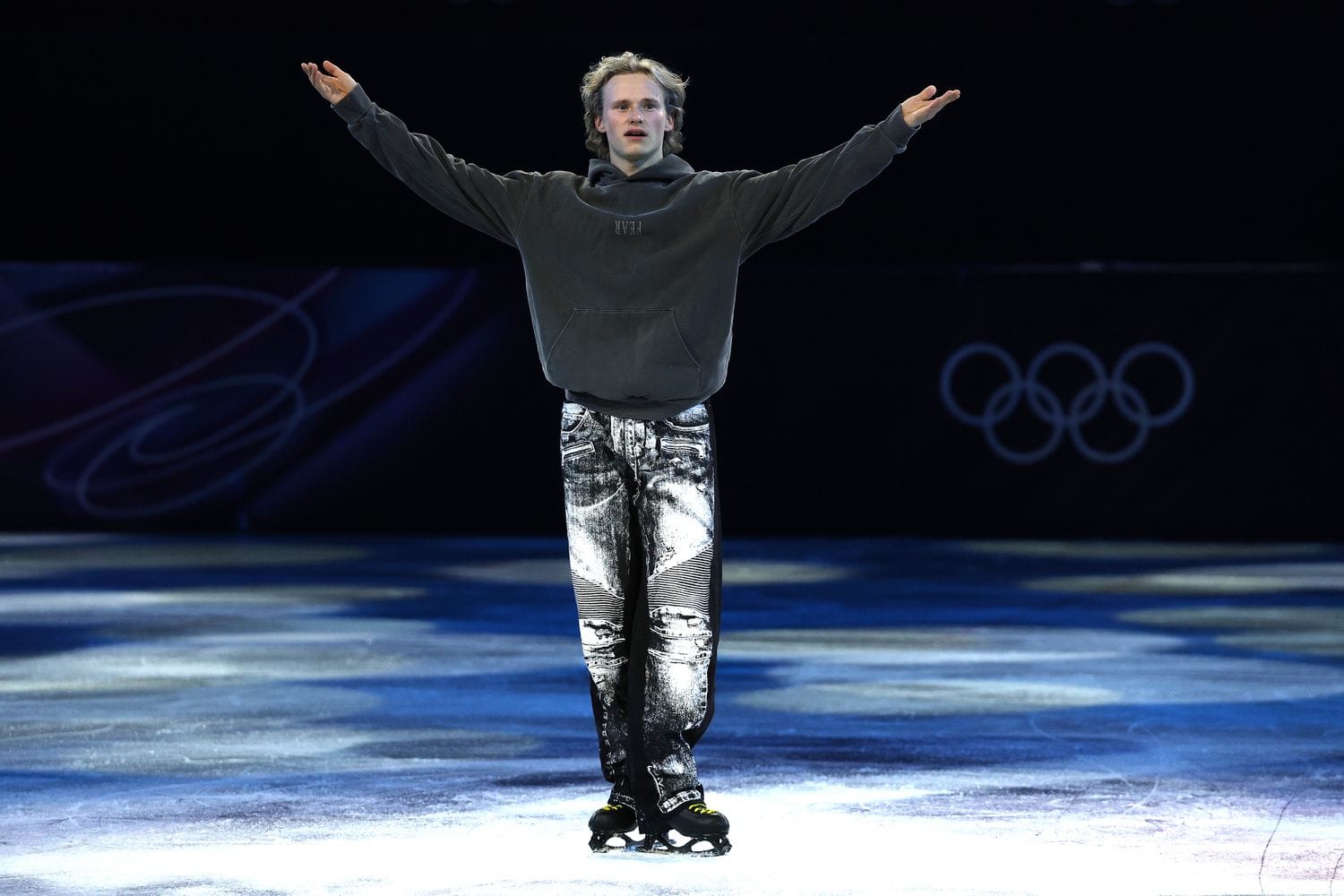
Ilia Malinin has never shied away from bold ambition. Nicknamed the self-proclaimed “Quad God” for his unprecedented command of quadruple jumps, the American figure skater is used to sky-high expectations. But in a recent candid interview, Malinin peeled back the layers behind the confidence, revealing a far more complex story of pressure, admiration, doubt, and relentless drive.
At the center of that story is one name: Yuzuru Hanyu.
Malinin openly acknowledged that Hanyu wasn’t just a competitor he watched growing up — he was an idol. “I studied everything,” he admitted, from Hanyu’s technical precision to the emotional intensity he brought to every performance. For Malinin, Hanyu represented more than medals; he represented artistry fused with fearlessness.
But admiration has its own weight.
As Malinin began landing quads at a rate rarely seen before — including the historic quad Axel — comparisons became inevitable. Suddenly, he wasn’t just a promising young skater. He was labeled the future. The revolution. The next standard-bearer.
That’s when the “Quad God” nickname stuck.
While some saw it as swagger, Malinin explained it started as a playful confidence boost — a way to embrace his technical identity in a sport often divided between power and artistry. Yet living up to that title has proven to be its own mental battle. “You hear it enough,” he shared, “and you start wondering if you have to prove it every single time.”
The road to the 2026 Winter Olympics in Milan isn’t just about adding more rotations.
It’s about balance.
Malinin spoke honestly about the sacrifices behind the jumps — long training sessions, managing injuries, and the constant push to refine choreography so that his skating feels complete, not just explosive. The technical revolution he’s spearheading demands precision, but the Olympic stage demands something deeper.
There are doubts, too.
He acknowledged moments when expectations felt suffocating — when every competition was framed as validation or failure. But instead of running from that pressure, Malinin described it as fuel. The criticism sharpens him. The comparisons motivate him. The rivalry pushes him forward.
And Milan?
For Malinin, the 2026 Games aren’t simply about medals. They’re about legacy. He wants to be remembered not just as the skater who could jump higher and spin faster, but as someone who earned respect — from fans, from peers, and from legends like Hanyu himself.
“I want to belong in that conversation,” he said, referencing the greatest names to ever step onto Olympic ice.
Whether he redefines the record books again or not, one thing is clear: the fire behind the “Quad God” isn’t just about quads anymore.
It’s about proving that beneath the rotations and the hype is an athlete chasing something far more enduring — a place in figure skating history.