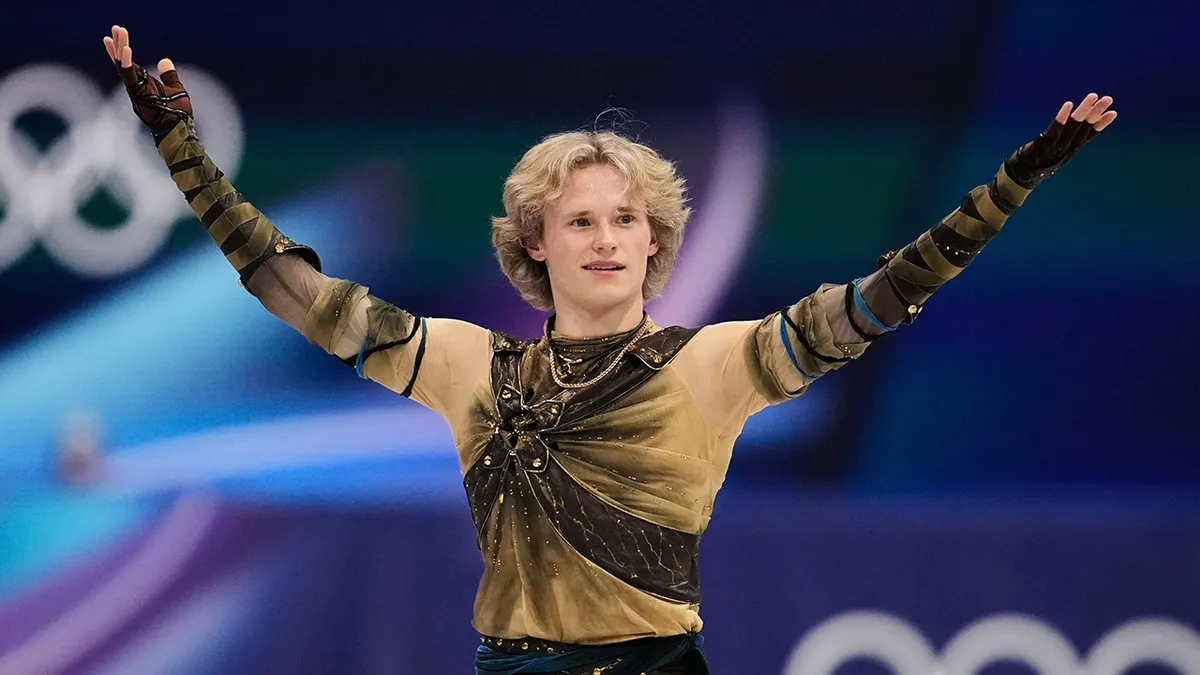
When Ilia Malinin stepped onto the Olympic ice, the tension inside the arena was immediate and unmistakable. This wasn’t just another program in a long night of elite competition. It was the appearance of a skater already known for pushing technical boundaries — and everyone sensed that something unforgettable might happen.
From the opening sequence, Malinin skated with controlled aggression, blending speed with razor-sharp edges. Every jump entry carried confidence. Every landing was deliberate. The crowd followed him closely, aware of his reputation as one of the most daring technical skaters of his generation.
Then came the moment that will be replayed for years.
Mid-program, without hesitation, Malinin launched into a perfectly executed backflip — clean, centered, and unapologetically bold. For a split second after he rotated, the arena went silent. It wasn’t confusion. It was shock. Figure skating has long balanced tradition with innovation, and in that instant, Malinin leaned fully into the latter.
When his blades hit the ice smoothly and he skated out of it without a wobble, the silence shattered.
The crowd erupted. Commentators stumbled over their words. Cameras cut to coaches, judges, and stunned spectators trying to process what they had just witnessed. It wasn’t just the athleticism — it was the audacity of attempting such a move under Olympic pressure.
Technically, a backflip has existed on the fringes of figure skating exhibitions for decades. But in this context — under Olympic lights, inside a competitive program — it carried a different weight. It signaled a new era, one where risk and artistry are colliding more openly than ever before.
Malinin didn’t allow the moment to overshadow the rest of his performance. He transitioned seamlessly back into choreography, landing his planned jumps with composure and maintaining musical precision. The backflip wasn’t a gimmick — it was integrated into the flow of the program, a calculated punctuation mark rather than a reckless stunt.
By the time the music ended, the arena was on its feet.
Fans flooded social media within minutes, calling it historic, fearless, and revolutionary. Some debated whether it bent the rules of tradition too far. Others celebrated it as the evolution of the sport. Regardless of opinion, one truth was clear: the conversation had changed.
For Malinin, the moment represented more than a viral highlight. It was a statement — that figure skating can honor its classical roots while still daring to expand its vocabulary. Courage and precision don’t have to exist in opposition.
Olympic history is built on moments that feel impossible until they happen.
And on that night, Ilia Malinin didn’t just skate a program. He created a flashpoint — one heart-stopping leap that may redefine what audiences expect from the ice for years to come.