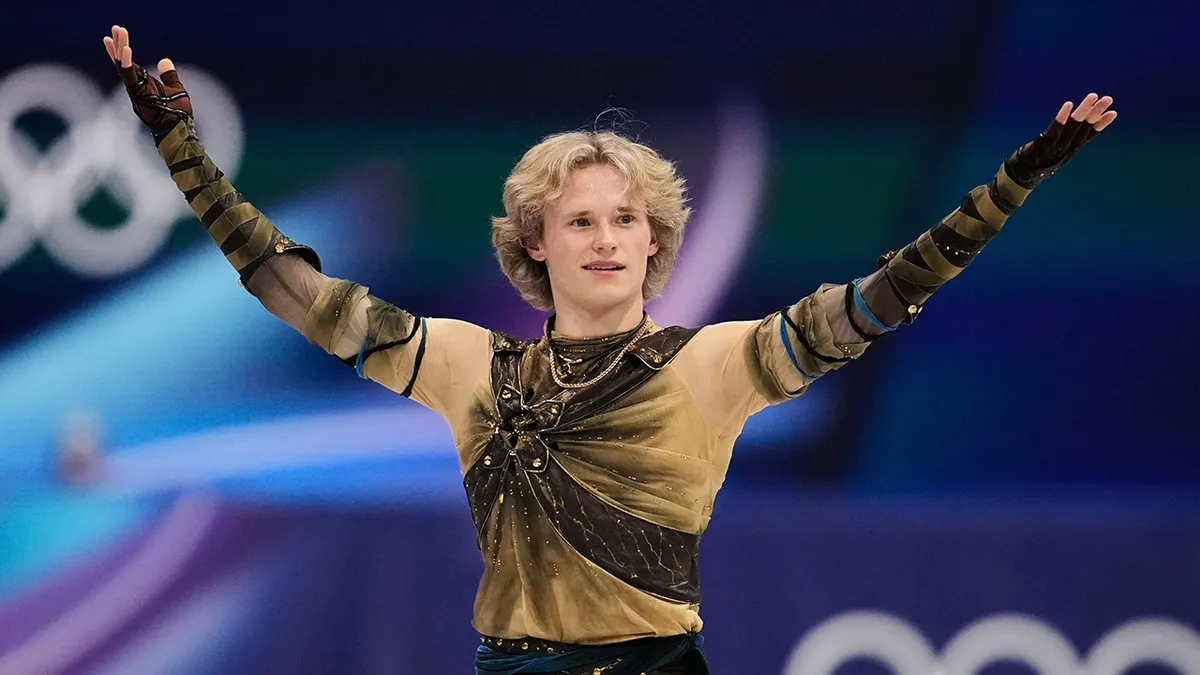
Just days after the sting of disappointment from his Olympic free skate, Ilia Malinin returned to the ice with a different mindset. Standing beneath the bright lights of Hallenstadion, the pressure that had followed him through the Olympics seemed to fade away. This time, there were no expectations to meet and no medals on the line. There was only the ice, the music, and a chance to remind the world why he had earned the nickname “Quad God.”
The moment the music began, the energy inside the arena shifted. Malinin attacked the program with an intensity that felt both controlled and fearless. Known for pushing the technical limits of figure skating, he wasted no time unleashing the kind of explosive elements that have defined his rise in the sport. The crowd sensed it immediately—this was not going to be a routine exhibition.
Within seconds, Malinin launched into a series of daring elements that blended athletic power with remarkable precision. His jumps cut cleanly through the air, each landing sharp and confident. The signature confidence that sometimes disappears under Olympic pressure seemed to return in full force. It was as if the skater had rediscovered the joy of skating for himself rather than for a scoreboard.
At the heart of the performance were the jumps that made him famous. Triple Axels appeared almost effortless, stitched seamlessly into complex combinations that pushed the pace of the program forward. Every landing drew a louder reaction from the audience, building a wave of excitement that rolled through the arena.
Then came the moment that truly electrified the crowd. Malinin added one of his most daring trademarks—a perfectly timed backflip. Though technically illegal in standard competitive programs, exhibition performances allow room for creativity, and Malinin embraced that freedom completely. The crowd gasped in unison before erupting into cheers that echoed through the stadium.
VIDEO:
As the routine continued, the performance became something more than just a technical display. Malinin moved across the ice with a looseness rarely seen in competition. Without the rigid structure of Olympic pressure, his skating took on a fluid, expressive quality that made the entire routine feel spontaneous and alive.
Midway through the program, one flawless sequence seemed to freeze time inside the arena. A rapid combination of spins, footwork, and jumps flowed together with such clarity that the audience collectively held its breath. In that instant, the focus shifted away from scores or rankings. What mattered was the sheer spectacle unfolding on the ice.
For many watching, it was impossible not to think back to the Olympic performance that had frustrated him just days earlier. Malinin himself acknowledged that feeling afterward, reflecting on how different things might have been. If he had skated with this same freedom during the Olympic final, he admitted, the outcome might have looked very different.
Yet the performance at Hallenstadion wasn’t about rewriting Olympic history. It became something even more powerful—a reminder of the extraordinary talent Malinin brings to the sport. When freed from the burden of expectation, he transformed the rink into a stage where technical mastery and showmanship collided.
Just when it seemed the performance had reached its peak, Malinin added a final surprise. In the closing seconds, he slipped in an element that had never appeared on the official program sheet. The spontaneous addition stunned fans and judges alike, turning the end of the routine into one more unforgettable highlight.
As the music ended and Malinin struck his final pose, the arena exploded into applause. Thousands of fans rose to their feet, cheering not just for the jumps or the spectacle, but for the spirit behind the performance. It was the kind of moment that reminds people why figure skating can be so captivating.
By the time the cheers finally faded, one thing was clear: this skate wasn’t about medals, redemption, or rankings. It was about freedom. And on that night in Hallenstadion, Ilia Malinin showed the world exactly what happens when a skater with nothing left to prove simply lets himself fly.