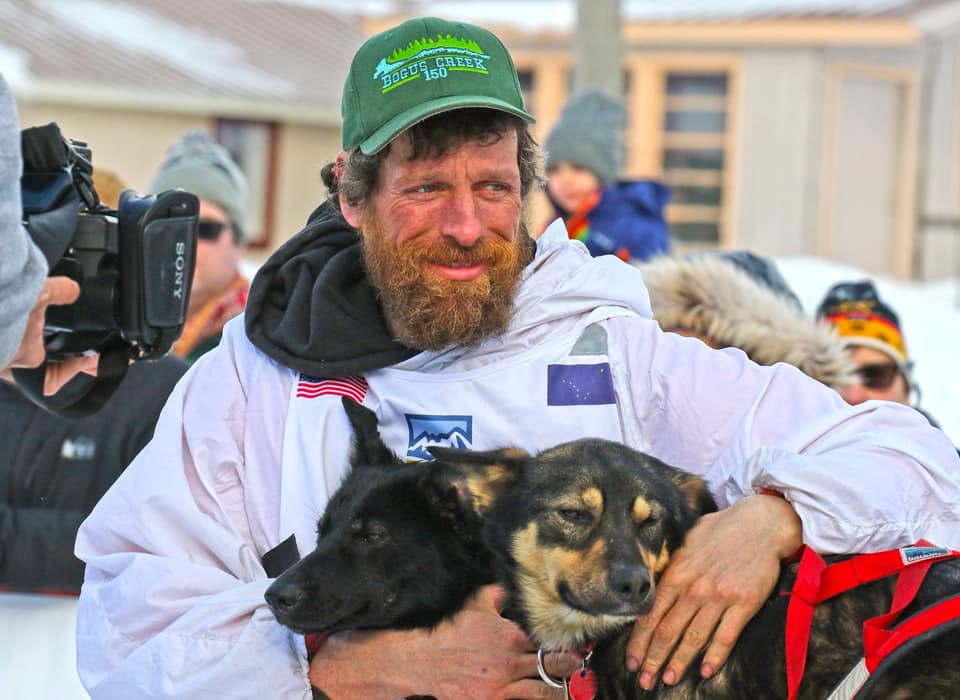
Jessie Holmes didn’t just defend his Iditarod title — he delivered a performance that tightened his control over the race from start to finish. With every mile, he created a gap that others struggled to close, turning the competition into a chase that never quite caught up.
At the heart of that dominance was his connection with lead dogs Zeus and Polar. Their rhythm on the trail set the tone, driving the team forward with a kind of energy that felt both controlled and relentless.
Holmes’ approach wasn’t about sudden bursts of speed. It was about building momentum, sustaining it, and trusting his team to carry that pace through some of the harshest conditions imaginable.
That strategy transformed the brutal Alaskan trail into something almost methodical — a test not just of endurance, but of precision and trust.
As the race unfolded, it became clear that Holmes was operating on a different level. His decisions, timing, and consistency gave him an edge that others couldn’t quite match.
But even with such a commanding victory, attention is already shifting to what comes next.
There are growing conversations about emerging challengers — competitors who are learning, adapting, and getting closer with each race.
Some fans believe that while Holmes remains the one to beat, the gap may not stay as wide forever.
The idea that the next race could bring a new level of competition is adding intrigue to an already intense rivalry.
For now, Holmes stands at the top, backed by a team that has proven its strength. But if this race showed anything, it’s that the story is still evolving — and the next chapter could bring a challenge even he doesn’t expect.