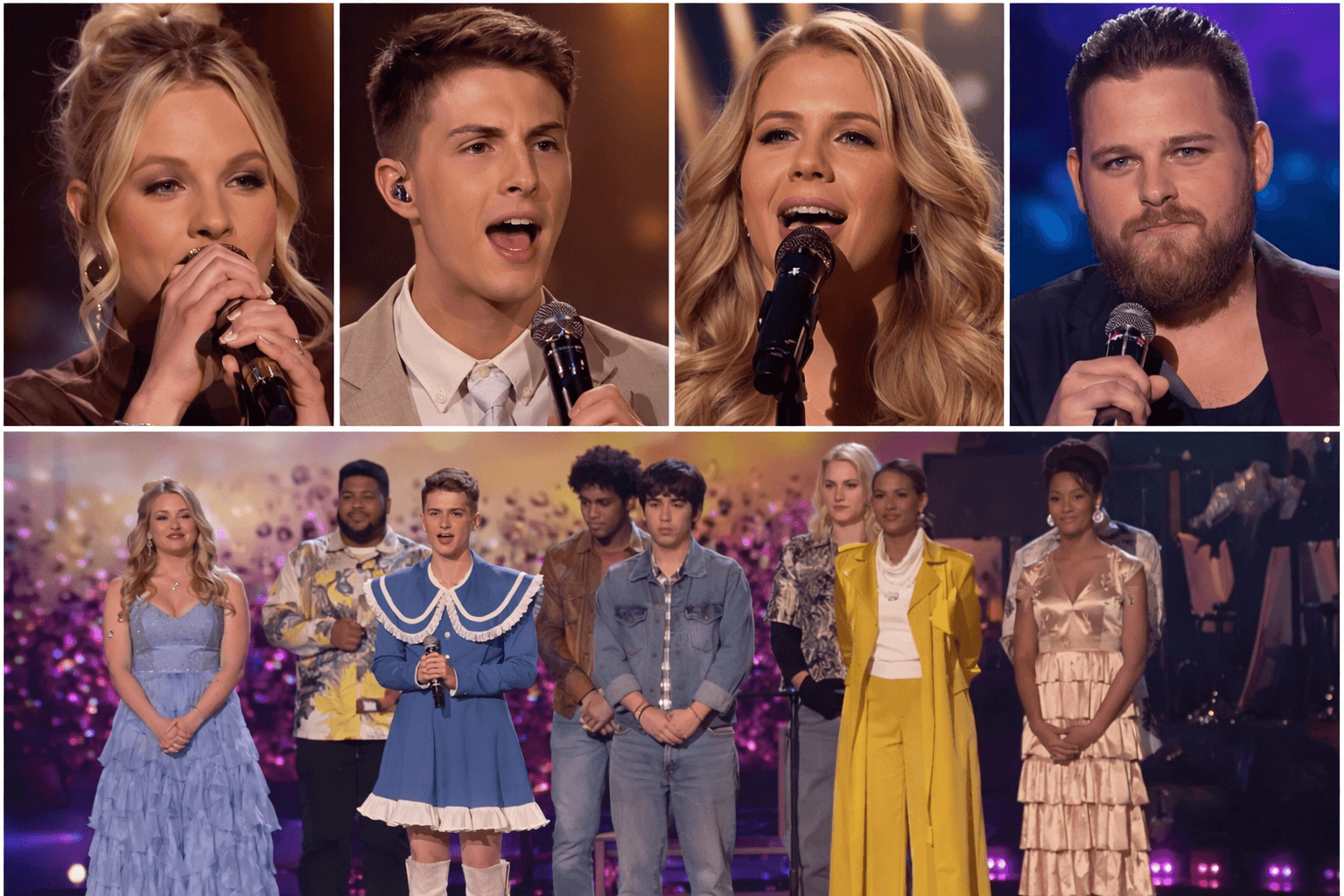
The drama surrounding American Idol Season 24 isn’t slowing down—and this time, it’s the fans who are speaking the loudest. What started as excitement over increased engagement has now turned into frustration, with many viewers calling this one of the “messiest seasons” the show has ever seen.
At the center of the controversy is social media voting.
While the feature was introduced to make voting faster and more accessible, fans are now arguing that it may be doing the opposite—creating imbalance, confusion, and what some believe is an unfair advantage depending on when contestants perform.
And one specific concern keeps coming up again and again.
Contestants who perform last.
According to many fans, those scheduled toward the end of the show are at a disadvantage because of how the voting window works. With limited time to vote, earlier performers have more opportunity to accumulate votes, while those who go last have far less exposure before the window closes.
That difference, fans say, could be decisive.
In a competition where every vote counts, even a few extra minutes can make a major impact. Viewers argue that someone who delivers an incredible final performance might not receive the same level of support simply because there isn’t enough time left for votes to come in.
And that’s where the frustration is building.
Social media has been flooded with comments pointing out the issue, with some fans demanding changes to the voting format. Others are questioning whether the current system truly reflects the best performances—or just the timing of them.
The controversy has only intensified after recent voting complications.
With reports of invalid votes, system overloads, and delayed results, trust in the process is starting to waver. For many viewers, the concern isn’t just about fairness—it’s about whether the competition is being decided accurately at all.
At the same time, others are defending the format.
Some fans argue that every contestant knows the rules going in and that strong performances should stand out regardless of timing. They believe that true frontrunners will find a way to connect with audiences no matter when they take the stage.
But even among supporters, there’s acknowledgment that something feels off.
Because this season, more than ever, outcomes seem unpredictable—not just because of talent, but because of external factors like voting mechanics and timing.
And that unpredictability is changing how fans engage with the show.
Instead of simply enjoying performances, many viewers are now analyzing strategy—when to vote, how to vote, and whether their votes are even being counted properly. The conversation has shifted from entertainment to scrutiny.
For contestants, the stakes couldn’t be higher.
A standout performance might not be enough if the voting window doesn’t allow it to translate into numbers. And in a competition narrowing down to just a handful of finalists, even small disadvantages can have huge consequences.
As the season moves forward, pressure is building—not just on the contestants, but on the show itself.
Because fans are watching closely.
And they’re asking a question that’s getting louder with every episode:
Is this really the fairest way to decide a winner… or is the system starting to work against the very talent it’s meant to reward?