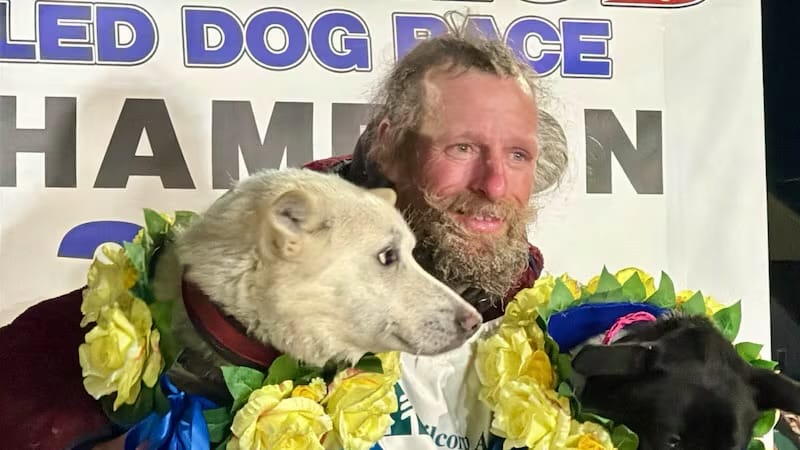
When Jessie Holmes crossed the finish line of the Iditarod Trail Sled Dog Race, completing nearly 1,000 miles in just over nine days, it marked a rare and historic back-to-back victory — something only a select few mushers have ever achieved. On the surface, it looked like dominance. Another title. Another moment of glory. But this year’s win carried a very different story beneath it.
Unlike his first championship, which was fueled by the hunger to finally reach the top, this race came with a different kind of pressure — the pressure to prove it wasn’t a one-time moment. Holmes wasn’t chasing the title anymore. He was defending it. Every decision, every checkpoint, every mile carried that expectation, and that changes the way a musher approaches the race.
What stood out this time was his control.
Holmes didn’t rush. He didn’t panic. While others pushed aggressively early, he stayed disciplined, carefully managing his team’s energy and trusting his strategy. It was a quieter kind of race — not built on big risks, but on consistency, patience, and understanding the long game.
And that patience paid off.
As the race wore on and conditions took their toll, Holmes and his team remained strong when it mattered most. The final push into Nome wasn’t dramatic — it was steady, controlled, and confident. The kind of finish that reflects experience more than emotion.
But what truly made this victory different wasn’t just how he raced — it was how he viewed it.
After crossing the line, Holmes spoke less about winning and more about growth. About trusting his dogs. About learning from the past and carrying that knowledge forward. There was a sense that this victory wasn’t about proving anything to anyone else.
It was about proving something to himself.
Fans noticed it too. The celebration felt calmer, more grounded — not the explosion of a dream realized, but the quiet satisfaction of a goal understood. It wasn’t just a win. It was confirmation.
Because not every victory is about reaching the top.
Sometimes, it’s about showing you can stay there — and understanding exactly what it took to get back.