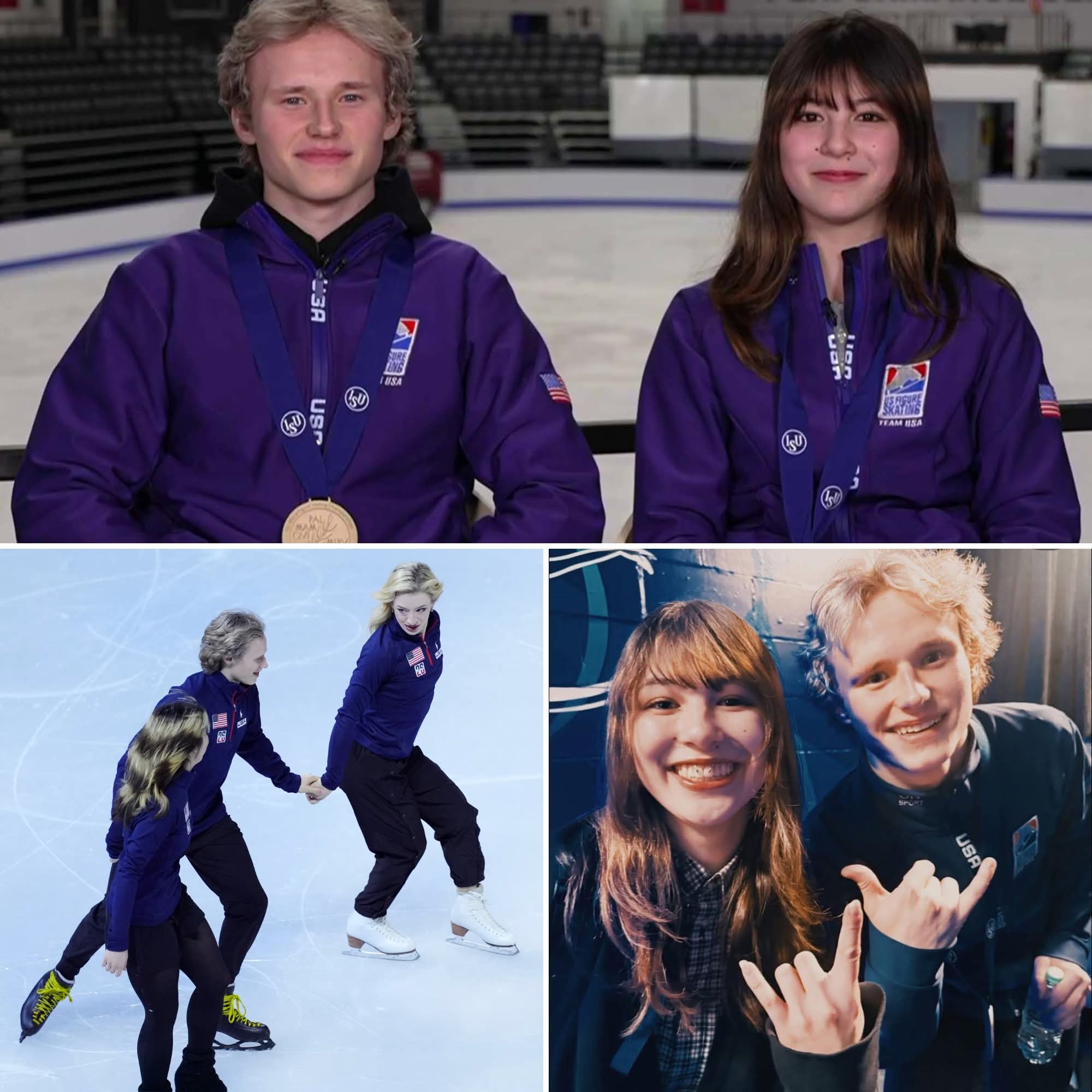
Under the softened glow of the Olympic exhibition lights, the atmosphere inside the arena felt different. The medals had already been awarded. The scores were finalized. The pressure that defines the Games had eased — at least on the surface. But when Alysa Liu and Ilia Malinin stepped onto the ice, it was clear they carried more than just choreography into that moment.
Liu arrived as a comeback story completed. Olympic gold hung around her neck, proof of resilience after stepping away from the sport and returning on her own terms. Yet beneath the triumph was the journey — the burnout, the doubt, the rebuilding. Her smile was lighter now, but the scars that shaped it were still part of the story.
Malinin’s path through the Games had been different. Known worldwide as the self-proclaimed “Quad God,” expectations followed him like a spotlight. When the competition didn’t unfold exactly as imagined, he faced a quieter challenge — redefining success beyond podium placement.
The exhibition gala offered something rare: freedom.
From their opening steps, the tone felt less like spectacle and more like conversation. There was playfulness in their edge work, a looseness in their transitions. But underneath that ease was something deeper — an unspoken understanding between two athletes who knew both the ecstasy and the weight of Olympic ice.
Liu’s movements carried a kind of liberated joy. She attacked her jumps with confidence, landing with a grin that felt less about proving anything and more about feeling everything. Malinin responded in kind, matching her energy with bold lines and expressive power.
Then came the moment at center ice.
As they closed the distance between them, the choreography slowed just enough to let the silence speak. No dramatic theatrics. No exaggerated gestures. Just eye contact that held for a beat longer than expected — a shared acknowledgment of everything they had endured to stand there.
It wasn’t about romance or rumor. It was about recognition.
Two young champions, shaped differently by the same Olympic furnace, finding connection in that shared heat. The performance didn’t scream for applause. It invited it. And when the crowd finally responded, it felt earned rather than demanded.
By the final pose, there were no visible burdens left — just presence.
They had skated like they had nothing left to prove because, in many ways, they didn’t. But they still had everything left to feel. And in that exhibition moment — somewhere between daring lifts and that breathless meeting at center ice — they reminded the world that sometimes the most powerful Olympic stories aren’t written in scores, but in emotion.