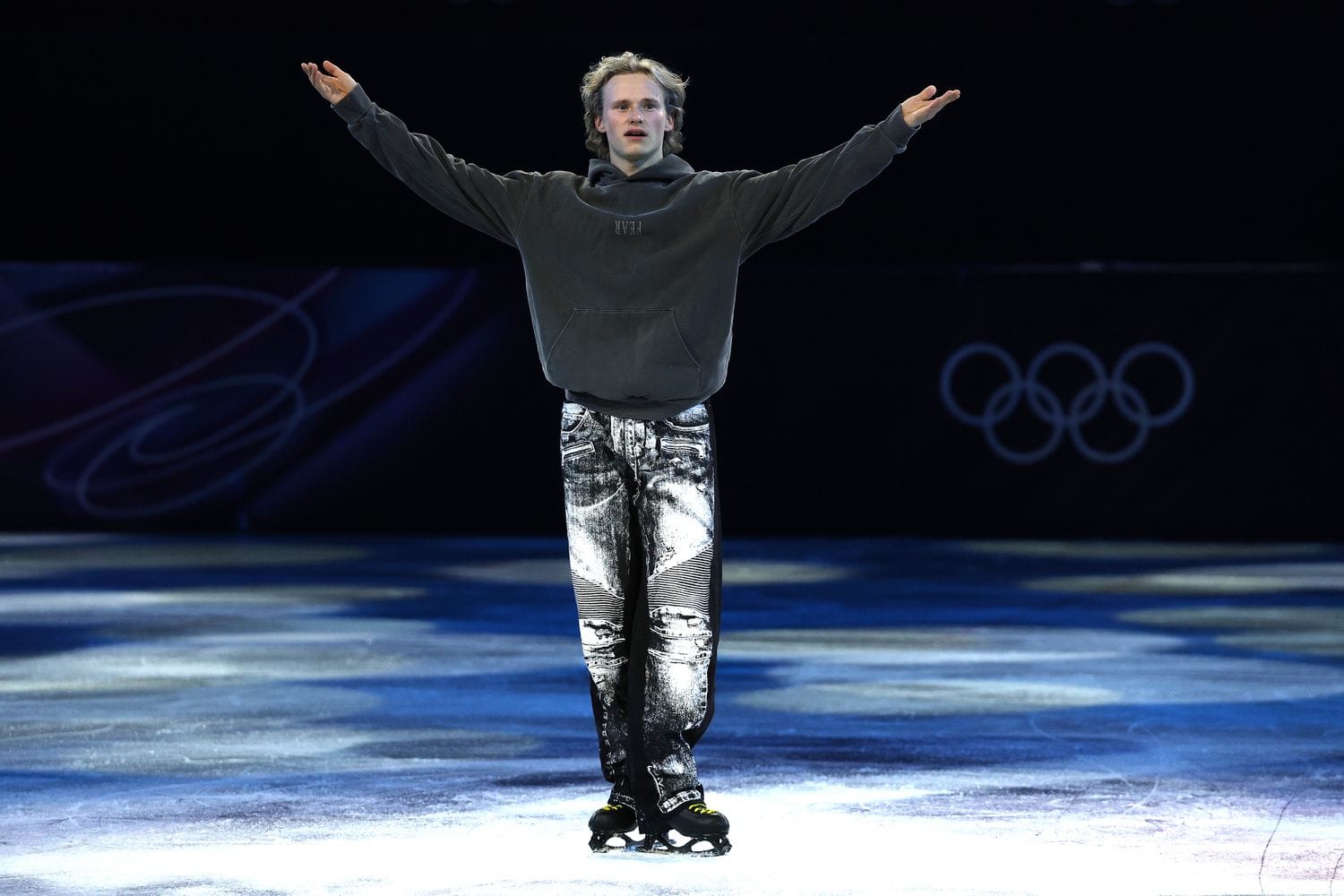
As Ilia Malinin prepared to leave the 2026 Winter Olympics and return to the United States, fans expected to hear about future titles, ambitious records, or the next technical milestone he wanted to chase. After all, the “Quad God” had just completed one of the most intense chapters of his career, standing at the peak of figure skating’s global spotlight. But instead of revealing another bold athletic target, Malinin shared something far simpler — and far more unexpected.
His final goal before departing Milan had nothing to do with training, competition, or legacy. It was something almost disarmingly ordinary: he wanted to visit a cat café. For many fans who had watched him perform historic jumps under immense pressure, the wish seemed surprisingly humble. Yet in many ways, it revealed more about who he is than any medal ever could.
Malinin explained that the reason behind this goal was deeply personal. During the long and demanding Olympic period, he had been away from home for weeks, separated from his two beloved pet cats. For him, they are not just pets but a source of emotional comfort, helping him stay calm and grounded amid the stress of elite competition.
Throughout the Games, Malinin faced enormous expectations. As one of the most revolutionary skaters in history, he carried the weight of global attention, constant analysis, and intense scrutiny. Every performance was dissected, every result debated, and every moment amplified across social media. That kind of spotlight can be overwhelming even for seasoned athletes, let alone someone still early in his career.
The mental toll of that pressure became a recurring theme during the Olympics. Malinin openly acknowledged the emotional challenges that come with fame, including self-doubt, criticism, and the struggle to maintain balance. His final gala performance reflected these feelings, presenting a more vulnerable and introspective side of a skater often defined by his technical dominance.
Against that backdrop, his wish to visit a cat café took on deeper meaning. It symbolized a desire to reconnect with normal life — to step away from the noise of competition and return to something simple, comforting, and familiar. It was not about escaping responsibility but about restoring emotional balance after an exhausting journey.
Fans quickly embraced this revelation, seeing it as a reminder that even the most extraordinary athletes remain human. The image of a record-breaking Olympic star wanting nothing more than a quiet moment surrounded by cats resonated deeply. It contrasted sharply with the glamorous and high-pressure world in which he usually operates.
The story also sparked broader conversations about athlete well-being. In recent years, many sports figures have spoken openly about mental health, emphasizing the importance of rest, personal connections, and emotional recovery. Malinin’s “last goal” became another example of how success at the highest level requires more than physical strength — it requires psychological resilience.
For Malinin himself, the goal represented closure. After months of preparation, intense performances, and global attention, visiting a cat café was a symbolic way to mark the end of a demanding chapter. It was a small but meaningful step toward returning to normal life beyond the Olympic spotlight.
In the end, the simplicity of his final wish made it powerful. While fans will remember him for gravity-defying jumps and historic achievements, this quiet goal revealed something equally important: behind the legend of the “Quad God” is a young man who, after conquering the world’s biggest stage, simply longed for a moment of peace, comfort, and connection.