It was one of those rare nights when television seemed to forget the script and surrender to something better. What began as a straightforward bar sketch slowly transformed into a moment of unscripted magic — the kind audiences instantly recognize but can never predict.
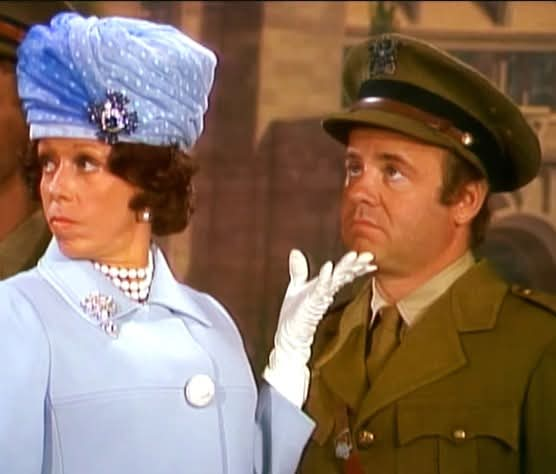
Dean Martin leaned casually against the bar, effortless as always, embodying cool without even trying. Ted Knight stood nearby, composed and determined, clearly committed to keeping the scene on track. Everything appeared polished, controlled, exactly as rehearsed.
Then Tim Conway walked in.
He wore that familiar, innocent grin — the subtle signal longtime viewers understood all too well. It wasn’t loud or exaggerated. It was quiet mischief. And the second he settled into the scene, the balance shifted.
The unraveling didn’t happen all at once.
It began with a pause held just a fraction too long. A line delivered at a slightly crooked angle. A look that technically wasn’t funny — and yet somehow became the funniest part of the scene. Conway didn’t attack the script; he gently nudged it off course.
Ted Knight was the first casualty.
You could see the battle in his face — the tightening jaw, the desperate attempt to maintain composure. But the effort only made it worse. Within moments, he collapsed into helpless laughter, shoulders shaking as the scene slipped beyond recovery.
Dean Martin held out longer.
Known for his unshakable smoothness, he tried to maintain control, leaning into his effortless persona. But even he couldn’t outrun the wave building around him. Eventually, the laughter broke through, and the king of cool found himself laughing so hard he could barely stay upright.
What makes the moment unforgettable isn’t simply that the actors broke character. It’s that the laughter was real. There were no exaggerated punchlines forcing the reaction. No chaotic shouting or obvious improvisation. Just subtle timing, quiet confidence, and chemistry too strong to contain.
The audience felt it immediately. The laughter rolling through the studio wasn’t polite applause — it was contagious, unstoppable, shared. Viewers at home could sense they were witnessing something authentic, something that wouldn’t happen the same way twice.
Fans still refer to it as “the funniest bar scene ever on television,” and it’s hard to argue. The setup was simple. The performances were impeccable. But what elevated it into legend was the moment control slipped away — and laughter, pure and unfiltered, stole the show.