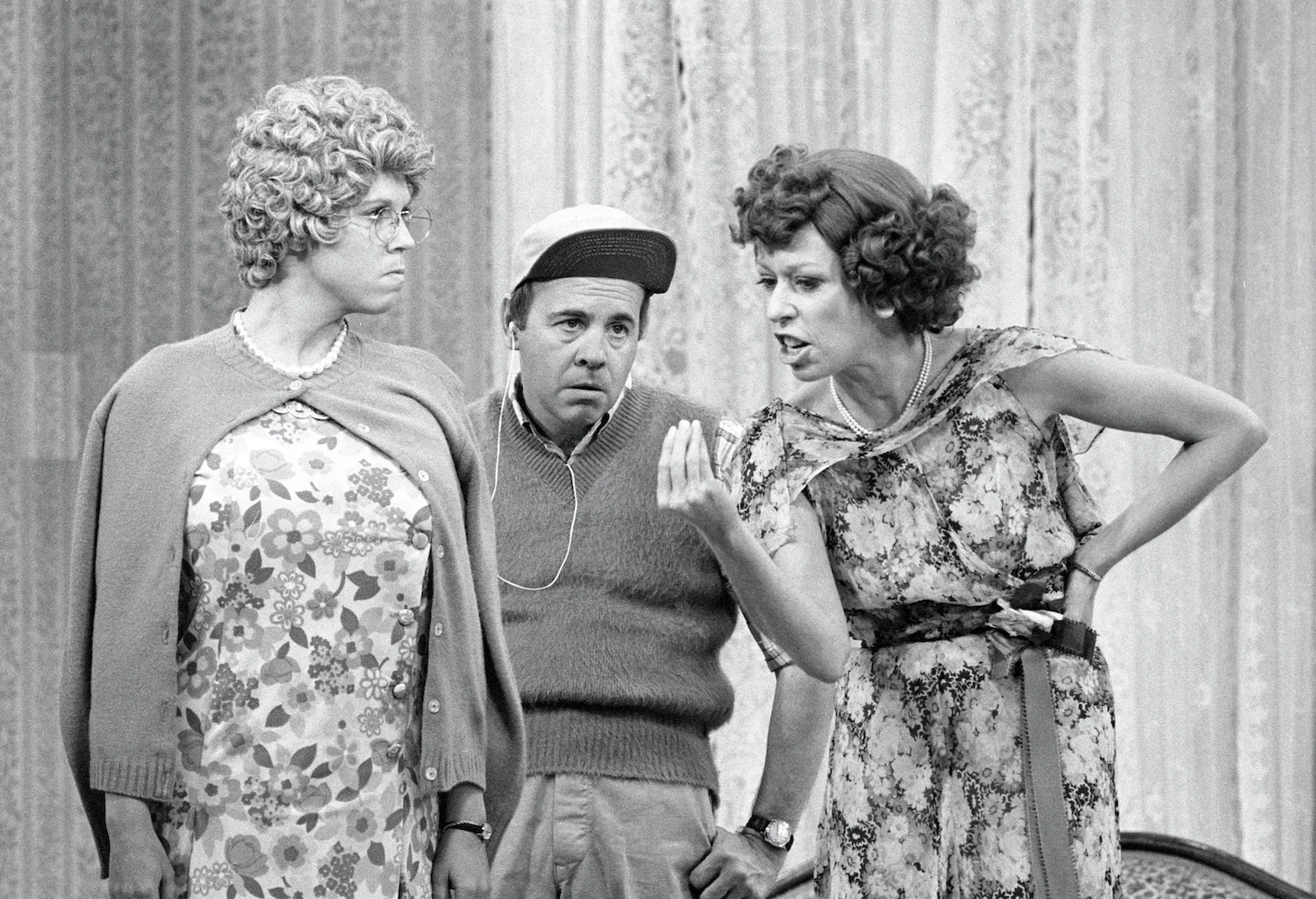
What began as a routine sketch on The Carol Burnett Show appeared harmless enough, another carefully planned moment designed to land a few laughs and move on. No one in the studio — not the cast, not the crew, not the audience — had any idea they were about to witness a breakdown that would become legendary.
Tim Conway entered the scene with his usual calm presence, delivering his lines with an innocence that felt almost suspicious. At first, everything stayed on track. The dialogue flowed, the timing held, and the sketch moved forward exactly as rehearsed.
Then came the moment with the “shots.” Conway’s reaction was subtle at first — just slightly exaggerated, slightly delayed, just enough to feel wrong. That small shift was all it took. The absurdity began to grow, quietly but relentlessly.
Harvey Korman was the first casualty. You can see it in his face — the instant he realizes he’s in trouble. His body tensed, his eyes darted, and suddenly the laughter broke free. It wasn’t polite laughter. It was uncontrollable, physical, and impossible to hide.
As Harvey struggled to stay upright, the sketch unraveled further. His attempts to regain composure only made things worse, each breath turning into another burst of laughter. The audience sensed it immediately and erupted along with him.
Carol Burnett, usually the anchor in moments of chaos, was pulled in next. She tried to keep things moving, but the energy had shifted completely. Once she cracked, the sketch crossed the point of no return.
At that moment, the script no longer mattered. Timing dissolved. Lines were forgotten. What remained was raw, unscripted comedy unfolding live, with performers laughing not at the joke — but at the sheer impossibility of stopping it.
Tim Conway, the quiet architect of the chaos, never broke character. He stayed steady, letting the madness bloom around him. His restraint made the moment even more devastating, proving that the smallest choices can create the biggest reactions.
The audience wasn’t just watching comedy — they were witnessing it being born. Every gasp for air, every wheezing laugh, every failed attempt to recover became part of the magic.
Decades later, viewers still react the same way: laughter that builds until it hurts. That sketch endures because it captures something rare — the joy of performers losing control together, reminding us that sometimes the funniest moments are the ones no one ever planned.