Under the bright lights and crushing pressure of Milano Cortina 2026, Lilah Fear and Lewis Gibson stepped onto the ice carrying years of work, sacrifice, and hope. For the British ice dance duo, this was more than a performance — it was the moment they had spent a lifetime chasing. Every glide held the weight of expectation, every movement carried the quiet dream of standing on the Olympic podium.
From the opening beats of their program, the energy was intense and electric. Their chemistry remained unmistakable, their connection visible in every synchronized turn and lift. The crowd watched closely, sensing they were witnessing athletes performing at the very edge of their emotional and physical limits.
Then came the moment that changed everything. A small error — barely visible to casual viewers — disrupted their rhythm. Soon after, a second stumble followed, turning what had been a strong routine into a fragile fight for control. In Olympic competition, where precision is everything, those tiny slips carried enormous consequences.
For a split second, it seemed the dream might collapse entirely. The silence in the arena grew heavy, the kind that falls when thousands of people collectively realize something has gone wrong. Yet instead of unraveling, Fear and Gibson did something remarkable — they kept skating.
Their movements after the stumbles were no longer just technical. They became emotional. Every step looked heavier, every expression more raw, as if the performance had transformed from competition into something deeply personal and painfully real.
As the program reached its final moments, the heartbreak on their faces was impossible to ignore. Still, they finished every note of the routine with determination, refusing to surrender the performance they had worked so long to perfect.
When the music stopped, there was no dramatic reaction, no visible anger or frustration. Instead, Lewis gently pulled Lilah close. They pressed their foreheads together, hands gripping tightly — a silent gesture that said more than any words ever could.
That quiet embrace became one of the most powerful images of the night. In that moment, it was clear the connection between them went far beyond medals or rankings. It was built on years of trust, shared struggle, and unwavering partnership.
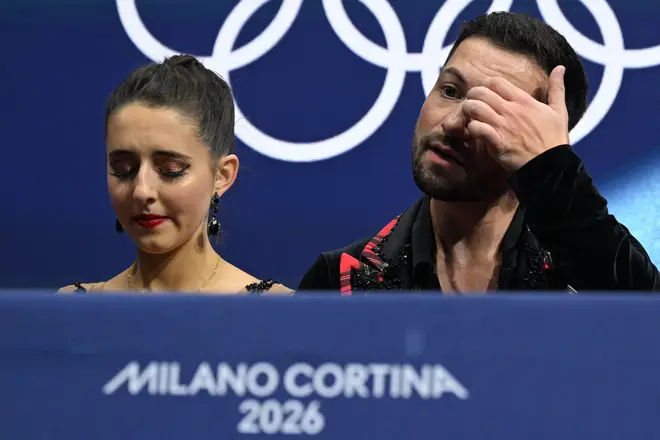
Later, in the kiss-and-cry area, tears flowed freely. Their whispers to each other were soft, private, and filled with reassurance. Even as the scoreboard confirmed their seventh-place finish, they held onto one another with a quiet strength that moved viewers around the world.
They did not leave the ice as medalists, but they left as something perhaps even more enduring — a symbol of resilience, loyalty, and grace under heartbreak. Sometimes, the most unforgettable Olympic moments are not about standing on the podium, but about how you stand beside the person who shares the fall with you.