Imagine composing a piece of music in your youth, setting it aside without ceremony, and believing it might never be heard. That was the quiet fate of a waltz written in 1964 by Sir Anthony Hopkins, long before the world would know him as one of cinema’s greatest actors.
At the time, music was a private passion for Hopkins, not a public pursuit. The waltz, later titled “And the Waltz Goes On,” was composed with care and emotion, then gently folded into the background of a life that would soon be consumed by acting, theater, and global acclaim.
For decades, the melody lived only in memory. Hopkins rarely spoke of it, never promoted it, and never imagined it would one day leave the page. It remained a personal creation — unfinished not in structure, but in destiny.
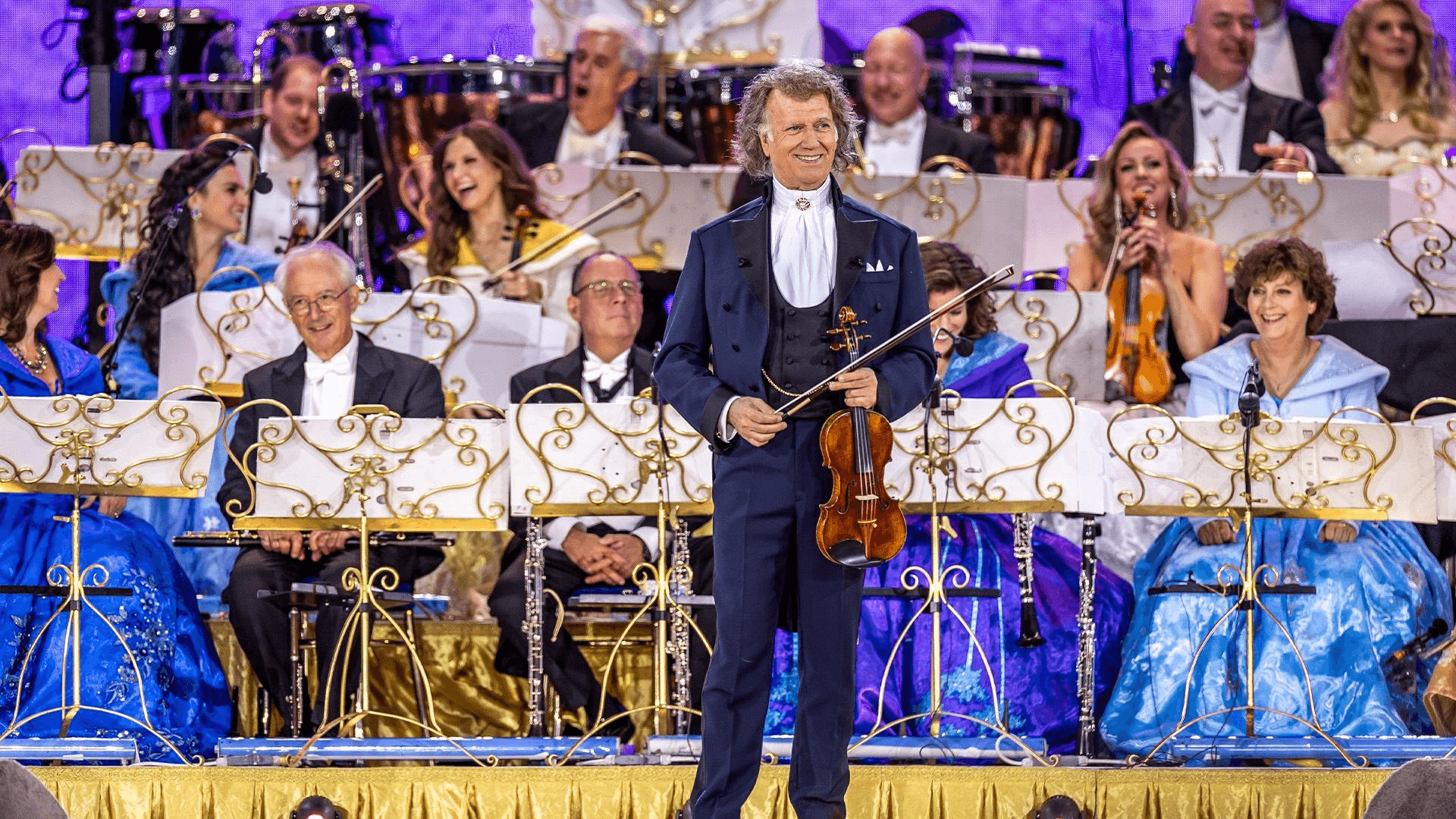
Years later, while watching an André Rieu concert, Hopkins casually mentioned to his wife how extraordinary it would be to hear that old waltz performed someday. Perhaps, he mused, in Vienna — the spiritual home of waltz music. It was a passing thought, spoken without expectation.
Unbeknownst to him, the idea would find its way to André Rieu himself. When Rieu first encountered the composition, he was immediately struck by its sincerity and elegance. There was nothing forced or showy about it — only warmth, romance, and a timeless sense of longing.
Rieu knew instantly that this was not a piece meant to remain hidden. He committed to arranging it for his full orchestra, treating it not as a curiosity from a famous actor, but as a serious and heartfelt musical work.
When the orchestra finally performed the waltz, the atmosphere changed. The melody unfurled gently, carried by sweeping strings and graceful rhythm, as if it had always been waiting for that exact moment to exist fully.
For Hopkins, hearing the piece brought to life was overwhelming. What had once lived silently within him now filled the hall, transformed yet faithful, echoing decades of emotion he hadn’t realized he was still carrying.
The audience sensed it too. This was more than a premiere — it was a resurrection. A reminder that art does not expire simply because it waits, and that beauty often finds its moment long after it is created.
In that performance, a forgotten waltz became something eternal. A quiet dream, remembered at last, proved that some music only needs the right heart to listen — and the right moment to finally sing.