What begins as a simple hot dog stand setup quickly turns into something far more perilous — at least for Harvey Korman’s composure. The moment Tim Conway steps behind the cart, wearing that calm confidence and perfectly neutral expression, the energy in the room shifts. You can almost sense the danger settling in.
Conway never rushes. That’s the first sign. He treats the smallest action like it deserves deep consideration. A pause lingers a beat too long. A glance stretches into silence. The audience starts to feel the tension building, knowing something is coming — even if they don’t know what.
Then come the details. He fumbles with condiments as though they’re complicated machinery. He explains procedures no one asked about. Every movement feels slightly off-center, just enough to tilt the scene away from safety. And he delivers it all with the unwavering seriousness of a man completely unaware of the chaos he’s creating.
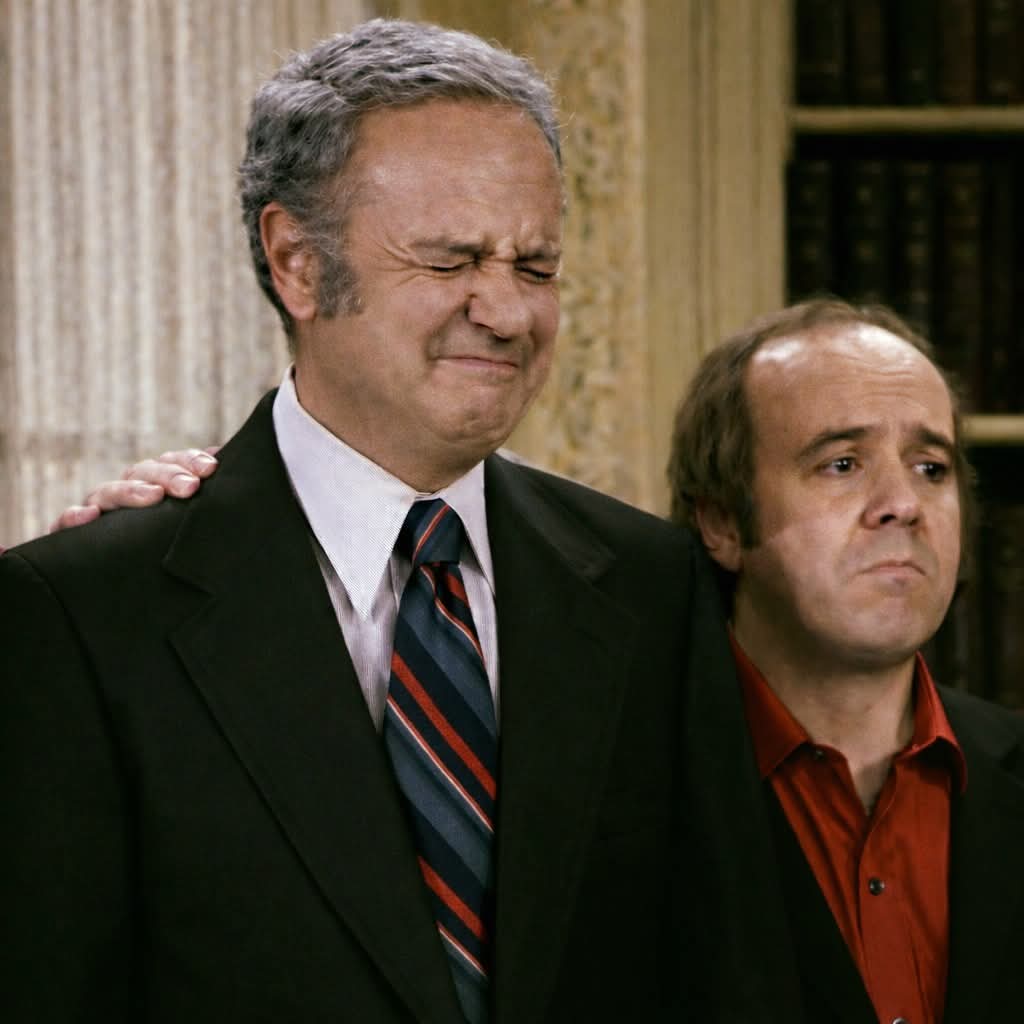
Harvey Korman does what he always does: he fights. His jaw tightens. His eyes water. He turns away, searching for composure. You can see him trying to anchor himself to the script, clinging to it like a life raft.
But Conway keeps escalating — gently, patiently. He doesn’t attack the scene. He nudges it. One tiny absurd detail at a time. Each addition chips away at Korman’s defenses until the struggle becomes part of the performance itself.
The audience senses it. The laughter begins as a rumble, growing louder with every stretched pause and unnecessary explanation. The hot dog stand fades into the background. What matters now is whether Harvey can survive.
And then it happens.
That crack. That split-second surrender. Harvey breaks — fully and helplessly — and the studio erupts. It’s the kind of laughter that feels earned, the kind that only happens when something real slips through the cracks of a scripted moment.
That’s the brilliance of Tim Conway’s style. No grand pratfalls. No shouting for attention. Just immaculate timing, fearless commitment, and the patience to let absurdity unfold at its own pace. Decades later, the sketch still works because it isn’t built on trends — it’s built on chemistry, trust, and the joy of watching one master gently, expertly dismantle another.
And somehow, watching Harvey lose that battle never gets old.