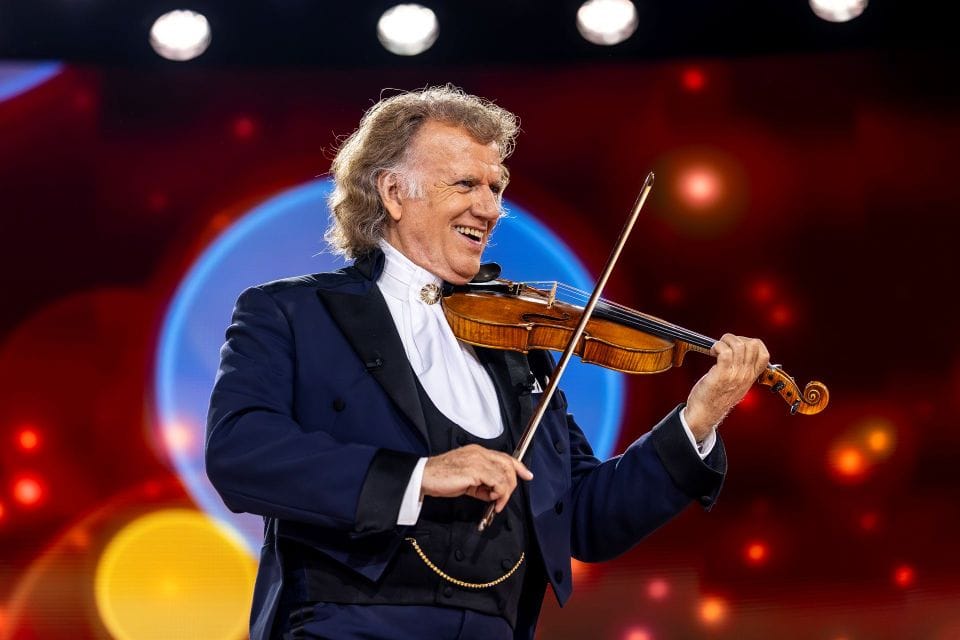
Thousands filled the Amsterdam Arena, their anticipation humming through the vast space as lights shimmered and the orchestra prepared to play. It was one of those nights when everything felt larger than life, yet poised on the edge of something intimate and unforgettable.
Then a single voice rose above the crowd. In that instant, time seemed to pause. The enormity of the arena faded as all attention narrowed to one young soprano standing beside André Rieu and the Johann Strauss Orchestra.
It was 2009, and Mirusia Louwerse had stepped into a moment that would define her career. As the opening notes of “Con te partirò” floated into the air, she didn’t simply begin to sing—she invited the audience into an emotional journey that felt both deeply personal and universally shared.
Known affectionately as André Rieu’s “Angel of Australia,” Mirusia approached the iconic piece with reverence. The song carried the weight of its legendary history, forever associated with Andrea Bocelli and Sarah Brightman, yet she honored that legacy without being overshadowed by it.
Her voice emerged powerful yet ethereal, filling the immense space with remarkable ease. Each phrase flowed effortlessly, riding the orchestral swell with precision, confidence, and a vulnerability that made the performance feel alive rather than rehearsed.
As the music built, the orchestra surged beneath her, strings lifting her voice higher and higher. Notes seemed to hang suspended in the air, as though the arena itself was holding its breath, unwilling to disturb the fragile beauty unfolding onstage.
From the front rows to the highest seats, the audience was united in stillness. Thousands listened in silence, aware they were witnessing something rare—an instant where talent, emotion, and timing aligned perfectly.
When Mirusia reached the final note, she released it with breathtaking control, allowing it to fade naturally into the vastness of the arena. For a heartbeat, there was no applause, no movement—only silence heavy with awe.
Then the moment broke. Applause thundered through the space, rising to its feet in recognition of what had just been shared. It was not just appreciation, but gratitude—for being present when music transcended performance and became memory.
Years later, that night still sends chills through those who revisit it. Mirusia’s “Con te partirò” remains a reminder that when the right voice meets the right moment, even time itself seems willing to stand still.