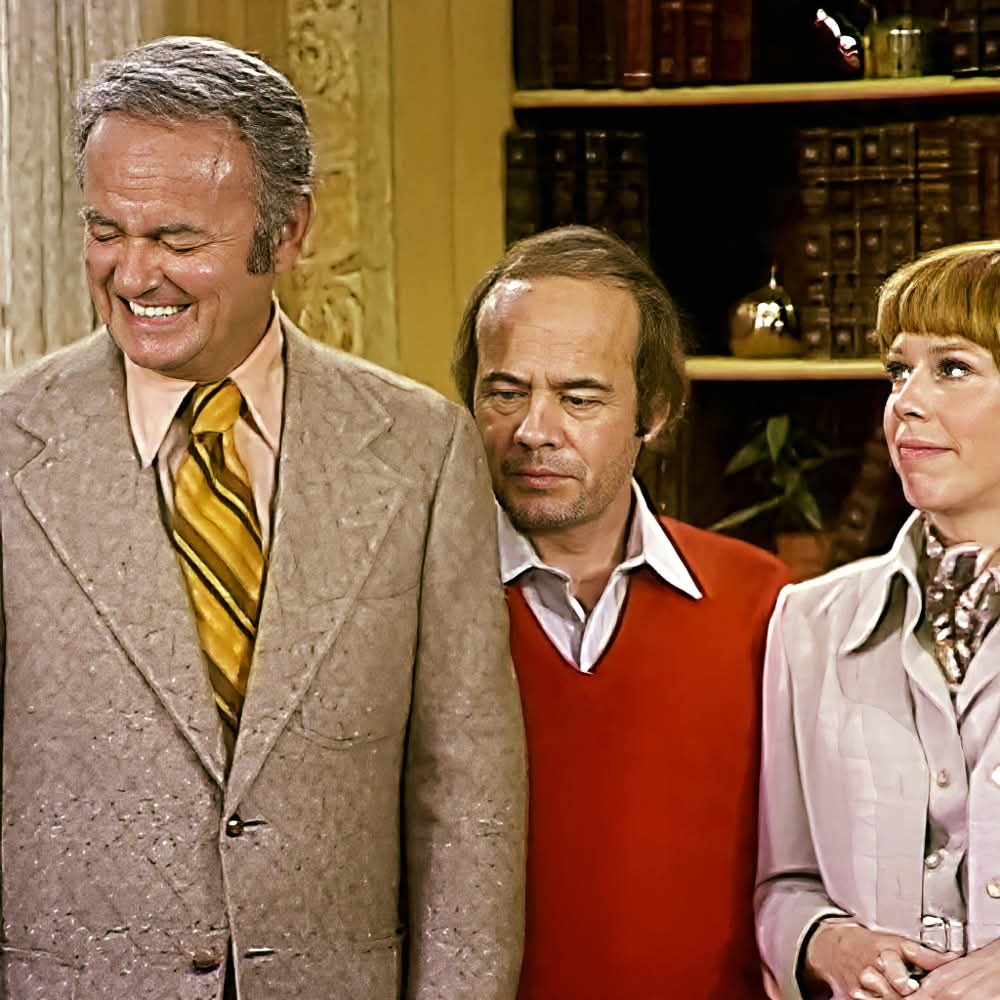
What began as another polished sketch on The Carol Burnett Show rarely stayed that way for long — especially when Tim Conway decided it was time to test the limits of live television. The scripts were tight. The sets were carefully designed. The performances were rehearsed. But once Conway stepped into a scene, all bets were off.
Each week, he arrived armed with something new — not loud gags or obvious punchlines, but quiet, perfectly timed surprises. He might walk confidently into a painted barn door as if it were real, perch himself delicately on what was clearly a doorknob, or treat an inanimate prop with total sincerity. The brilliance wasn’t in the action alone. It was in the calm commitment.
Carol Burnett often tried to keep the sketch on track, maintaining structure while sensing the inevitable derailment approaching. Her professionalism anchored the chaos, but even she knew that once Conway began drifting off-script, survival mode would kick in.
Harvey Korman, however, was almost always the first casualty.
Korman’s struggle to maintain composure became a beloved part of the comedy itself. Viewers could see the battle unfolding in real time — the tightened jaw, the turned back, the desperate attempt to deliver the next line without dissolving into laughter. And Conway knew exactly how to push him there.
One of the most unforgettable moments came during the submarine sketch. As tension built inside the cramped set, Conway leaned over with innocent curiosity and softly asked, “How’s it going down there?” It was such a simple line — understated, almost polite — but it shattered whatever composure Korman had left.
The audience erupted. Korman folded. And Conway, sensing victory, stretched the pause just a little longer.
That was the magic. It wasn’t reckless chaos. It was precision disguised as mischief. Conway understood rhythm better than anyone. He knew how long to hold a look, when to whisper instead of shout, and how to let anticipation do most of the work.
Even the props weren’t safe. Horses, doors, furniture — anything could become part of the joke if Conway decided it was. Nothing was too small to turn into a comedic weapon.
Decades later, those sketches still circulate because they captured something rare: laughter that felt alive. Not forced. Not overly polished. Just a group of performers walking the tightrope between control and collapse — and letting the audience feel every second of it.