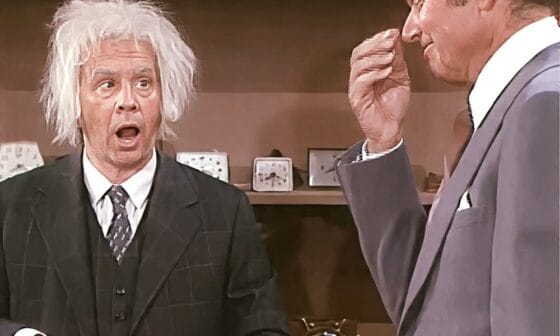
It begins with a ticking clock. Two minutes remain, the device is armed, and the tension in the room is unmistakable. The scene is designed for urgency, for quick thinking and dramatic movement. Every second matters.
Everyone feels it — except Tim Conway.
While panic builds around him, Conway steps forward at a pace so slow it feels almost unreal. Instead of racing against time, he seems to drift through it, as though the countdown is merely background noise. The contrast is immediate and hilarious.
The premise calls for action, for a last-second rescue. What it gets instead is deliberate stillness. Conway offers no heroic tools, no brilliant solution. In their place appear a ham sandwich, a rubber mouse, and a pair of glasses perched upside down as though nothing about the situation is unusual.
The audience begins to lose control. Laughter rolls across the studio in waves, growing louder with each unhurried movement. The slower he goes, the harder they laugh.
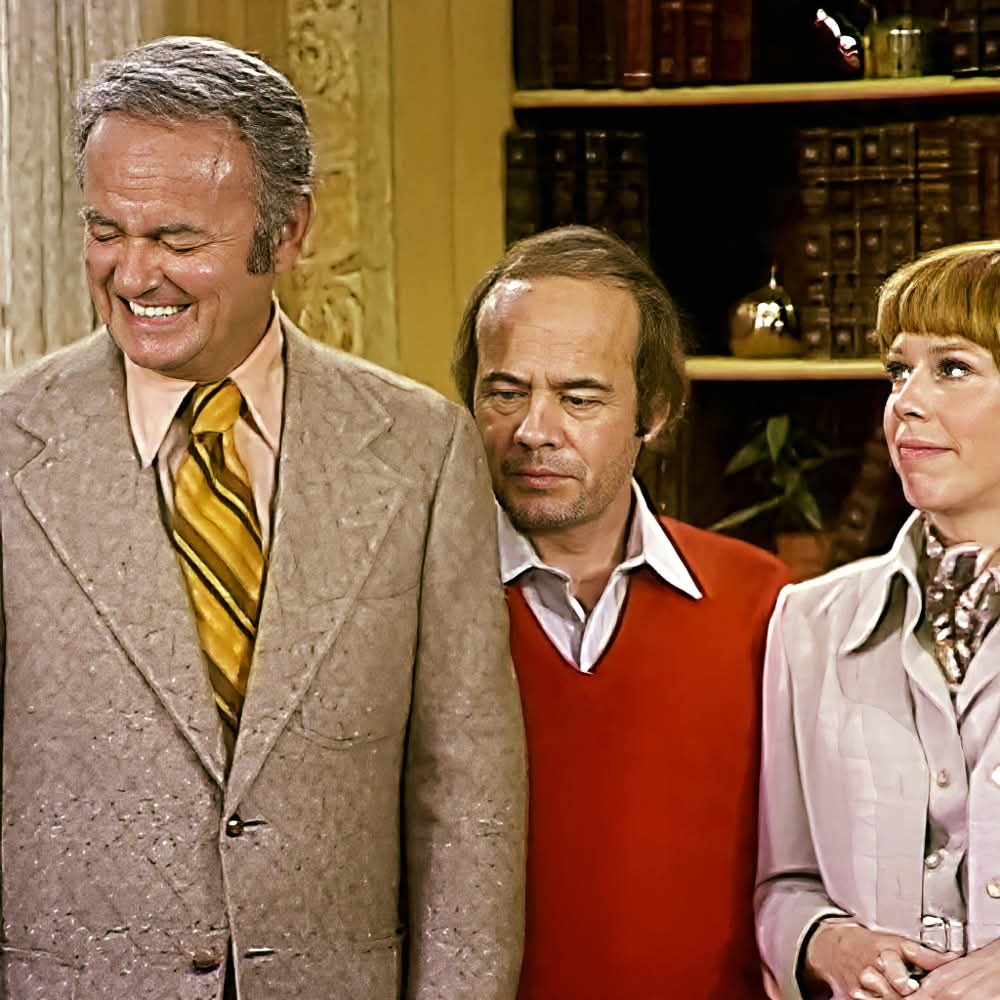
Harvey Korman, standing nearby, fights a losing battle. His lips tremble, his face reddens, and he turns away in a desperate attempt to stay composed. The clock keeps ticking, but his composure is vanishing far faster than the remaining seconds.
Then comes the moment that seals the sketch in television history. Conway reaches for the pliers.
They descend at a glacial pace, shaking ever so slightly. The silence stretches. What should take a split second becomes an eternity. Each inch downward builds unbearable anticipation.
It’s a masterclass in restraint. Conway understands something fundamental about comedy: anticipation can be funnier than action. The tension between what should happen and what actually happens becomes the punchline itself.
As the countdown barrels toward zero, the room is in complete collapse. Cast members struggle to remain upright. The audience gasps for breath between fits of laughter. The scene has transformed from a simple sketch into controlled chaos.
Long after the clock stops, the moment lingers. It wasn’t about the prop or the premise. It was about timing — about one performer moving at his own rhythm while the world raced around him. In those slow, deliberate seconds, Tim Conway didn’t just stretch time. He owned it.