Jayson Arendt’s life was firmly rooted in the dugout, not under stage lights. Known to fans as a Banana Ball standout and a former Seahawk, he had built his identity around athletics, discipline, and teamwork. Music was always there, but it lived quietly in the background, never demanding the spotlight.
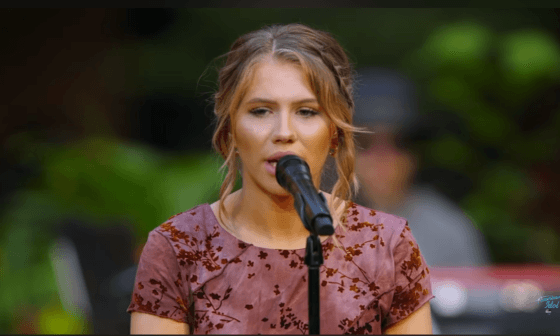
That changed the moment he stepped onto the American Idol stage. One audition — a raw, emotionally charged rendition of Chris Stapleton’s “Fire Away” — flipped the direction of his life in ways he never saw coming. What began as a leap of faith quickly became a defining moment.
Arendt didn’t perform like someone chasing fame. He sang like someone telling a story he had carried for a long time. There was no polish-first mentality, no overthinking the moment. Instead, he leaned into vulnerability, letting the emotion of the song do the heavy lifting.
His athletic background showed in unexpected ways. The focus, control, and quiet confidence of a competitor were there, but they were paired with something softer — a storyteller’s instinct that drew people in rather than pushed them back. It was a balance that felt genuine, not manufactured.
The judges felt it immediately. Their reactions weren’t measured or cautious; they were locked in. Within minutes, the audition stopped feeling like just another performance and started to feel like a moment — the kind that lingers after the music fades.
Then the internet took over. Clips spread. Comments poured in. Messages of support arrived faster than Arendt could process them. The response was overwhelming, not just in volume, but in sincerity.
“I didn’t know I had as much support as I do,” he admitted afterward, still stunned by how quickly everything shifted. Overnight, he went from athlete-with-a-guitar to a name people were rooting for, debating, and sharing.
The sudden attention forced him to confront a question he’d never seriously asked himself before: what if music isn’t just a passion, but a future? What if this path leads somewhere entirely different from the one he trained for?
That’s where his most surprising statement comes in. If this journey continues, Arendt says he’d choose a CMA Award over a World Series ring. For someone shaped by sports culture, it’s a bold admission — and a revealing one.
It’s no longer just about a single audition. Jayson Arendt now stands at a crossroads between who he was and who he might become, proving that sometimes the biggest wins don’t happen on the field, but in the moments you dare to step into the unknown.