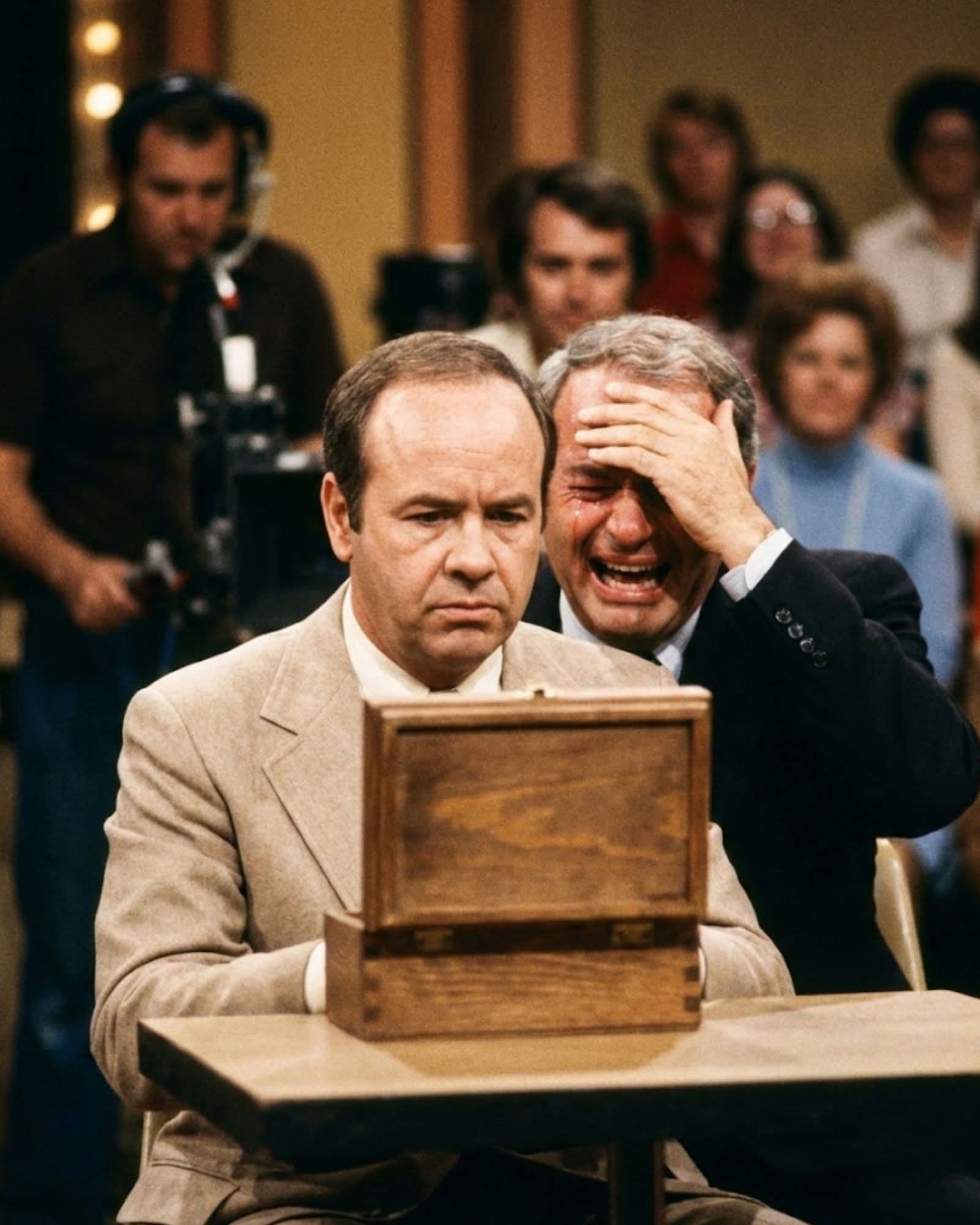
What began as a sharp, tightly written spy parody on The Carol Burnett Show appeared to be firmly under control. The setting was serious, the tone deliberate, and the structure precise—exactly the kind of sketch built on discipline and timing rather than chaos.
Then Tim Conway delivered a single line: “Sir, I’m the one asking the questions.” In that instant, the balance of power shifted, and the sketch never recovered.
Conway didn’t raise his voice or push for a laugh. He stayed calm, almost respectful, which made the sabotage even more effective. With one understated reversal, he dismantled the logic of the interrogation and quietly handed control of the scene to confusion.
Harvey Korman, playing the authority figure, tried to regain footing. You could see the effort on his face—the clenched jaw, the widening eyes—as he struggled to stay in character while the rules of the scene dissolved around him.
The pauses grew longer. Silence hung heavier. Every beat stretched just far enough to make everyone uncomfortable, and that discomfort became the fuel for laughter. Discipline slipped not all at once, but moment by moment.
Each reaction betrayed the performers further. Small smiles turned into shaking shoulders. Professional restraint gave way to barely contained disbelief as Conway continued to steer the scene deeper into absurdity without ever acknowledging the damage he was doing.
Then came the truth serum. What might have been a simple plot device became the final trigger. Any remaining structure collapsed as the sketch crossed from scripted performance into something uncontrollable and unmistakably real.
The cameras began to shake as laughter overtook the stage. The cast broke completely. The audience roared, sensing they were witnessing something that could never be recreated, no matter how carefully written.
At that point, it wasn’t acting anymore. It was a live unraveling—performers trapped inside a moment they could no longer manage, responding honestly because there was no other option.
That is why the sketch endures. Not because of clever writing alone, but because it captured the exact second when control vanished and comedy took over. It wasn’t planned collapse—it was glorious, irreversible, and unforgettable.