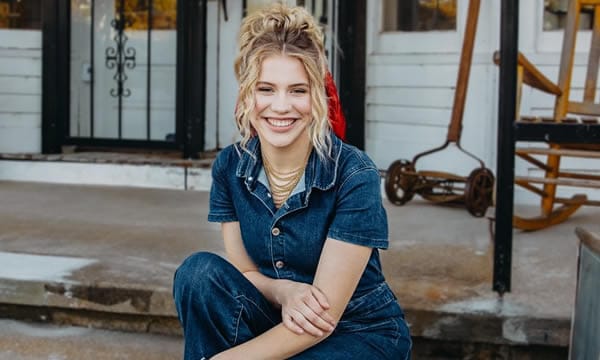
Under the bright lights of the American Idol stage, Hannah Harper stood with a calm that felt almost fragile. The 25-year-old stay-at-home mom from Willow Springs, Missouri, wasn’t dressed like a typical contestant chasing fame. She carried a guitar, a steady breath, and a story that had been written far away from any spotlight.
Before she sang, she revealed where her most important song had truly begun — not in a studio, not on a stage, but on the floor of her kitchen. It was a moment, she explained, when exhaustion and loneliness had quietly surrounded her during postpartum depression, leaving her unsure whether her voice would ever matter beyond her own home.
That confession alone shifted the atmosphere in the room. The judges leaned forward, no longer evaluating a performance, but listening to a person. Harper spoke plainly, without dramatics, about the invisible weight many mothers carry — the constant demands, the emotional isolation, and the quiet fear of losing yourself while caring for others.
Then she began “String Cheese.”
The song didn’t rely on vocal fireworks or polished perfection. Instead, it painted everyday life in honest detail — toys scattered across the floor, reheated coffee growing cold, and the simple moment of a child asking for help opening a snack. Within those ordinary scenes, she revealed something deeper: how even in her lowest moments, motherhood slowly pulled her back toward hope.
As she sang, Carrie Underwood’s reaction became impossible to ignore. The country superstar, herself a mother, reached for tissues as the lyrics struck close to home. It wasn’t just admiration in her expression — it was recognition. Harper wasn’t performing a character. She was telling the truth.
Luke Bryan and Lionel Richie remained quiet throughout much of the performance, allowing the moment to unfold without interruption. Their stillness spoke volumes. They understood that this audition wasn’t about hitting perfect notes. It was about connection — the rare kind that turns a song into something shared.
By the final line, Harper’s voice steadied with a quiet strength. She didn’t try to overwhelm the room with power. She let the last note ring naturally, almost like a release. For a brief moment afterward, silence filled the space — the kind that comes when people are absorbing something deeply personal.
Then the room responded. The judges praised not only her voice, but her courage in naming a struggle many rarely speak about publicly. They recognized her ability to transform private pain into something meaningful and universal — a gift that can’t be taught.
The unanimous yes votes that followed felt almost secondary. What truly mattered had already happened. Hannah Harper had taken a chapter of loneliness and turned it into a moment of connection for millions watching.
In the end, her audition became more than a step forward in a competition. It became a reminder that when pain is spoken honestly, it can change shape — from something isolating into something that helps others feel seen, understood, and less alone.