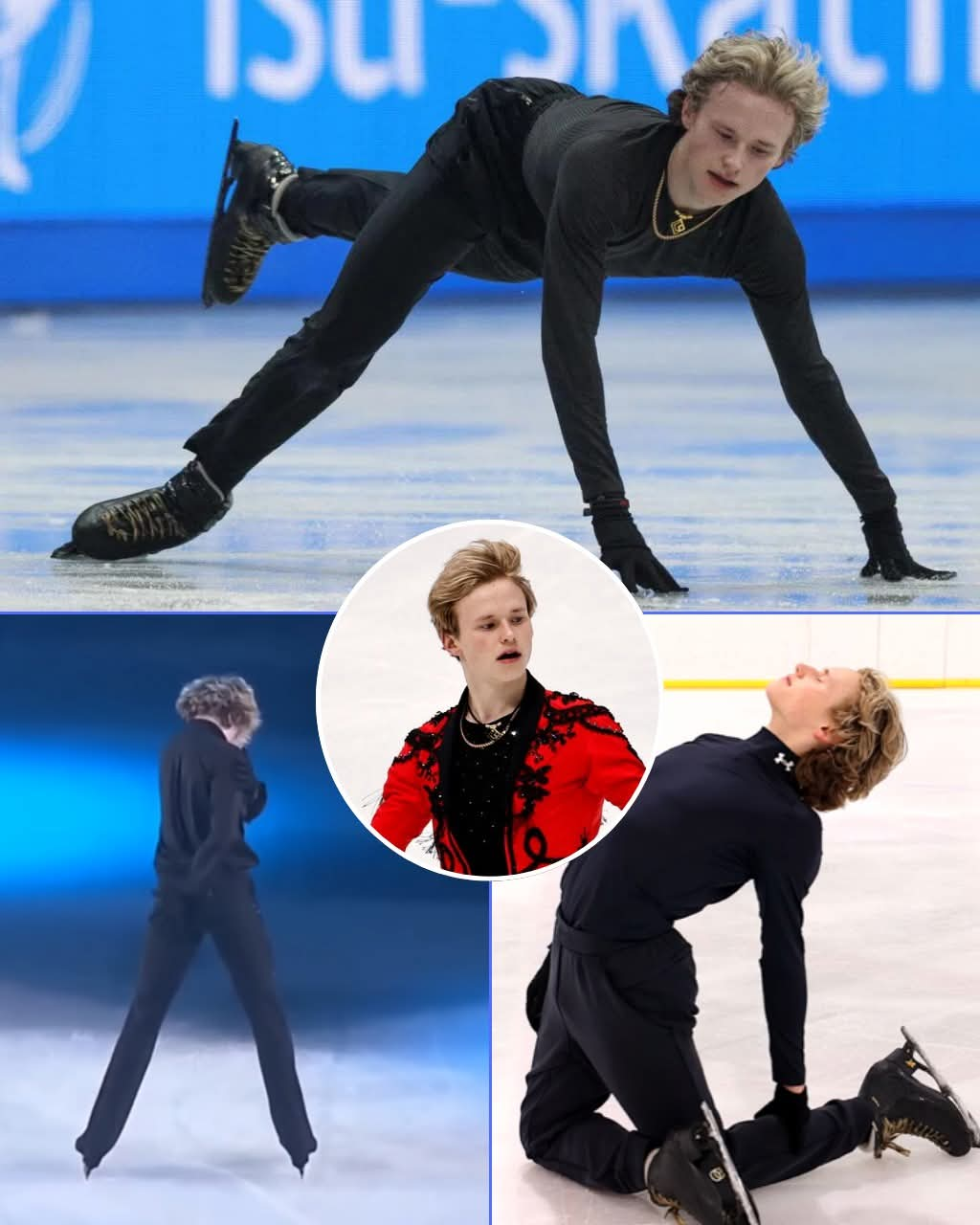
Ilia Malinin has built his reputation on doing what few others in figure skating even attempt. Quad axels. Historic jump layouts. Programs packed with technical firepower designed to push the sport forward. When he competes, the expectation is clear: innovation, difficulty, dominance.
But at The Ice show, Malinin chose a different path.
Skating to Billie Eilish’s “Lovely,” he stepped away from the explosive athleticism that made him a world champion and into something far quieter. There were no high-stakes jump combinations engineered to overwhelm a scoreboard. Instead, the performance unfolded with patience. Each glide felt intentional. Each extension lingered just long enough to let the music breathe.
The shift was immediate — and fans noticed.
“This isn’t about jumps,” one viewer wrote online. “It feels like he’s skating straight from the heart.” Social media quickly filled with similar reactions as clips of the program began circulating, many pointing out how different this Malinin looked from the athlete who attacks technical content with fearless precision.
For those who know his journey, the performance carried added meaning.
Before the world titles and record-setting jumps, Malinin balanced grueling training schedules — often more than 10 hours a day — with schoolwork and the everyday pressures of growing up. Early mornings at the rink. Late-night homework. Endless repetition. That discipline built the technical foundation that changed men’s skating. But it also built something less visible: control, maturity, and emotional depth.
Supporters were quick to highlight that artistry like this doesn’t simply appear overnight. “All those hours built not just a champion, but an artist,” one fan commented — a sentiment echoed across platforms as viewers replayed the routine.
What makes the performance resonate isn’t difficulty. It’s restraint.
Malinin didn’t need to prove he could land history-making jumps. He has already done that. Instead, he allowed the choreography to expand, to soften, to trust the quiet spaces in the music. There was confidence in the stillness — a willingness to reveal rather than impress.
In a sport often defined by technical escalation, this program felt like a reminder that greatness isn’t measured only by rotation and height. Sometimes it’s measured by the courage to slow down.
If this performance is any indication, Ilia Malinin’s future may not be defined solely by what he can land — but by what he can make audiences feel.