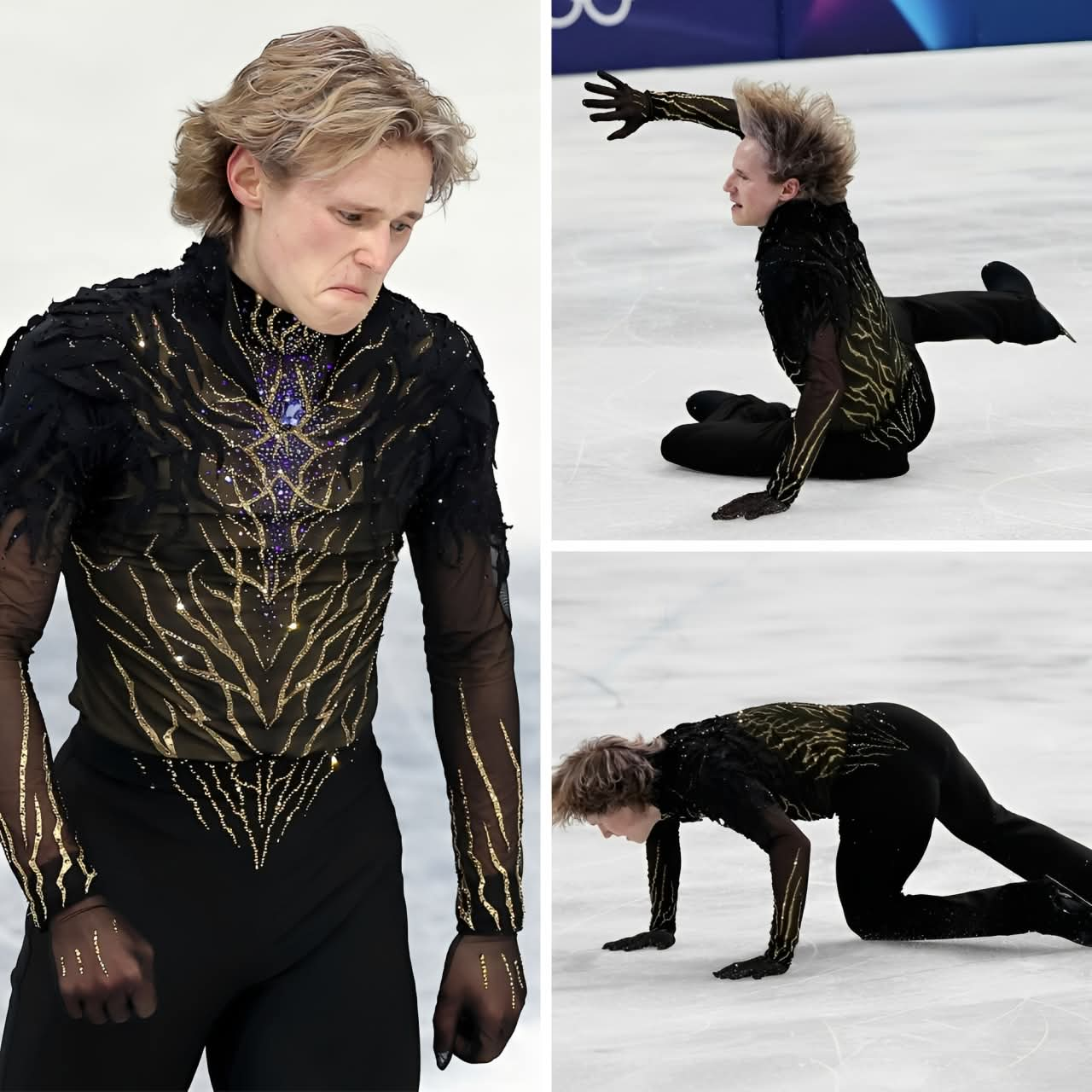
“Negative thoughts.”
That’s the phrase Ilia Malinin used to describe the tiny internal shift that unraveled what had otherwise looked like a dominant performance. For a skater known for fearless quad layouts and almost surgical composure under pressure, the admission was striking. This time, the battle wasn’t about strength or stamina. It was about the mind.
Malinin explained that doubt crept in at exactly the wrong moment. Not long. Not dramatic. Just a flicker. A fraction of hesitation before takeoff. At his level, where rotations are measured in milliseconds and landings in millimeters, that flicker is enough to tip the balance.
What the audience saw as rare mistakes, he experienced as a chain reaction. One disrupted focus led to a slight adjustment. That adjustment led to tension. Tension led to overthinking. And overthinking, in a sport built on muscle memory and instinct, is often the real opponent.
“You start thinking instead of skating,” he shared — a line that resonated far beyond figure skating. For Malinin, whose rise has been marked by historic jumps and fearless layouts, expectation now travels with him. Every event carries the weight of past brilliance. And sometimes, that weight whispers.
He didn’t blame the ice. He didn’t question preparation. He didn’t point to external pressure. Instead, he acknowledged how quickly confidence can flip into self-criticism when the standard is near perfection. When you’ve built a reputation for pushing limits, even a small wobble can feel amplified.
For many supporters, that honesty mattered as much as any clean quad. It revealed the layer most fans never see — the constant internal calibration elite athletes manage while appearing calm on the surface. The difference between attack and hesitation. Between flow and force.
Malinin’s career so far has been defined by audacity: the quad axel, ambitious jump content, bold competitive strategies. But this moment highlighted something else — vulnerability. The willingness to admit that even at the top, doubt can slip in.
And history suggests something important. Setbacks haven’t stalled him before. They’ve sharpened him. Each stumble has been followed by recalibration, refinement, and often something even more daring.
So now, fans aren’t just watching for the quads.
They’re watching to see how he answers this moment — not just with technique, but with trust in his instincts once again.