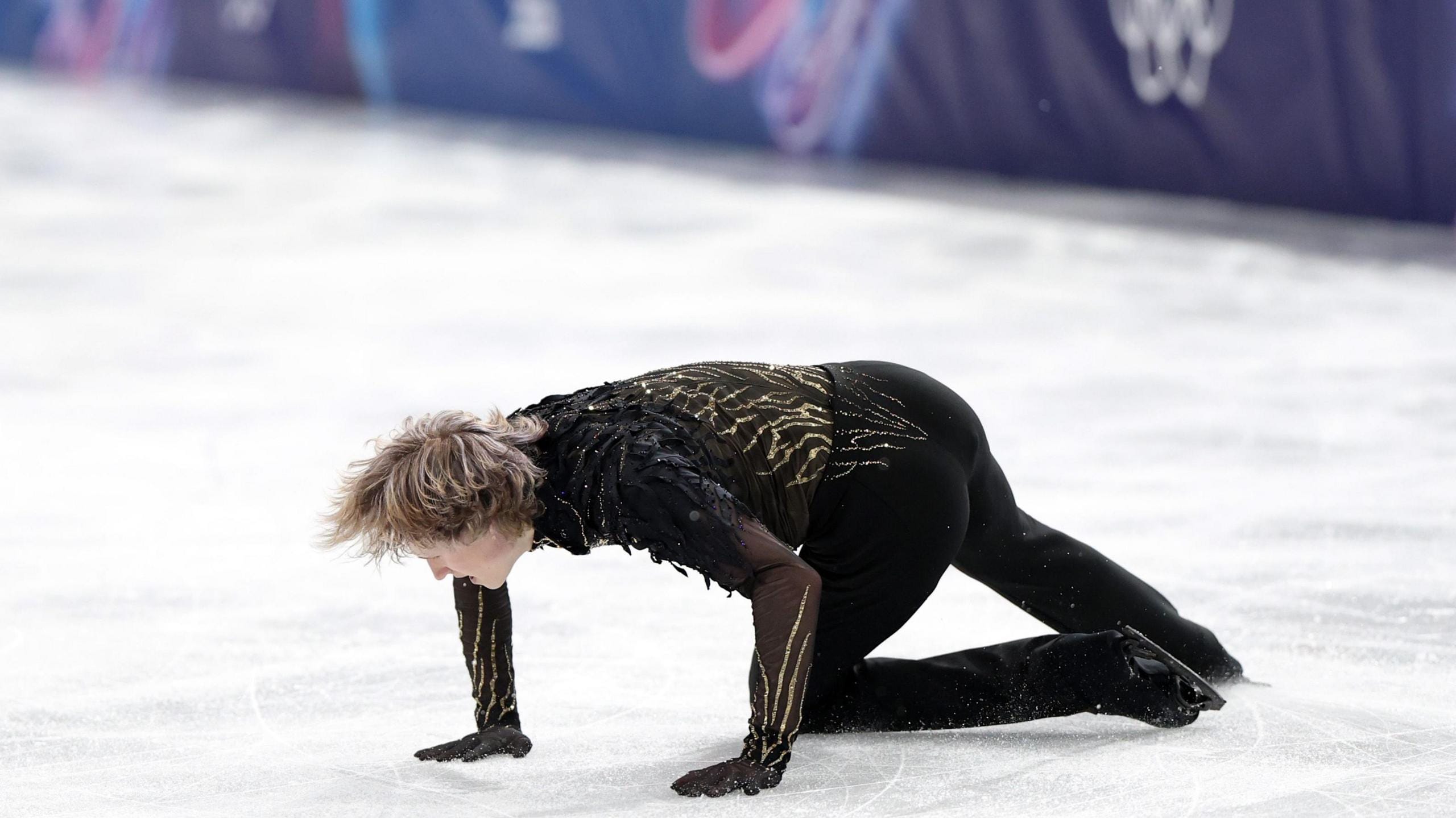
He skated like he had lived a lifetime at just 21 years old. Known around the world as the fearless “Quad God,” Ilia Malinin built his reputation on daring technical feats — jumps so difficult most skaters wouldn’t even attempt them. But on that night at the Gold on Ice gala, he did something far more challenging than landing another historic element. He chose to slow down.
As the opening notes of NF’s “Hope” filled the arena, the atmosphere shifted immediately. There was no explosive entrance, no dramatic rush to impress. Instead, Malinin stepped onto the ice with quiet composure, his expression calm and focused, as if he were skating into something deeply personal rather than performing for thousands of watching eyes.
Fans who expected a showcase of technical fireworks quickly realized this performance was different. His movements were softer, more deliberate, almost restrained. Each glide felt intentional, as though he was allowing the music — not the pressure of expectation — to lead him.
The choreography unfolded like a story rather than a routine. He carved long, thoughtful edges across the ice, letting pauses linger longer than usual. It was a rare sight for a skater famous for speed and intensity, and the stillness itself became powerful.
Then came the moment that captured everyone’s attention. As the lyrics spoke about creating something no one else could, Malinin launched into a jump he had personally named — a symbol of his relentless pursuit of pushing boundaries. But this time, it didn’t feel like a display of dominance. It felt like a statement of identity.
For years, fans had seen him as a phenomenon — the athlete who redefined technical limits in figure skating. Yet in this performance, the spotlight shifted away from the legend and toward the human being behind it. The jump wasn’t about proving he was the best. It was about showing who he was beneath the titles.
In that moment, the “Quad God” seemed to fade away. What remained was a young man confronting doubt, expectation, and the heavy weight of being seen as unstoppable. His skating spoke quietly but clearly, telling a story that words could never fully capture.
The emotional impact was undeniable. Many in the audience later described feeling an unusual stillness in the arena, as if everyone instinctively understood they were witnessing something deeply personal rather than purely competitive.
As the final notes of “Hope” echoed and Malinin struck his closing pose, the applause rose slowly at first — then swelled into a standing ovation. It wasn’t just appreciation for skill. It was recognition of vulnerability, courage, and growth.
With the 2026 Olympic cycle approaching, that night felt less like a gala performance and more like a turning point. It wasn’t simply about what Malinin could do on the ice anymore. It was about who he was becoming — an athlete learning that sometimes the hardest thing to show isn’t strength, but truth.