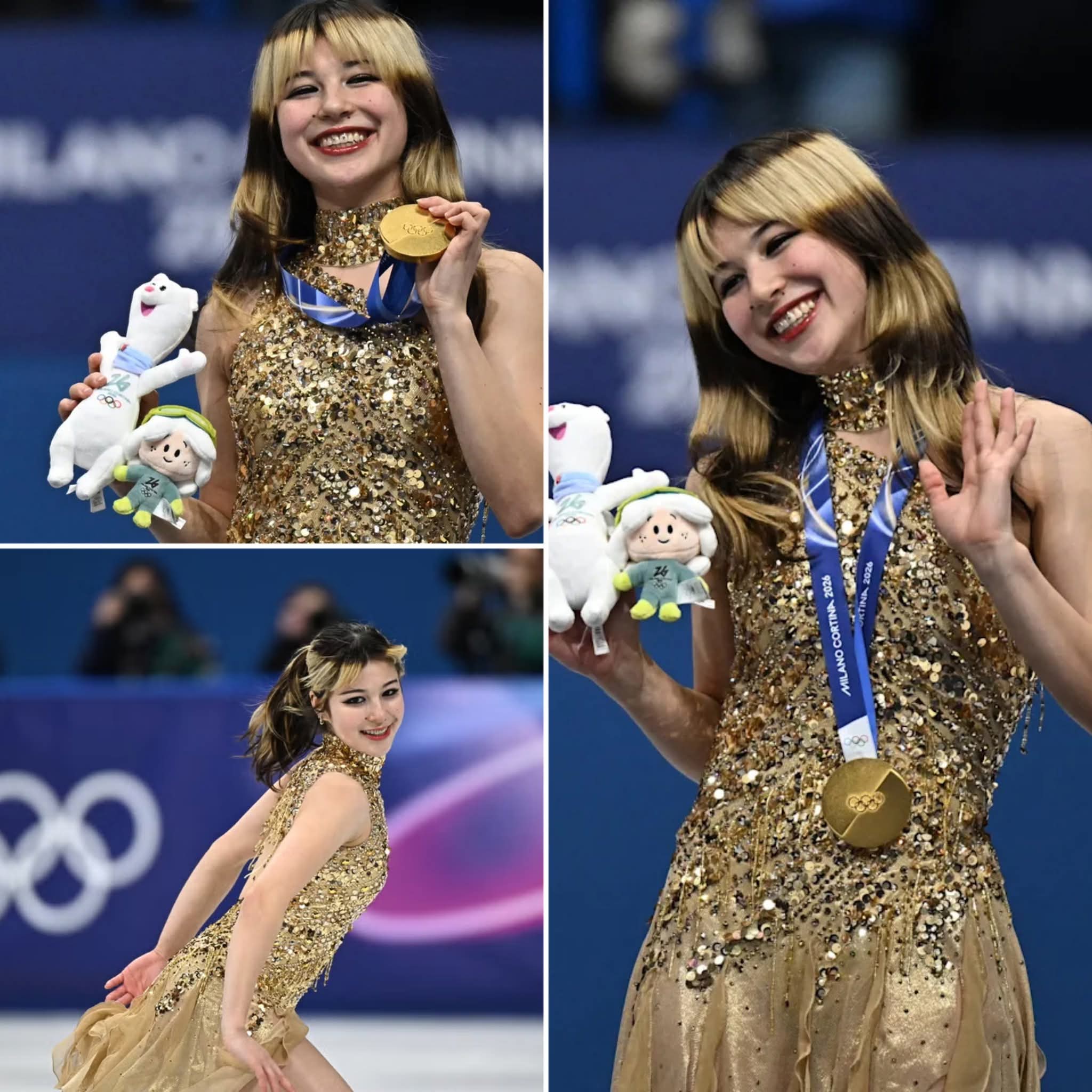
The 20-year-old phenom soared from third place to Olympic gold at the 2026 Winter Games, delivering a performance that will be replayed for years to come. With fearless precision and an unmistakable smile, she became the first U.S. woman to win Olympic singles gold since 2006 — ending a 24-year drought and rewriting American skating history in the process.
Her free skate was electric from the opening note. A blazing Triple Lutz set the tone, followed by a confident Triple Salchow that landed with authority. Every jump carried speed. Every landing felt certain. By the final sequence, the arena was already rising, sensing something historic unfolding in real time.
But the medal is only part of the story.
What makes this victory so extraordinary — almost “forbidden,” as some fans have called it — is the bold decision she made years earlier. At just 16, when most rising stars double down on training and expectation, she walked away from figure skating entirely.
She didn’t leave because of injury. She didn’t leave because she couldn’t compete. She left because she was burned out.
At the height of her teenage success, with national titles and Olympic buzz already attached to her name, she chose something radical: a normal life. School. Friends. Privacy. Space to breathe. In a sport that rarely allows pauses, she pressed stop.
Many assumed that was the end.
Figure skating history is filled with prodigies who shine briefly before fading. Walking away at 16 felt final — especially in a discipline where momentum is everything. Critics questioned whether she would ever regain elite form. Some quietly suggested she had thrown away her window.
But when she returned two years later, something had shifted.
She wasn’t chasing approval. She wasn’t skating to fulfill expectations set by coaches, federations, or headlines. She came back because she missed the feeling — the freedom of flying across the ice, the joy that first pulled her into the sport as a child.
That difference showed in Milan.
Under suffocating Olympic pressure, she looked calm — almost untouchable. While others skated as if protecting a dream, she skated like she had already found herself. The jumps weren’t desperate. They were deliberate.
By the time her final pose hit, the roar inside the arena felt less like celebration and more like release.
This wasn’t just a gold medal. It was proof that stepping away didn’t end her story — it saved it.
In a sport built on relentless discipline and early specialization, her comeback challenges the old blueprint. It suggests that rest, rediscovery, and self-trust aren’t weaknesses — they’re strengths.
The most jaw-dropping twist isn’t that she won. It’s that she won after daring to leave.
And that’s why this Olympic gold feels bigger than history. It feels like a new definition of it.