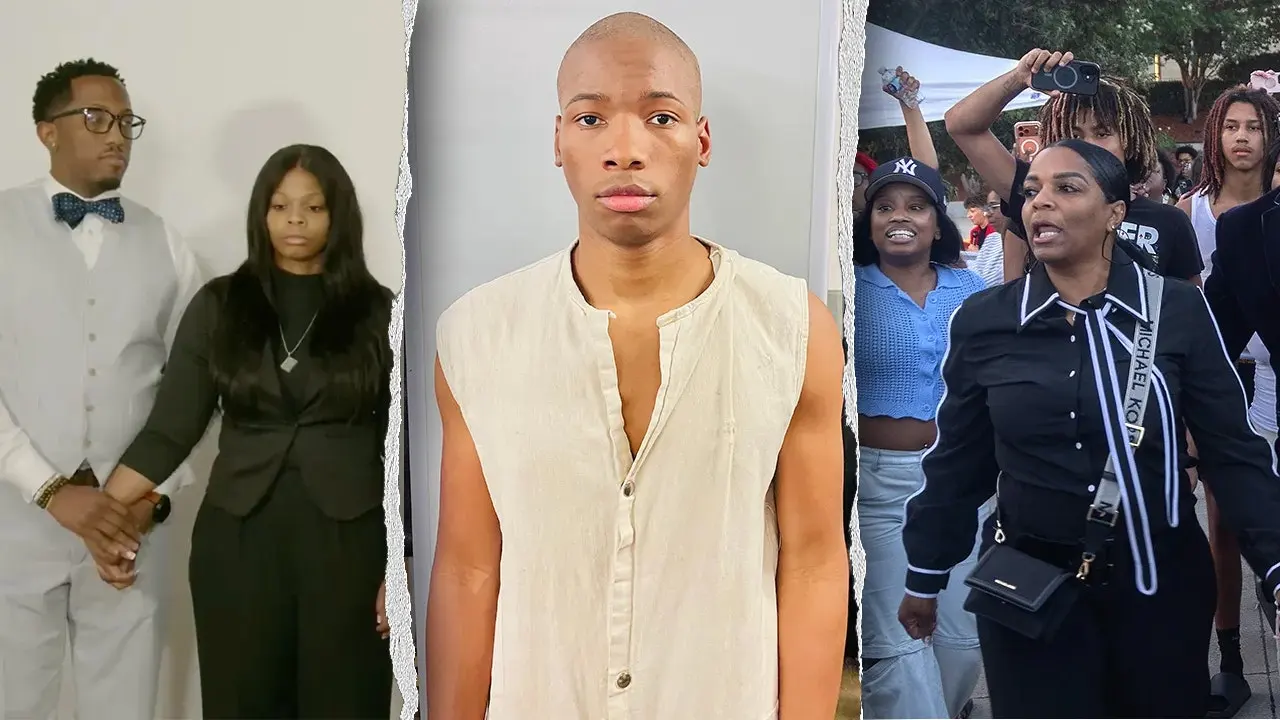
The legal fight over Karmelo Anthony’s conviction is entering a new stage, but experts say overturning the verdict will not be easy. After a Collin County jury sentenced the 19-year-old to 35 years in prison, his legal team quickly filed a notice of appeal, setting up the next chapter in a case that has remained deeply divisive.
Anthony was convicted in connection with the fatal stabbing of 17-year-old Austin Metcalf during a Frisco ISD track meet in 2025. His attorneys argued self-defense at trial, but the jury rejected that claim and found him guilty.
Now the case is expected to move to the 5th Court of Appeals in Dallas. That court will not retry the case or call new witnesses, but will review whether legal mistakes happened during the trial that may have affected the outcome.
Legal experts say that distinction matters. Appeals are not usually about whether the public agrees with a verdict, but whether the trial court followed the law properly.
Dallas-based civil rights attorney Daryl Washington, who is not connected to the case, said appellate courts are usually reluctant to disturb jury verdicts. He described jury decisions as something courts treat with significant weight.
SMU law professor Eric Ruben made a similar point, explaining that appeals courts usually do not revisit the facts the jury already decided. Instead, they focus on whether the judge correctly applied the law and whether the defendant received a fair legal process.
One issue expected to receive attention is the defense’s Batson challenge. That type of objection questions whether potential jurors were removed because of race, sex, or ethnicity.
Anthony’s attorneys raised the challenge after the remaining Black prospective jurors were removed from the jury pool. Prosecutors said the strikes were not based on race and argued the jurors were excluded because they were educators.
Judge John Roach Jr. allowed the strikes, and that decision could now become part of the appeal. The question for appellate judges may be whether the prosecutors’ explanation was genuinely race-neutral or whether it was used as a cover for improper exclusion.
Former criminal trial judge and federal prosecutor David Finn said he believes the explanation involving educators was legally valid. In his view, the conviction is likely to stand.
Washington, however, questioned whether that reasoning deserves closer review. He noted that educators are often people trained to listen carefully, weigh facts, and consider different sides, which could make the explanation worth examining further.
Beyond jury selection, experts say other legal instructions may also be reviewed. The trial court gave jurors options involving murder, manslaughter, self-defense, and sudden passion during sentencing, which some experts believe could make the verdict harder to challenge.
Ruben also pointed to the legal meaning of “provoke” as another possible issue. Under Texas law, a person can lose the right to claim self-defense if they intentionally provoke a confrontation to create an excuse to use force.
If jurors were not given a clear enough understanding of that legal term, Anthony’s appeal team may argue that the instructions created confusion. Appeals often focus on technical questions like that rather than emotional arguments about the case.
Still, defense appeals in Texas are difficult to win. Attorney Paul Saputo said criminal verdicts are rarely overturned, and recent judiciary statistics show full reversals happen in only a small percentage of cases.
For Anthony, the appeal may be the beginning of a long legal process rather than a quick second chance. For Austin Metcalf’s family, it means the case remains alive in the courts, even after the jury’s verdict and the 35-year sentence.